Collaboration, innovation and pragmatism key for nationwide stability
BCO Midlands debates BCO research paper Viability & Sustainability in the Regions
 July 28, 2026


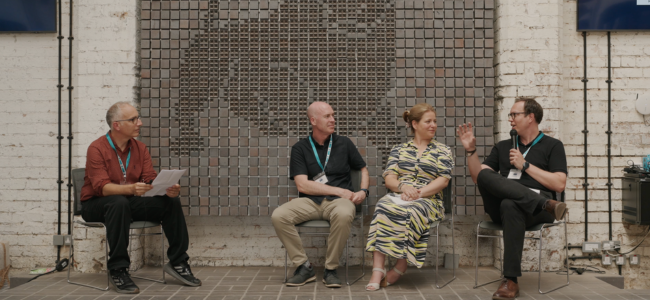
BCO Midlands welcomed members, guests and friends to the award-winning EH Smith Design Centre in Birmingham on 9 July 2026 for an evening exploring one of the most pressing challenges facing the office sector today: how to balance sustainability ambitions with commercial viability.
The event marked the regional launch of the BCO’s recent research report, Viability & Sustainability in the Regions, bringing together developers, investors, consultants and occupiers to discuss the realities of delivering sustainable buildings outside London and the South East.
Delegates gathered on one of the hottest evenings of the summer – arguably the most authentic possible setting for a debate on climate resilience. If attendees hoped the venue’s environmental credentials might offer some respite from the heat, the soaring temperatures at least ensured sustainability was never far from anyone’s mind.
Closing the gap between perception and reality
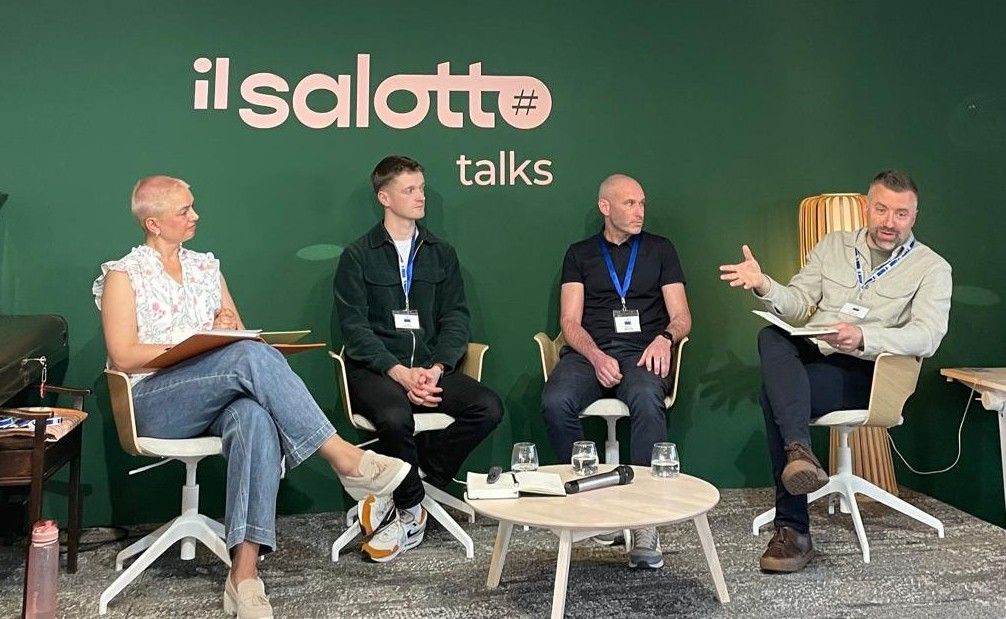
BCO Midlands was joined by Nick James, managing director at Futureground, who co-authored the report for the BCO alongside Lambert Smith Hampton’s Jaime Blakeley-Glover. James was joined by local panellists Lydia Dutton, senior director and regional sustainability lead at CBRE, Paul Chatwin, associate director, sustainability, at Cundall and James Bradley, a partner at Core Five, to interrogate the findings of the report.
Viability & Sustainability in the Regions examines why a sustainability gap persists between the “Big Six” office markets – Birmingham, Manchester, Leeds, Bristol, Glasgow and Edinburgh – and other regional cities, while challenging the assumption that sustainable offices must be prime, new-build assets.
James highlighted the disconnect found in the report between Big Six market perceptions and associated metrics, and the on-the-ground reality within regional office markets.
He argued that understanding these local nuances and mismatches was a critical first step in tackling the real challenges facing regional development, rather than relying on generalised, top-down metrics. Success, he suggested, should not be measured by a handful of standout “viable” buildings, but by a holistic uplift in viability across the wider regional built environment.
The panel discussion explored the growing challenge of delivering high-performing, low-carbon workplaces while maintaining the commercial viability needed to bring projects forward.
Against a backdrop of rising expectations from occupiers, investors and regulators, panellists considered how the industry can continue to improve environmental performance while ensuring developments remain financially deliverable.
Standards, costs and good design
CBRE’s Dutton was clear that sustainability can no longer be treated as optional.
“Integrating sustainability into office developments is no longer optional,” said Dutton, “without it assets will simply not be commercially viable in the future.”
Dutton advised of upcoming regulatory requirements and certifications, driving deeper engagement in retrofitting.
She said: “Having clear, finalised standards will unlock further investment and activity across existing office stock.”
Dutton did question whether the research was overly negative, however and highlighted strong activity in locations beyond the core Big Six cities, such as Nuneaton and Coventry. She also championed the case for upgrading assets from lower energy ratings to EPC A or BREEAM Very Good/Excellent, a move she said directly supported higher rental yields and preserved asset value across regional asset markets.
Core Five’s Bradley brought a candid look at the cost realities behind accreditation. His message was one of scrutiny rather than rejection.
“It’s not just about earning badges,” said Bradley, “it’s about evaluating what specific benefits high-value features bring to occupants.”
Bradley said most standard accreditations added roughly £2–£5 per sq ft to construction and development costs, with premium standards such as BREEAM or WELL adding somewhere between 1–7% to total build cost. Developers and tenants, he concluded, must critically weigh whether the value of an accreditation justifies the investment.
Cundall’s Chatwin pivoted the discussion towards design as the industry’s most powerful tool for resolving these tensions. “Good design,” he argued, “naturally leads to high sustainability outcomes regardless of whether project teams chase formal accreditation of badges.”
He added: “Although cost is always an underlying factor in development, cost shouldn’t prevent regions from striving for genuinely good buildings.”
This echoes the report’s broader ambition for a region of “better buildings”, not merely a handful of exceptional ones. “If a building is designed well by default,” said Chatwin, “it will naturally be comfortable, low carbon, efficient, and support health and wellbeing; meeting most sustainability targets without needing formal accreditation solely for the sake of a badge.”
As closing sentiment, Chatwin expressed a desire to see a greater push and appreciation for retrofitting existing buildings rather than focusing exclusively on new builds.
Discussion, debate and future success
Audience participation was particularly strong, with members challenging the panel on topics ranging from embodied carbon and retrofit viability to development appraisals and planning policy.
The lively debate demonstrated that while there may not be a single answer to the industry’s sustainability challenge, there is growing consensus that collaboration, innovation and pragmatism will be critical to future success.
The clear message from the session was that achieving both viability and sustainability will require careful judgment, open dialogue, and a recognition that the most successful regional projects will be those that treat the two as complementary, not competing, priorities.
Five key takeaways:
- The sustainability gap is about perception as much as performance. Big Six market metrics don’t always reflect on-the-ground conditions in regional cities, and closing this gap requires local insight, not generalised top-down assumptions.
- Sustainability is now a commercial prerequisite, not an optional extra. Panellists agreed that assets without strong environmental credentials risk being commercially unviable as regulatory and occupier expectations rise.
- Accreditation should be evaluated on value, not volume. With standard certifications adding roughly £2–£5 per sq ft and premium standards up to 7% of build cost, developers and tenants need to assess what each “badge” actually delivers for occupiers.
- Good design can deliver sustainability outcomes without chasing badges. Genuinely well-designed buildings tend to be low-carbon, efficient and supportive of wellbeing by default — a principle regions should build around.
- Success is regional and collective, not isolated. A single landmark scheme is not enough; true progress means a broad uplift in viability and sustainability across the wider regional office stock, with retrofit playing a central role alongside new build.
You can read the report in full here.


 By BCO Media