World wonderful web: The powerful combination of design, science and spiders
BCO Oxford takes a talk and tour of the Aspen Building at the Wood Centre for Innovation
 July 29, 2026


What do you get when you cross a collection of office professionals with a golden orb-weaving spider?
An incredible BCO Oxford sub-committee event, that’s what.
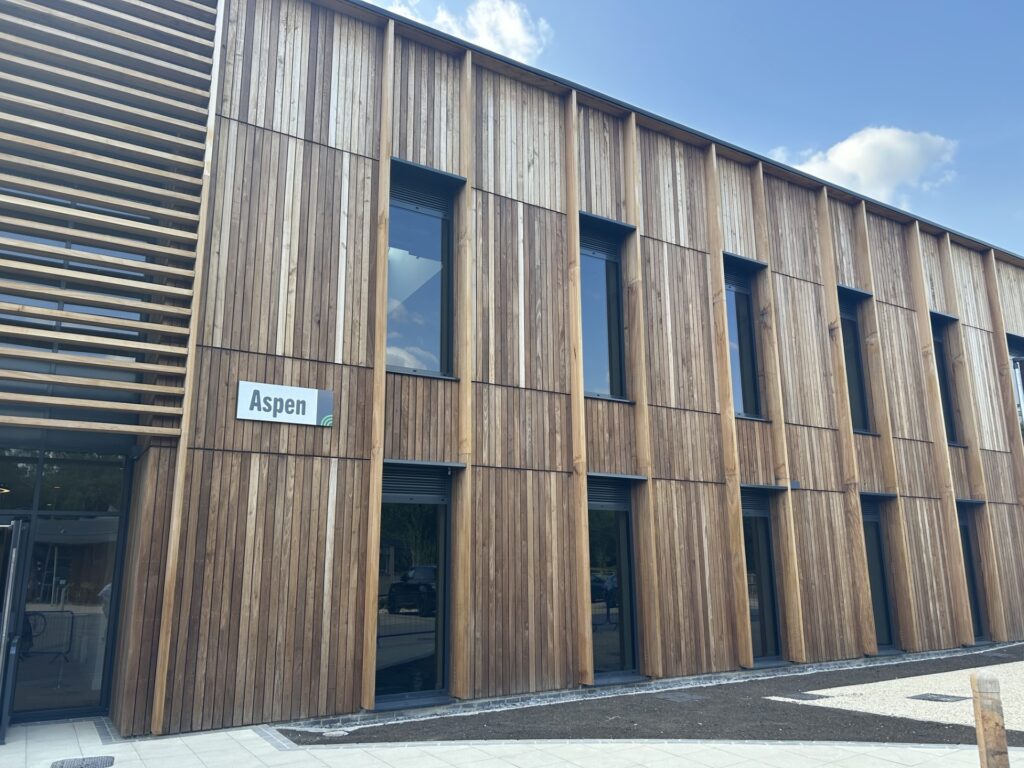
BCO members were treated to a talk and tour of the Aspen Building at The Oxford Trust’s Wood Centre for Innovation in Headington on 21 July, sponsored by Beard, the contractors on the newly completed building.
Aspen, which is set in 15 acres of woodlands, offers a compelling case study in how thoughtfully designed workspace can directly enable scientific breakthroughs – not just accommodate them.
The Aspen Building forms the second wing of the Wood Centre, alongside the fully let Linden Building, adding 16,684 sq ft of flexible laboratory, technical workspace and office accommodation across two floors for life science and deep tech start-ups.
For delegates, interest lay in how these design decisions translate into practical benefit for occupiers. The building’s flexible, customisable floorplates allow incoming companies to shape space around highly specific technical requirements, a crucial factor for early-stage science businesses whose needs shift rapidly as they scale. This adaptability, delegates heard, is often more valuable to tenants than any single sustainability credential in isolation.
Glen Moses from ADP Architects, which designed the building, shared his insights into the design decisions and parameters the firm had to work within, while Steve Burgess, chief executive of The Oxford Trust, gave a summary of Trust’s work.
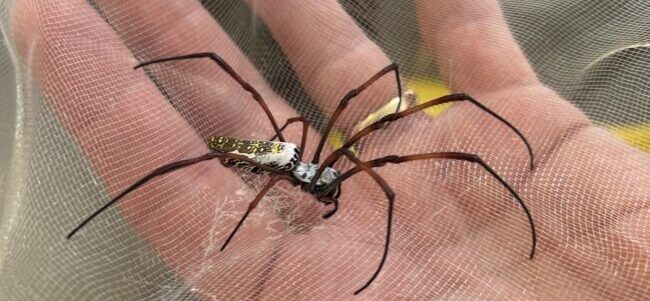
Perhaps the biggest star of the show was Ellie the spider (pictured, above), however, the faithful co-worker of Katie Slater from Newrotex, who also gave a talk about their groundbreaking work as tenants on the campus.
Newrotex is a University of Oxford spinout developing SilkAxons, a bioengineered nerve guide that uses spider silk to repair severe peripheral nerve injuries. The technology relies on the dragline silk of Nephila spiders – such as Ellie – prized for its strength, biocompatibility and dissolvability, properties that let it support nerve axon regrowth over several months before safely breaking down in the body.
SilkAxons has since progressed to first-in-human clinical trials, designed to bridge nerve gaps considerably longer than current FDA-approved alternatives, offering hope to the estimated 1.5m people worldwide who suffer serious nerve injuries each year.
The evening clearly struck a chord with attendees.
Laura Ludlow of Mills & Reeve called it “a fascinating evening,” adding that the Aspen Building “fits perfectly into the campus” and that its future occupants “will surely enjoy the woodland views out of the lab window.”
Cristina Popescu described it as “inspiring,” while Richard Elvidge of WGS praised “an inspiring few hours” and the chance to meet “an incredible business”, while Lisa Curran of PSG reflected on “an incredible presentation from Newrotex explaining how spiders have been creating ground-breaking work to help repair nerve damage in patients.”
Beard, as sponsor, summed up the appeal simply: It was “fantastic to hear about the incredible innovation happening within the building and, of course, meet Ellie.”
For BCO delegates, the link between building and breakthrough was the standout lesson of the visit: without adaptable, well-serviced lab space and the surrounding ecosystem of the Wood Centre, a company like Newrotex could struggle to keep its research – and its spiders – close to the point of discovery.


 By BCO Media