The programme:
Review the programme to devise a plan specifically tailored to your preferences. It is first come, first served, so it’s always a good idea to book your choices early on. On that note- it is going to be a jam-packed programme, and while there will be break-out moments between sessions, to make the most of networking opportunities, you might want to plan ahead. Delegates can view a complete delegates list beforehand.
Social media:
Connect with new prospects, or touch base with other conference delegates by searching the official conference hashtags (#BCOConference #Copenhagen2019) -a great way to keep track of acquaintances and people you would like to meet at the conference. Join the conversation and catch up with all of the conference highlights. Follow us on Instagram and Twitter. View tweets from last year’s conference here.
Official conference app:
For ease of having everything in one place, an all-new conference app will be available to download. Use it to take notes, view the full programme as well as choose and view your very own profile and personal itinerary. View a floorplan of the venue and see where it’s all happening. Here you can also use a map for directions to the various hotels, drinks reception, and party venue. Enter the photography competition by submitting your photos to the gallery within the app.
With the app, you will be able to view the delegates list and chat. If you meet someone you want to connect with later on, being able to send them a message can help you make the most of every networking opportunity. Take advantage of the ‘digital conference bag’ and fill it with PDF downloads and presentations from the conference sessions.
Download/find out more on the BCO website. The app is available on Android and Ios. Search ‘British Council for Offices’ in the App Store / Google Play store.
Only available to registered conference delegates. To login:
Username: Your email address
Password: Your last name (with a capital letter at the beginning)
Photography competition:
Stand a chance to win by entering up to three photos via the conference app. There are two exciting themes you could potentially capture this year! Capture the spirit of Arbejdsglæde OR try your hand at different angles for an artsy shot of Copenhagen’s stunning architecture. It’s open to all levels so don’t hesitate to participate whether you are an amateur or pro.
Remember- the best camera is the one you have with you, so don’t miss out on snapping a few shots on your phone while you are out on tours or exploring Copenhagen. You will still have up to two weeks after the conference to enter. Read T’s & C’s and more on the BCO website.
Portable charger/power bank:
Since you’ll be out enjoying the jam-packed programme, you’ll want to keep your phone powered up so as not to miss any updates or photo opportunities (which you may wish to enter into the photography competition).
Conference theme:
Most importantly, we are there to learn from the Danes. Their love of cycling, clean harbours, sustainability and laid-back yet sophisticated culture have made this one of the world’s happiest and most liveable countries. Since it’s all about Work-life balance, enjoy and have fun! “Arbejdsglæde” is a unique Danish concept which involves people finding balance and joy at work. Learn more here.
The full programme is available on the BCO website and bookings are still open with a few limited spaces left.

The disruptive forces reshaping the way we work call for an equally disruptive response in the way we serve customers in the office industry. The management of offices is undergoing a revolution and those that do not adapt will be left behind.
As an ever greater importance is placed on customer service, the way a building is managed is being recognised as increasingly critical and we need to ensure our property managers are equipped with the correct skillset to implement change and ensure the bar for standards continues rising.
This was a key finding in a recent Savills, Landsec and JLL-sponsored report conducted by the British Council for Offices (BCO) – The Customer Experience Revolution: closing the skills gap. The paper argued the term ‘property management’ is outdated, harking back to an era focused more on bricks and mortar than people. Whatever you choose to call it, the demand for excellent customer experience in the workplace is here to stay, just as a certain level of service has come to be expected in the hospitality sector, and the management of offices can learn from this.
As efficiency, flexibility, adaptability, sustainability and wellbeing continue to be of top concern to occupiers, there’s a realisation that now, more than ever before, we need strategic direction from property managers in order to deliver on change.
At Savills we launched the RISE initiative last year, which defines and delivers a customer-centric programme across prime offices and mixed-use assets throughout the UK.
RISE sets out to transform the delivery of services to the office sector, creating an independently audited framework for improvement, to enable benchmarking of portfolios and to measure and understand value to the customer.
The initiative engages, builds community, and ensures the highest level of customer experience through the continuously evolving management of buildings. RISE embraces and encourages innovation, while maintaining the best environmental, health and wellbeing standards.
RISE is supported by Savills recently launched PLACE team, which focuses on identifying and developing the DNA of a place, and understanding how we can shape this by improving the physical and social elements it interacts with.
Projects undertaken range from hyper local to national; working with local artists to enliven reception lobbies, events to engage visitors and workers, such as interactive see-saws and fashion shows held in common areas; and working with our occupiers across the managed portfolio to showcase products. Sustainability and wellness is fundamental to this and initiatives should be measured by the positive benefit on those they interact with.
Until recently, the role of the property manager has been undervalued. By placing a greater value on property management, it’s possible to get more out of a building to the benefit of both landlord and occupier.
The BCO report highlights the new challenges the industry faces, but more than that, it recognises the increased value of the management role and nods to an opportunity to promote the role of the property manager in a new light that could attract a far more diverse workforce.
Originally posted on 12 April 2019 by John Redfern, Head Office, London Director of Savills‘.
Download The BCO report here. Special thanks to the report sponsors Savills, Landsec and JLL.


Calling all 2019 BCO Conference attendees: BCO and Waterman Group invite you to enter and stand a chance to win the photography competition for the winning photo from Copenhagen. Entry is open to all levels and all BCO Conference attendees are invited to participate!
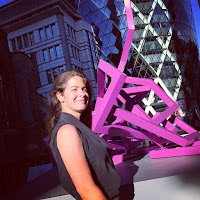
-Catherine Thomas, MD, Art Acumen (Judging Chair)
Catherine is the Managing Director of Art Acumen, specialising in curating and commissioning art collections, devising bespoke creative projects and place-making through public art programmes. For the past 16 years, Catherine has delivered visionary art strategies and inspirational art commissions for many corporate, public and private clients, building a formidable portfolio and excellent reputation.

-Miriam Spatafora, Structural Engineer, Waterman Group
Miriam grew up with a strong love of Literature and Arts, surprising everyone when she chose to pursue a career in engineering. With a strong eye for detail, she has notably worked as an engineer on the Royal Academy of Dance development. She has a huge appreciation and respect for the visual arts. Miriam loves photography and enjoys capturing a range of shots with her both analogic and digital camera, exploring the contrast between film and modern techniques.

Martina Famoso, Engineer, Waterman Group
‘Martina is an engineer with a strong passion for Arts and Architecture. This passion comes from being born in Italy surrounded by its immense historical patrimony. When she is not working as an engineer, she loves to draw, paint and of course to walk around London taking pictures of the beautiful contrast between old and modern architecture.’

-Ryan Dempster, Architect, Buckley Gray Yeoman
An architect with an eye for aesthetics, Ryan is a BCO NextGen Rising Star for London and the South East. An avid photographer himself, with an impeccable eye for design, Ryan founded @storeyshots – a growing Instagram based community curated as a show and tell of architecture and inspiring advice from firms in the industry.

-Alex Upton, Architectural Photographer
Alex’s approach to architectural photography is informed and complemented by his background in studying both Fine Art (BA Fine Art First-class Honours, University of the Arts London) and Design. This not only assures his consistent attention to detail and quality but also enhances his understanding of form, space, composition and materials in relation to architecture.

-Simon Kennedy, Architectural Photographer
More than fifteen years of experimentation have informed Simon’s current photographic techniques. Simon’s photographic vision developed in a unique way – years of working as a qualified architect combined with teaching post-graduate architectural studies at The Bartlett School Of Architecture. This experience has given him a unique understanding of architecture, and a highly insightful photographic vision which continues to develop and be informed by his teaching practice at the Bartlett and by collaborations with various architects.

With bicycles exceeding the number of cars on the roads, it is no secret that Copenhagen is considered by many to be the cycling capital of the world. The city has set itself the goal of becoming carbon neutral by 2025 as well as ‘the world’s best bicycle city’.
An extensive network of bicycle lanes and bicycle highways make it easy. Copenhagen has undertaken and recently completed, several expanded bicycle lanes, many now roughly the same size as traditional car lanes. With cycle superhighways, bike-only stop lights and handy lean-rails for cyclists waiting at lights, it’s no wonder they are confident enough to start at a young age, cycling to school with their parents and continuing into their working lives. In fact, half of all Danes commute to work by bicycle.
Even though it might be overwhelming for first-time visitors, there are plenty of reasons to try it out. Apart from the obvious being cheaper, healthier and greener, rental bicycles are not hard to find around Copenhagen, and most hotels will have them available for rent. Most of the city is relatively flat, and you may stumble across hidden gems normally harder to reach by foot or public transport.

But why is it the first choice of transportation? It is down to mindset. It is down to the mentality that comes from city initiatives with a focus on wellness, making cycling cool, ultramodern, and a symbol of personal energy.
If you happen to find the time amidst the busy BCO Annual Conference programme this year (or perhaps you are staying on longer) try the famous Danish ‘cargo bikes’ which allow you to cycle with your luggage, shopping or even a fellow conference delegate. If that’s not on the cards, perhaps you will get to enjoy the 2-hour T8/25 Copenhagen Harbour Cycling Tour providing a deeper look at Copenhagen’s Harbour and its stunning transformation over the past 25 years.
Gothenburg to Copenhagen
For the 2019 Conference, the BCO’s SOLD OUT Annual Cycle Challenge will focus entirely on Scandinavia, with a route from Gothenburg to Copenhagen. The ride will cover approximately 300 miles over 3 days. All riders are encouraged to raise £500 sponsorship for the conference charity Mind. Show your support and donate via the Justgiving page.
If you were lucky enough to secure a spot on the BCO Cycle Challenge, we would love to hear about your experience. Tweet or mention us on Instagram @bco_uk and tell us about your cycling experience using #bcoconference #copenhagen2019.
For more info or to book places at the 2019 BCO Annual Conference in Copenhagen visit http://www.bco.org.uk/Conference/Conference.aspx


Wates Construction recently welcomed the BCO to view construction progress at 3 Glass Wharf in Bristol, soon to be home to HMRC. Here, Alec Jackman discusses the important role commercial developments are playing in today’s uncertain economic climate…
“At a time of uncertainty for the UK, as our impending exit from the European Union looms, there is understandable concern of what the future may hold for Britain’s economy. However, as negotiations with Brussels continue, the construction industry is weathering the storm with output rising every month since April*. The overall rate of expansion in UK construction in October proved to be the second largest in 16 months and this was thanks in no small part to growth in commercial construction activity.
“Within my region, Bristol is a perfect example of how bold and forward thinking commercial developments are able to provide a city with a real economic boost. Indeed, as the city increasingly competes with larger cities such as Manchester and Birmingham for investment, demand is starting to outstrip supply, with property agents now warning of a shortage of Cat A and Cat B fit outs for expanding professional services firms.
“This fantastic city is already home to some major global players and the calibre of their office spaces should and does reflect this. This can also be seen in our continuing presence at Salmon Harvester Properties’ Glass Wharf development at the city’s Temple Quarter Enterprise Zone.
“We handed over 2 Glass Wharf in 2016 and it is now home to PwC, Grant Thornton, Foot Anstey LLP and Arcadis Group. Fast forward to 2018 and construction is nearing completion at 3 Glass Wharf which is seeing us build 15,000 sq m. of Cat A office space to be occupied by HM Revenue & Customs (HMRC) as part of its regional centres programme. This HMRC modernisation plan alone is yielding significant economic boosts for the regions in which new centres like this are based, providing high quality, skilled jobs in modern, cost-effective buildings.
“Programme certainty and quality are always critical within office developments and particularly here where HMRC has a strict timetable in which to achieve its comprehensive UK wide estates transformation. So our work is continuing apace and we recently hosted a visit from the BCO to share best practice about our experiences and achievements at this prime Bristol office development.
“These include our efforts to be a force for good and investing a targeted £24,000 into social enterprises as part of our project supply chain. We have also appointed subcontractors from within a 30-mile radius of the site.
“Most recently, our presence in the area has resulted in the renovation and fit out of a 19th century classroom at Hannah Moore Primary School nearby. Thanks to a £10,000 Wates Giving grant, this has been transformed into a ‘Nurture Room’ to provide emotional, social and behavioural support to the school’s pupils.
“While the impact of Brexit remains unknown, construction firms like us at Wates need to continue working closely with the BCO as well as developers and investors in order to continue creating dynamic office buildings that will entice major players from the public and the private sector to new sites throughout the country. This is proving to be the key to economic stability in an uncertain time.”
Alec Jackman is Business Unit Director for Wates Construction in the Southern Home Counties.
*IHS Markit/CIPS UK Construction Purchasing Managers’ Index
Follow @WatesGroup on Twitter.
Stay up to date with upcoming #BCOevents and news on @BCO_UK.

Every year the country’s top designers, developers, architects and occupiers under the age of 35 celebrate the achievements and successes of young professionals in the commercial property sector and their mentors at the BCO NextGen Awards.
The Awards are part of the BCO’s NextGen programme, which sets out to mentor and encourage the next generation of professionals to become future leaders in the industry, whilst providing a platform for new talent to share ideas. NextGen members also vote for the office environments and buildings that have most inspired them. The BCO NextGen awards are judged by BCO NextGen committee members and winners from across the country will be announced at the awards evening on 1 November 2018.
Last year saw a hugely successful awards night held at U+I in London to celebrate a brilliant 2017 in commercial real estate. After an equally exciting 2018, with so many brilliant achievements racked up by rising stars across the country, competition will be fierce for the awards on offer as we recognise the accomplishments of bright young talent nationally.
This year we hope to make it the biggest one yet and this will be at an even bigger venue (‘etc venues 155 Bishopsgate’) with Multiplex as the headline sponsors. The event will be hosted by Lucy Porter.
BCO President, Katrina Kostic Samen said:
“As part of my legacy it is very important to me to focus on the NextGens. They are our future and hopefully as an industry we will encourage attendance at key networking events throughout the year. It is encouraging to see such support from sponsors, the membership, mentors and senior people in the industry who give up their time in their busy schedules”.
Chairman of the BCO NextGen London Committee, Carl Giles said:
“NextGen membership provides an opportunity for younger people to develop knowledge and assist with building a network. It has gone from strength to strength and doubled over the last two years. We want to continue that growth and invite more young, ambitious, future leaders in the industry who want to learn about challenges outside of their day job. NextGen members want to do more than just their day job. They want to create change and challenge the status quo.”

With around 350 industry professionals expected to attend this hugely popular event, those wanting further information or to book their tables/places should book online. There are a few spaces left. Alternatively contact events@bco.org.uk for any queries.
Learn more about the industry wide programme highlighting the achievements of young professionals in the commercial property sector.
View this year’s nominees.
View the list of sponsors.

Sponsored by: Nucom
Click here to learn more about Nucom and other BCO Awards sponsors.

1) What is your name and what do you do?
Hello, I’m Cristiano and I’m a director in the interiors group at TP Bennett. I lead a team of talented colleagues focusing on all the strategic, creative and technical aspects of workplace projects, from the early feasibility stages to the last inspections on site, and everything in between. Together we work on a number of projects, for prestigious clients in various sectors including tech, legal, financial, and professional services, both in the UK and abroad.
2) What experiences led you to the role of BCO Awards judge? (and/or chairman)
I joined the BCO as a NextGen member, very soon after starting my career over a decade ago. I was fortunate to become involved in the NextGen Committee in London and the South East when it was a new initiative, and I helped the NextGen group grow to its current membership of over 600, including with my stint as Chair. The Awards organisers felt I could bring a NextGen angle, as well as an interiors viewpoint and experience of the booming tech sector.
3) What do you most look forward to when judging?
The obvious answer is that as a BCO Awards judge you get to see the best buildings and fit-outs in the country. This is a privilege that few people in our industry have access to, and is also a great learning experience as it shows how everyone works differently. Some submissions can really surprise you with their innovative responses to the challenges of the location, the brief, and the budget and programme.

4) What tends to excite you, initially, about submissions you really like?
This might sound superficial but the very first thing that excites me is the quality of the submission document itself! Perhaps it’s because I’m a designer, but I really appreciate it when teams take the time to prepare a well-designed submission with eloquent and concise writing, powerful graphic design, and strong photography. Not only does it provoke a far more engaged response from the judges, but it also shows that the team really cares about their project. Obviously, you can’t judge a book by its cover, and this is why it’s essential to visit the sites and see the projects in person – but a good submission is the best possible start.
5) What do you see as a key benefit of entering the awards?
Prestige and recognition are obvious benefits, for the professional team but also the client. But there is a also a less obvious, ‘lateral’ benefit to the whole process. A BCO award judges excellence across all aspects of creating a workplace, and bearing the criteria of the awards in mind right through the project is an excellent compass to guide teams. In short, everyone should approach every project as a potential BCO award winner – it’s a great incentive.
6) What have you learned from judging the BCO awards entries?
Three things stand out. First, that we are very fortunate to work in an extremely talented industry where the competition is impressive, and there is no room for complacency, half-baked solutions, or just following the status quo. Second, that everyone works differently – some projects in particular amazed me with their innovative ideas, often very simple but incredibly effective. Third, it really opens your eyes to the judging process and shows that an award winning project needs to consider every possible angle.


7) Have there been any trends?
Seeing the various shortlisted projects really reinforced the trend that we’re seeing consistently across the industry – that workplaces are no longer just ‘a place to go and work’ but they are hubs for communities of people, they are talent-attractors and talent-retainers, they are flagships and sources of great pride for the businesses that work there, and they don’t have to be ‘boring offices’ – they can be great fun.
8) What have you been most impressed with?
As someone who lives and works in London it’s easy to get sucked into the buzz and hype that exists in and around our capital. But the incredibly high standard of quality in all the regional entries shows that our industry is a very level and competitive playing field across the country. I saw some of the most innovative, forward thinking and creative solutions in submissions outside of London – which is doubly impressive as very often these projects don’t have the budgets available within the M25.
9) As a judge, what are your hopes for the judging process next year? In other words, as a judge what would you like to tell applicants and potential awards applicants about the rigor of the process?
I would say that everyone should aim to make every project the best it can be – start by thinking ‘this project will win a BCO award when it’s complete’ and hold that thought throughout. It is only with this unwavering commitment to excellence that projects can qualify – the competition is fierce and the process is highly rigorous – but having seen the quality of this year’s submissions, I am immensely proud of our industry and I have no doubt that next year us judges will all be ‘wowed’ again!

Sponsored by: Sharkey.
Learn more about these five finalists in the Projects up to 1500m2 category here:

Sponsored by: Luxonic
Learn more about these five finalists in the Refurbished / Recycled category here:

 August 28, 2026
  By BCO Media