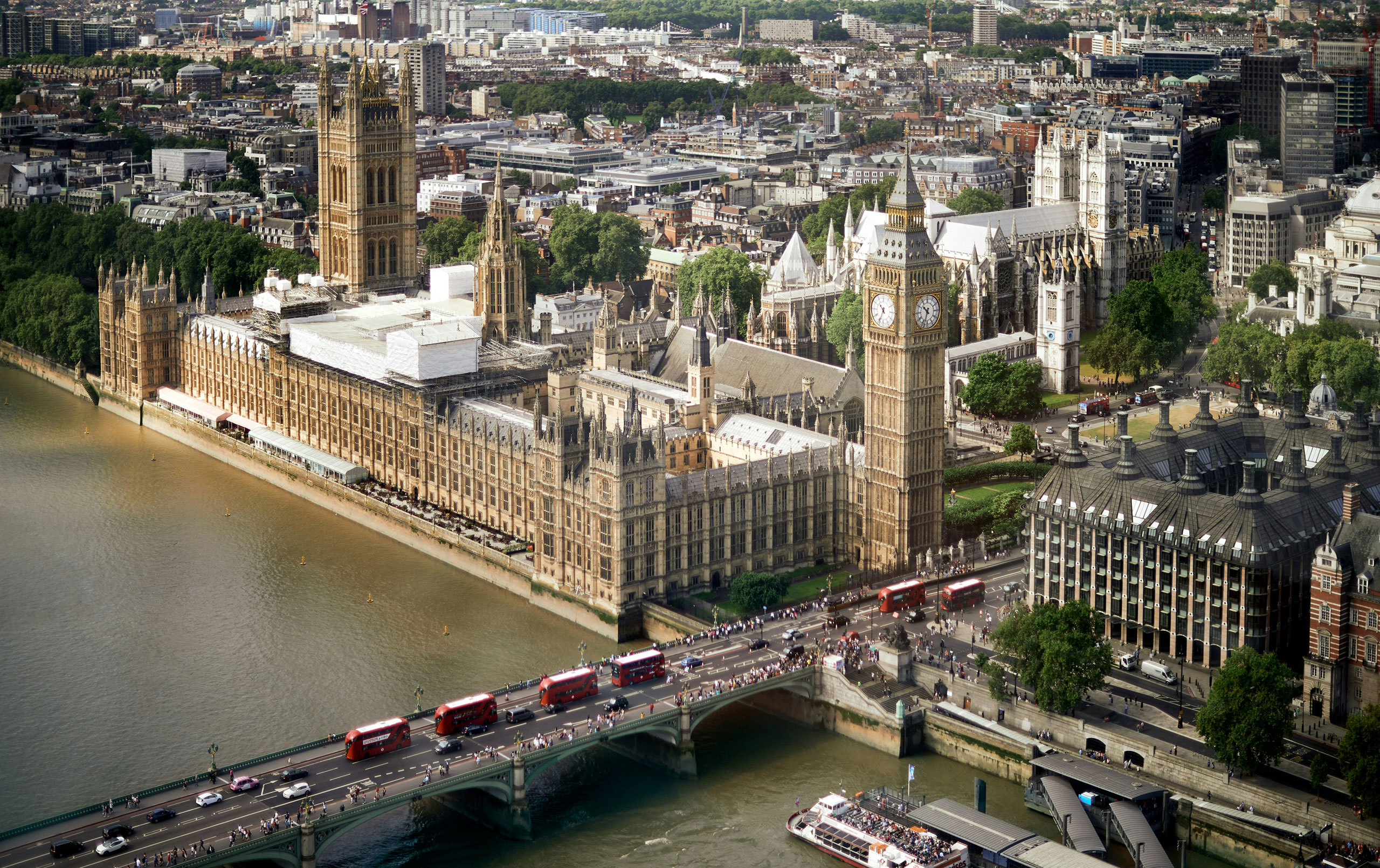
Good growth in every postcode. It’s a great line, and one I know the office sector would happily sign up to. So forgive me for being slightly baffled by reports that the chancellor is eyeing a £1bn business rates raid on commercial buildings valued at more than £500,000.
Such a move would impact around 9,000 properties across London and the South East, with the City and Canary Wharf hit hardest.
If this plan is put forward in next week’s Budget it would deliver the opposite of growth, making viability in London, which already sits on a knife edge, almost impossible.
London is crying out for good-quality office space. Vacancy in the City and West End is below 1%, grade-A buildings took a record 93% of Central London leasing last year and the shortage of best-in-class space is expected to run into the next decade. Occupiers are preletting years in advance just to be sure they have somewhere to go.
Demand is not the problem. Delivery is. We have world-leading developers, designers and contractors ready to build but they are battling soaring finance and construction costs. Turner & Townsend estimates the cost of developing a new office building in London has risen by up to 40% since 2020. Just one tall building will complete in the capital this year – the slowest year since 2015 – and almost half of Central London’s 2026-30 pipeline has yet to break ground.
Larger properties are already paying a higher rates multiplier, introduced in April to fund relief for the high street, and a revaluation has pushed many office bills up on top of that. Pile another cost on to development, delivery and operation and some of those calculations simply stop working. That means fewer cranes, fewer construction jobs and less of the best-in-class workspace that London is famous for.
Offices are not a luxury to be taxed whenever the Treasury needs a quick billion. They are critical national infrastructure. They are where businesses innovate, grow and deliver for UK plc. They bring people into our towns and cities and make them the economic and social hubs they should be.
The BCO’s own research has long shown that people cost businesses many times more than their premises, and that a great workplace makes those people measurably more productive. Tax the workplace and you tax productivity.
It is important to note that this isn’t a London versus the regions thing. The companies footing this bill are national and international employers whose investment supports jobs right across the country. London competes for their headquarters with New York, Singapore and Dubai, not with Manchester. Make it dearer to be here and that investment doesn’t move north. It moves abroad.
But we cannot simply shout “no” and dangle the viability issue as our defence against a tax such as this. If we want government to treat offices as critical infrastructure, we have to prove it, with hard evidence on productivity, regeneration and the jobs and places our buildings create.
At the BCO our mission is to do this and to provide the research and guidance that enables our members to create and operate places where people, businesses and the local community thrives.
And what I’ve learnt from our members in these first 18 months as CEO is that they are just as committed to this mission.
What the London – and UK – office development market needs now is help and support to create the workspaces that will enable our country to deliver, not yet another cost making development viability even harder to achieve.
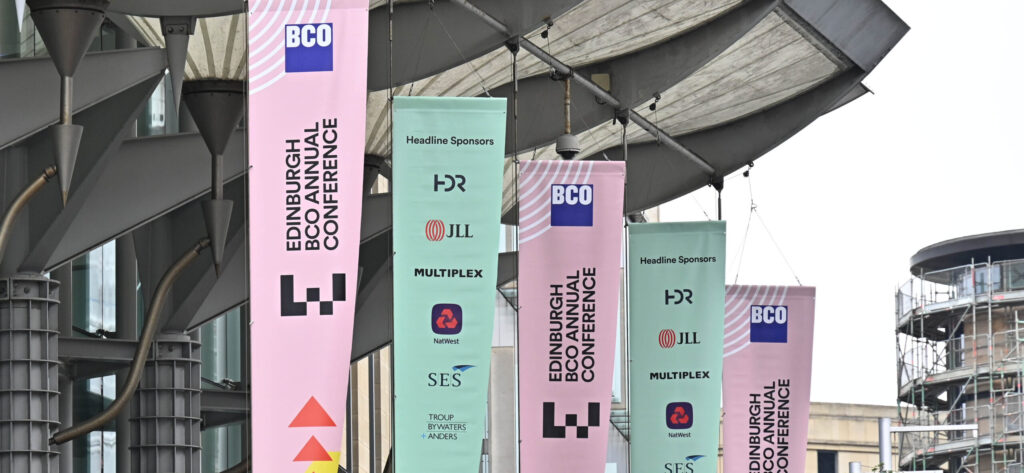
If there was one thing shone through strongly for me at our conference this year, it was that our sector – the office sector – has finally stopped talking about change as something on the horizon and started accepting that it is already here.
The Festival of Enlightenment felt to me like a line in the sand. Not because everything suddenly became certain but because the conversation has matured. There was less noise, fewer gimmicks, and a far more honest interrogation of where value really sits in the workplace.
While AI, of course, formed a big part of the conversations we had across the two days of plenaries, workshops and tours, the nuance was sharper. Much of that shift can be traced back to the brilliant Gillian Docherty from the University of Strathclyde. Her contribution in the opening plenary didn’t just land, it stuck. In fact, it arguably gave this year’s conference one of its defining refrains: don’t build “creepy” buildings.
On the surface, it’s a throwaway line. In reality, it cut straight to the heart of the industry’s current dilemma. Because this isn’t about rejecting smart technology, it’s about being honest about how it’s used. Buildings become “creepy” when they collect data people don’t understand, don’t consent to, or don’t see the benefit of. And that raises a much bigger question about trust and whether this sector has really earned it.
This is where Docherty’s thinking noticeably shifted the tone of the AI conversation. Rather than asking what’s possible, she reframed it around what’s appropriate. And that feels like an important pivot to me.
What was equally powerful was her strong message that despite all the talk of automation, data and intelligence, AI won’t mean the death of the office. What it will mean is the death of the mediocre office.
This is an important message for us at the BCO to hear too. Our mission is to enable excellence in offices. Our job is to provide the guidance, intelligence and connections to enable that to happen.
Docherty also pushed the conversation beyond the usual workplace narrative. AI, as she framed it, isn’t just a software story, it’s an infrastructure and energy story. Grid capacity, power generation, digital capability… these are no longer peripheral considerations; they are fast becoming central to real estate value. Which, in turn, ties the future of offices even more closely to the future of cities.
Economic and development realities were also front-of-mind, with Sir John Curtis bluntly telling the audience not to expect any sort of stability any time soon. Geopolitical stability, economic stability is not around the corner. The only thing we can be sure of is uncertainty.
But oddly, the hard to hear message didn’t pull the audience down. It pulled them together. Rising costs, ESG requirements, and changing leasing models are forcing greater collaboration between landlords and occupiers. Both up on stage, in the examples of best practice we saw on tours, and in the conversation around the EICC, it was evident there was a clear shift toward more flexible, partnership-based relationships and toward circular, locally responsive development approaches.
City dynamics were another important thread at this year’s conference, with discussions highlighting that urban centres remain engines of economic growth and opportunity, particularly when supported by strong infrastructure and investment. The conference reinforced that the success of offices is increasingly tied to the vitality of the cities they inhabit. And vice versa.
For me, one of the most uplifting – and exciting – themes throughout the conference was the move to more human-centric workspaces. Excellence in workspace doesn’t just come from brilliant design and development, it comes through operation, thought and purpose.
With the now, quite frankly, boring RTO debate largely over, the conversation has turned from not how to get people back to the office, but how to design, develop and operate spaces that people actively choose to use. Spaces that offer something richer, healthier, happier and more human than the alternative.
Which brings us to another favourite theme, the importance of experience, a word that potentially risks being overused, but here felt more grounded. Why? Because the conversation has moved on from features and an amenity arms race to the fundamentals – light, air, comfort, inclusivity, choice. The basics, done properly and thoughtfully.
Underpinning all of that is trust – that don’t build scary buildings point Docherty was making. If people don’t understand or believe in how a building works, the experience breaks down, however advanced the technology.
One of the most quietly powerful counterpoints to the AI discussion right at the top of the conference came through the intergenerational closing session, led by author of Five Generations at Work, Rebecca Robbins. If Docherty challenged how we think about technology, Robbins challenged how we think about people.
The session surfaced a simple but often overlooked truth: there is no single “user”. Different generations have different expectations, behaviours and motivations and much of the friction we see in the workplace comes from assumptions made without evidence.
What was interesting is how closely these two threads align. Both point to the same conclusion: the industry has spent too long designing for an average that doesn’t exist. Whether it’s over-engineered tech or one-size-fits-all workplaces, the risk is the same -irrelevance and, ultimately, obsolescence. The opportunity lies in being able to design, develop and operate with far greater intentionality, whether that’s around data use or human diversity.
Perhaps the most encouraging aspect of this year’s conference, though, was the tone. There was a willingness to challenge assumptions, to admit what isn’t working, and to listen to different perspectives, whether that’s younger voices in the room or different generational experiences of work. It felt more open, more honest, and ultimately more useful.
So where does all that leave us?
It leaves us with a sector that is no longer defining success purely in terms of assets and outputs, but in terms of outcomes and impact. The office is evolving into something more fluid – a platform for connection, for creativity, for community.
And I don’t know about you, but I’m all for that.
Make sure you’re kept up to date on BCO news and events by signing up to event and monthly newsletter emails. Emails direct to your inbox will ensure you receive opportunities to attend our events before they sell out. You can also opt-in to receive postal mailings from the BCO, including special event booking forms