BCO Conference Archives - BCO - British Council for Offices BCO Conference Archives - BCO - British Council for Offices

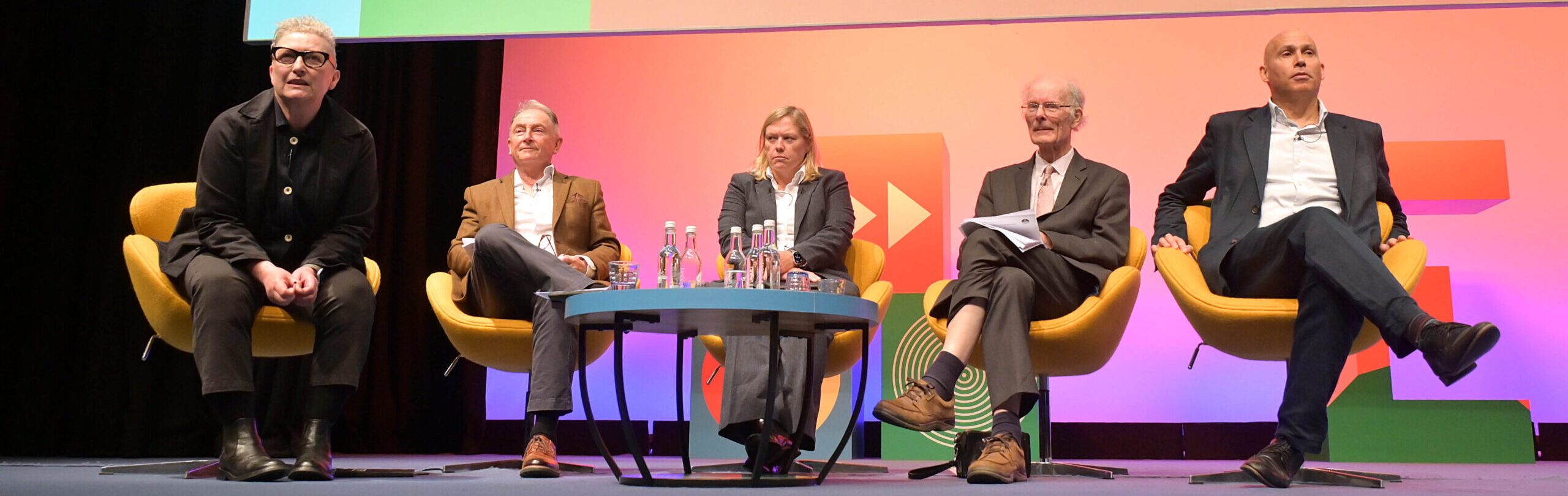
BCO Conference 2026 insights: “I can’t believe we are still talking about the Covid effect all these years on,” said Ashleigh Corbett, head of flex for Scotland at CBRE, as the almost-opening gambit in a session about operational excellence.

She cast minds and memories back to the spring and summer of 2020 when flex enquiries “went up 150% overnight” as corporate occupiers started to realise it would be much easier to thrive in the post-pandemic office market with some sort of flexible workspace offer.

They were right. A prolonged period of near-universal working from home, followed by a somewhat messy navigation of hybrid working, saw demands change and employee preferences shift. A market once dominated by small businesses and start-ups became an integral part of the office landscape at breakneck speed.

Workspaces that work

Nearly seven years on, the question is less about why flex went mainstream and more about what landlords, occupiers and end users now expect from it and what that teaches us about delivering workspaces that work.

“We have to remember that the customer and the consumer aren’t always the same,” said Chris Moriarty, co-founder and director of workplace analytics software company Audiem. “A customer might care deeply about how flexible a workspace is, while the consumer might care more about getting a desk, having access to something decent to eat, clean toilets and whether the building actually works.”

The key to success, then, is making sure everyone gets what they want out of the deal. That means delivering excellence at every stage – in design, in development and in operation.

Flexibility needs to be at the heart of these spaces by default. The amenities and overarching functionality of the building can’t fall by the wayside because while it might be the elastic contract terms that draw in the customer, it is the amenities and design that are more likely to resonate with the people using it day to day.

Design-driven amenities

“These need to be customer-focused, hospitality-led, amenity-rich workplaces,” said CBRE’s Corbett. “It needs to feel more like home. Is it a gimmick to have GHD hair straighteners? Well, we are all heading out later and I’ll be going to freshen up at a serviced office because I know they have the good mirrors, the good showers and, yes, the good straighteners.”

“Design drives good amenity,” countered Ruairi Dempsey, electrical area business class lead at HDR. “As for the overarching success of these spaces, that’s simple: they must serve a purpose and, to be effective, we have to know how they are used.”

“People have to enjoy a space the first time they walk in,” said Stefano Faiella, director at Threesixty Architecture. “That’s how you get them to come back. Challenge number one is creating an emotional connection. That’s doesn’t need to be anything particularly complicated.

 “If someone can visit on a really bad day in the pouring rain and battering wind and still want to come back, that’s usually because there is something magical about the space; anything from the design to the location.”

And it is that, said our experts, that will determine whether a space succeeds. Everything else, from the hair straighteners to the location, feeds into that deciding factor.

Ultimately, they will come if design, development and operation deliver not just what the consumer wants, but what they need – with flexibility.

Words by Emily Wright
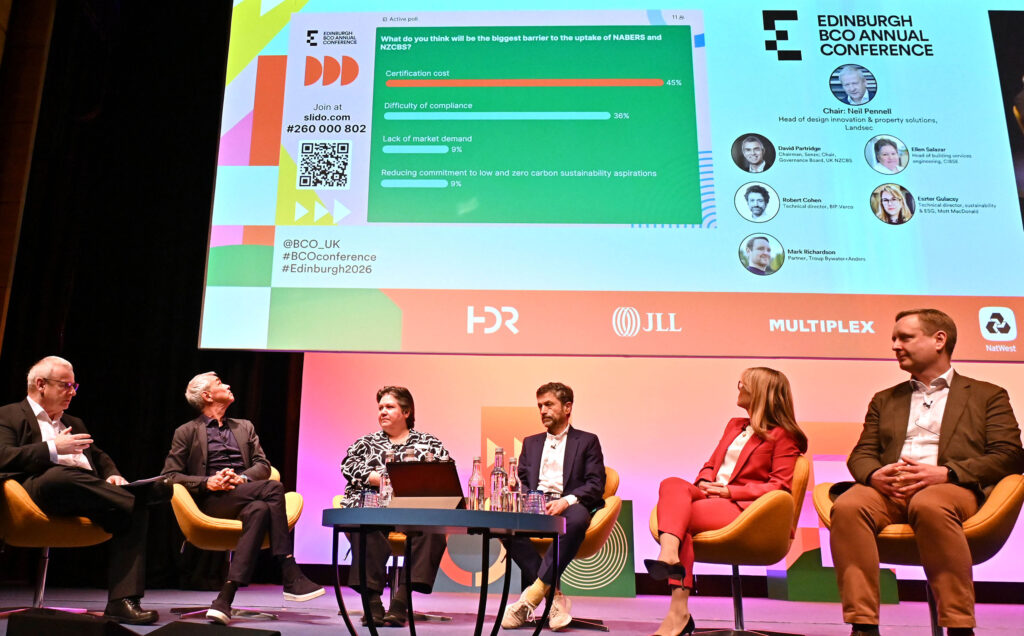
BCO Conference 2026 insights: The journey to net zero carbon buildings is paved with acronyms. It can be confusing, overwhelming and off-putting.

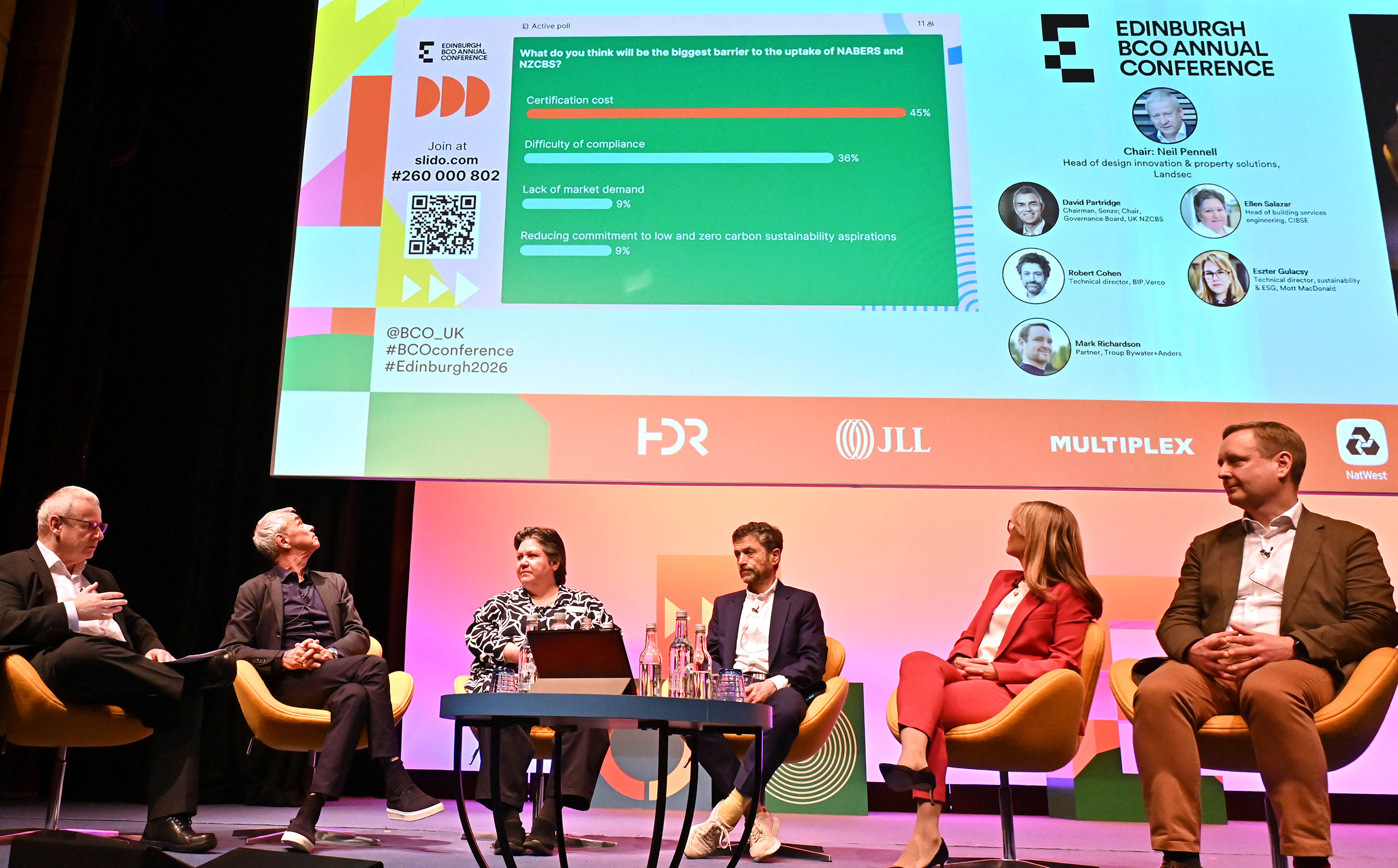
In an ideal world, realising ambitions to protect the future of our planet would be as simple as possible. In reality, standardisation and regulation play a critical role in ensuring the long-term decarbonisation of the built environment. The trick is knowing how cut through the noise.

That’s where NABERS UK comes in. A rating system that is more straightforward than its abbreviation suggests, what does it measure and why does it matter?

The UK version of the National Australian Built Environment Rating System was officially launched in November 2020 and measures a building’s energy use in real time. That’s the USP. Where so many certifications and standards are assessed and evaluated largely based on design or specification, this one gauges the performance of an active, occupied building over a series of months. And you don’t get a much more accurate picture of a property’s energy use and output than that.

“NABERS doesn’t just give a snapshot of a building’s performance at the point of design”, explained Ellen Salazar, head of building services engineering at CIBSE. “It gives ongoing operational verification using 12 months of energy data.”

Recognised partnership

But how do we make NABERS and the new Net Zero Carbon Building Standard good friends?

Well, they already are, said David Partridge, chair of the UK NZCBS governance board.

NABERS results are audited and buildings are given a star rating. If a new building achieves a 5* rating or an existing building hits a 4.5* rating, it is automatically deemed to have satisfied the operational energy requirements of the new UK NZCBS.

One standard defines the ambition; the other indicates when and whether that ambition has been achieved.

The two standards are “joined at the hip”, said Partridge. And because a NABERS rating is independently verified over a 12-18-month period by accredited assessors, it’s a partnership that gives developers and owners a recognised, respected route to demonstrating operational net zero.

“It begins with an initial design review based on ambitions and assumptions,” said Salazar. “Then it goes into modelling, followed by a second assessment, handover and then those 12-18 months of operation monitoring, which ends in the actual performance rating.”

Vote of confidence

The commitment forces every decision, right from the early design stages, to be considered against the pursuit of a promised rating – a compelling vote of confidence for investors and occupiers alike.

And if a building doesn’t achieve its targeted NABERS rating immediately? Not a problem. In fact, this focus on the growth and evolution of a building is part and parcel of the process. Not designed as a pass-or-fail moment at practical completion, performance is expected to improve as occupation goes on and teams start to better understand a property and can more effectively fine-tune its operational performance. Data can be analysed, operational issues identified and improvements made.

“I think the net zero standard is a gift to offices,” said Partridge, referring to the fact that the industry has access to a certification that takes into consideration the complicated, ever-changing nature of an occupied building: properties where landlords control some systems and occupiers control the others; spaces where energy use shifts depending on how they are used; and where technology that promises the earth fails to live up to expectations in reality.

But what about embodied carbon? Not fixable with a BMS tweak or an adjustment of operating hours based on building use data over time, this is a much thornier issue to manage. The answer is not to make the targets easier, said Partridge, but to use them to highlight and tackle the materials and construction processes carrying the biggest carbon burden. A catalyst for innovation. Not a stick to be used to punish the industry, but an “on ramp” to help the sector collectively move in the right direction.

Words by Emily Wright


BCO Conference 2026 insights: Social value is complicated, and that’s OK. Communities are complicated too. What that means is that successful social impact can and should mean different things to different people in different places.

“The question should never be ‘what does social value mean?’,” said Kieran Ronnie, head of social value, Europe, at AECOM. “It should be ‘what does social value mean here? In this place.”

Social value can’t be reduced to a universal checklist. It can’t even be reduced to a single definition. Perhaps it doesn’t need one. Perhaps the time has come to accept the fact that social value, like the communities it serves, can be a bit confusing – even a bit messy – and that the industry should be focusing less on chasing a neat, but ultimately unhelpful and reductive, definition, and more on tangible delivery.

“You have to understand the local needs first and make sure your social value strategy responds to them first and foremost,” said Neil Onions, founding director of Beyond the Box, a social enterprise and civic engagement practice set up to help developers, local authorities and cultural organisations better involve and include communities in how built world projects and places are shaped and delivered.

“Don’t fall into the trap of building places around local communities rather than building places for them,” he said.

That means talking to those communities, of course, but also considering who you are speaking to – and who you have the most access to – before making any firm decisions.

Key considerations

“Sometimes, it’s the loudest voices that get heard,” said Nick Walker, director of built heritage and townscape at Iceni Projects. “But what about the person holding down three jobs who doesn’t have time to come to the consultations? They are probably the people who matter the most.”

It is crucial, he added, that those delivering any kind of social impact, from contractors to consultants and from architects to planners, really understand the community they are serving. And that they refrain from delivering a load of flowers beds: “Local communities don’t want those,” he said.

While it may have been a flippant remark, the comment holds a lot of truth and value as part of wider discussion around delivering meaningful social value.

People don’t want tokens. They want real impact.

“Social value is about leaving a legacy,” said Callum Scott, ESG lead at Multiplex. “As a main contractor, this is so important. We want to change people’s lives.”

That legacy can take many forms, from bringing more jobs to a local area to improving accessibility or designing and delivering places that work for and support different generations and genders.

The earlier the better

While outcomes vary, there was one point on which there was unanimous agreement: successful social value starts early. Last-minute add-ons are far less likely to create long-lasting benefits.

“When we consider social impact, people often jump to things like local activities and career days,” said Onions. “If you want a real impact, you have to think about it at the start of the process, decide what you are committing to and make sure there is accountability from whoever is procuring what you are going to deliver.”

For Simon Bone, principal at Perkins & Will, this means things like accessibility and new community spaces have to be included at the very early stages of a project.

“These are aspirations that need to be actively transformed into a strategy, embedded into a plan and measured to help us understand how successful they have been,” he said. “We should be asking who is using the spaces we have delivered? How have they made them feel? What has the feedback been? That’s all key information.”

Measuring the impact of social value can be as confusing as the concept itself, but in an ocean of metrics there is one thing that tells us more about how well a place or space is serving the people around it than anything else – how the local community responds.

“Successful social impact is viscerally felt by the local community,” said Onions. “And that is the only measurement that matters.”

Words by Emily Wright


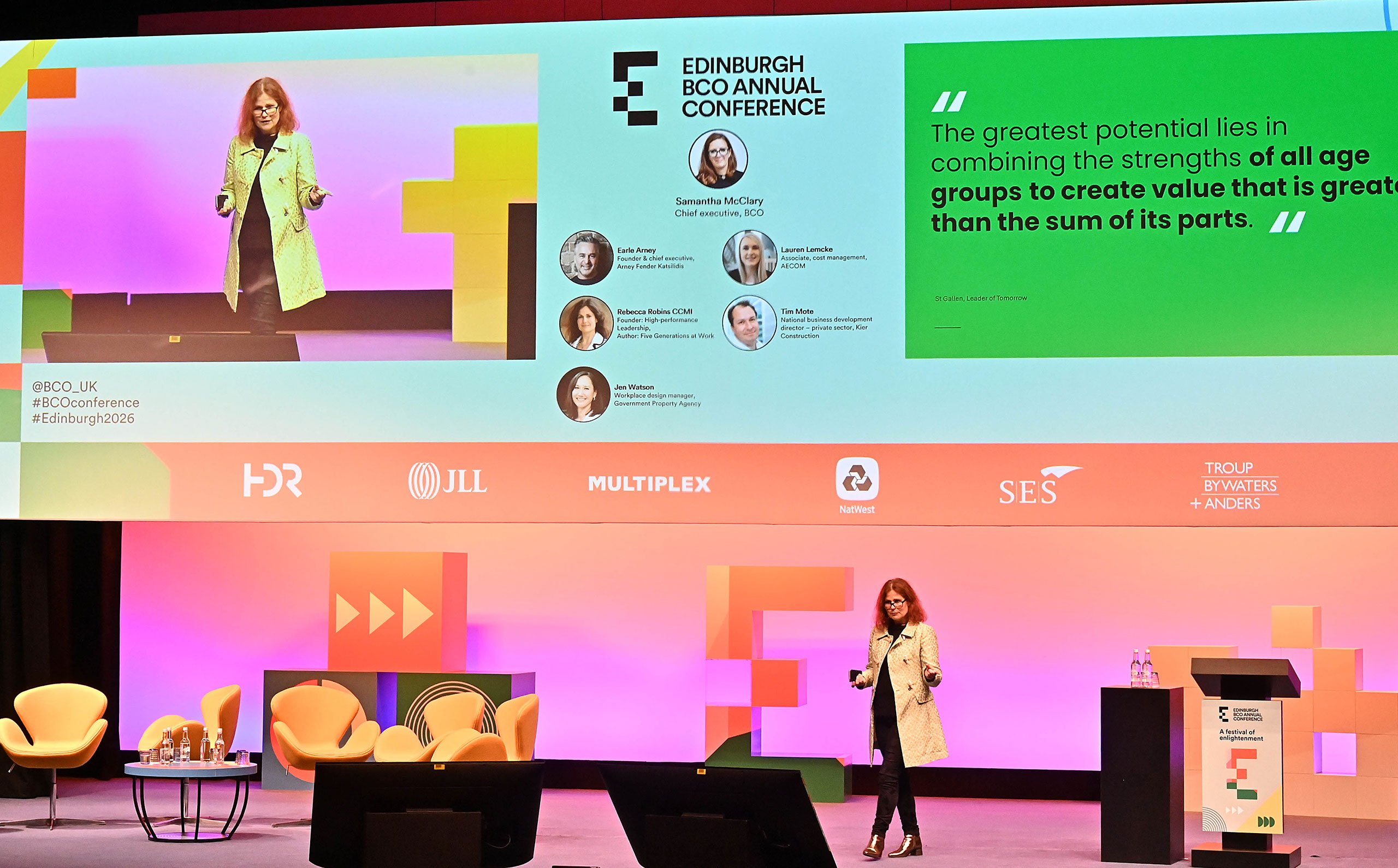
BCO Conference 2026 insights: When the first significant wave of Gen Z employees entered full-time employment in the early 2020s, their arrival signalled the emergence of the five-generation workforce.

The youngest cohort – born between the late 1990s and the early 2010s – joined the ranks of the working population at a time when some Silent Generation employees – those born up until the mid-1940s – were extending their careers beyond traditional retirement age. As a result, five generations are now working alongside each other, creating one of the most significant demographic shifts in modern employment.

This raises an important question for our industry: Are today’s offices equipped to support a labour force spanning seven decades?

Not really, said Rebecca Robins, author of Five Generations at Work.

“We are missing out here,” she warned. “While 81% of employers agree that a multigenerational workforce is key to growth and success, less than 10% have the policies and programmes in place to support it.”

And it’s not just office employees spanning so many generations. It’s the entire world of work.

“We have five generations of customers and stakeholders too,” said Robins.

“The future of successful companies rests on understanding this shift. Embracing it, or not, could dictate whether you are still in business 10 or 15 years from now. So how do we unlock all of that potential?”

Intergenerational conflict

In short, we need to move beyond intergenerational conflict at work, which requires a fundamental culture shift towards intentional inclusivity and a complete eradication of age-related stereotypes. To do that we need employees of all ages to understand why there are different approaches to work across the generational divides.

It’s all about context, said Robins. And appreciating this, above all else, is the key to reducing conflict.

“We all need to understand why different motivations at work exist,” she said. “If you are starting your career now, for example, and you know we have an ageing population and that most of us will live longer than previous generations, you may not want to work for a law firm the way people did previously. You might decide that spending 90% of your week at the office is not for you, and for good reason.”

Decisions like this should be accepted as indicators of evolving social norms, not weaponised to fuel stereotypes, Robins added.

In many ways, office design has kept up with the changing nature of age-based employment much more effectively than attitudes. Kier’s director of business development, Tim Mote, pointed out how the cellular offices and the closed-door policies that traditionally kept senior – and often older – directors separate from everyone else have seen a sharp decline.

But there is still a long way to go when it comes to creating physical spaces that better support a multigenerational workforce. And not everyone is aligned on how best that can be achieved.

Jen Watson, design manager for the London estate and Whitehall campus at the Government Property Agency, strongly advocates the power of collaborative space to bring workforces together for cross-generational discussion, conversation and harmony.

“Designing for all generations means creating and protecting those [collaborative] spaces,” she said.

Earle Arney, founder and chief executive of AFK Studios, was less convinced, however, and argued that promoting and protecting collaborative spaces at the cost of different sorts of work environments was a mistake.

“Work requires us to complete a multitude of tasks, some of which are quiet and focused,” he said. “Designing an office for one task for the entire day is absolutely crazy. This is as much a diversity issue as it is a generational issue. The way people think and communicate is vastly different, not just because of their age but because of who they are as people.”

Creating harmony

He added that another potential driver of harmony across the five-generation workforce could come, somewhat ironically, from what he referred to as the sixth generation: AI.

“If we consider AI as part of this discussion, then there are actually six generations in the workforce. Technology and the way we are using AI is really democratising access to knowledge, which will radically transform the traditional structures of the workplace.”

This could be a game changer in terms of levelling the playing field and minimising conflict across workforces, said Arney.

Just don’t use it to ask for an overview of each generation, said Lauren Lemcke, an associate at AECOM and the most recent winner of the BCO NextGen Ideas competition.

From Gen X – “independent cynics who just want to be left alone” – to Millennials – “entitled job-hoppers who expect rapid promotion and constant praise” and Gen Z – “always on their phones, don’t really want to work but expect to be the CEO by 30”, the portrayals were far from flattering.

It was an amusing exercise that revealed a real problem, said Lemcke.

“I didn’t ask for a negative description. But AI has automatically given me one,” she said, adding that this said a lot about how we tend to speak about and perceive generations.

After asking the same question but clarifying the answers should be positive, things looked and sounded very different. Gen X became “independent, pragmatic, adaptable problem-solvers”. Millennials were described as “collaborative and purpose-driven” and Gen Z was upgraded to “digitally fluent, entrepreneurial and challenging the status quo”.

Ultimately, it’s all about perspective and appreciating that a successful multigenerational workplace is not one where everyone works in the same way, but where different experiences and approaches are recognised as strengths.

Not just five generations at work, but five generations that work.

Words by Emily Wright


BCO Conference 2026 insights: Not every building needs to be a monument. Churches, yes. Schools and universities, sometimes. But offices? Offices just need to serve a purpose. A successful workplace is one filled with productive people who are happy to be there. Everything else is just detail.

“How well an office supports human interaction should be the measure of its success,” said Bennetts Associates’ James Nelmes. “We should not be judging these buildings on aesthetics first and foremost.”

“If we all agree with the sentiment that success stems from the quality of life these buildings enable rather than the object itself, why do we put so much emphasis on photography alone? Imagery can’t accurately tell us how well a building actually performs,” added Peter Kerr of Cameron Kerr.

Egotistical architecture

This, he said, is the epitome of egotistical architecture. When workspaces are designed to look good rather than feel human-centred, function often fails to follow form.

Ironically, this image-driven culture that has shaped modern architectural critique is now creating demand for exactly the opposite, however. Buildings are gradually being valued less for how they photograph and more for how they perform in reality.

“Our whole culture is becoming more superficial,” said Andrew Leiper of engineering firm Max Fordham, added that there was a growing need for recognition, celebration and validation.

But in this time of digital overload, Fordham says people are looking for spaces that help them feel connected. And the trick to designing them successfully? Check the ego at the door and focus on the end-user, rather than awards, accolades or certifications.

Certification overload?

“Is certification really that important?” queried David McGowan, director of architectural practice Corstorphine & Wright. “Who does it really serve?”

It is an often asked question that no-one can really answer. Blame for pushing certification is more easily laid at almost everyone’s doorstep, however.

Could there come a point when commercial office space no longer needs an ever-growing collection of badges to attract tenants? Perhaps. But only if everyone values buildings in the same way.

“If agents thought more about the tenants, rather than needing a stream of accreditations to make it easier to benchmark a building, that would really help,” said Kerr.

That’s not to say modern office buildings shouldn’t aspire to high standards. Sustainability, inclusivity and accessibility are fundamental to workplaces where people feel safe, comfortable and welcome.

Accessibility is fundamental

Indeed, when questions were raised about accessibility for wheelchair users and others with different needs, the answer was unanimous: the industry still has a long way to go.

Many buildings, said one audience member, have become victims of narcissistic one-upmanship as developers and architects pursue statement projects that may achieve cultural status, but won’t always serve the people who use them every day.

So how can the ordinary, but not mediocre, office building deliver the kind of authentic, human-centred design that so many occupiers are looking for?

“The vast majority of the buildings we spend our lives in are the background to our cities rather than statements,” said Nelmes.

“The challenge comes when everybody wants to stand out. What we actually need are wonderful containers and that doesn’t mean they have to be bland, just easily adapted.”

Words by Emily Wright

BCO Conference 2026 insights: With tenant experience driving occupier demand more than ever , the right facilities can make or break a building’s leasing success.

But what happens when those added extras aren’t financially viable? Can today’s office buildings command competitive rents without offering everything, including the kitchen sink?

There is little to no budget for “bells and whistles” in the regions where prime rents hover at around £50 per sq ft, said Make Architects founder Ken Shuttleworth.

“Rental values in London are four times what they are in the regions,” said Shuttleworth. “Outside the capital you have to cut your cloth and keep things simple. It’s great to have terraces in London, but further afield they add cost without necessarily adding value.”

A question of viability

Paul Curran, chief executive of Edinburgh-based Qmile Group, said the the list of challenges for regional developers around commercial viability is extensive.

“We are dealing with build costs, inflation on build costs, significant interest rates increases, issues around holding costs, prolonged planning processes, funding difficulties, valuations on buildings making them unviable despite rents increasing,” he said. “And, of course, the additional challenge of getting occupiers to commit to space.”

While rents may be higher, viability remains a much of an issue in the capital, added Helen Hare, director of projects at GPE.

“Wouldn’t it be fantastic if London’s higher rents offset increased construction costs?” she said. “Unfortunately, it is not as simple as that. Everything is relative and we have much higher land values in London and around a 50% cost increase.”

That said, when it comes to attracting occupiers, many of London’s office buildings – particularly ground-up developments – do have an elevated amenity offer on their side.

But while occupiers are irrefutably on the hunt for workspaces they can leverage as branding statements and recruitment tools, the scaled back approach to office design required for viability in the regions is not necessarily a bad thing.

Simple isn’t boring

“Everyone looks to London when it comes to office development,” said Shuttleworth, “but some of it has got a bit over the top. It’s become about who can provide the most stuff. When things are pared back, people use the environment around them; the local coffee shops and bakeries, the sandwich shop on the corner. Otherwise, you can quickly create a fortress that no one ever leaves.”

And simple buildings don’t equate to boring ones. Brand identity is a powerful tool, said Shuttleworth, adding that all of Make’s commercial office designs in the regions are fully let, not because of a raft of amenities, but because people like the feel of the building itself.

“The buildings we’ve done outside London are simple, super-efficient and have very strong identities,” he said. “One has a garden outside, one has cross-bracing, one has distinctive brickwork. The tenants have come because of these details; people want a building that reflects the values of their company.”

And there are ways of achieving this on a lower budget, added Shuttleworth, including working directly with suppliers.

“The quantity surveyor will tell you, straight up, you can’t afford one-off details,” he quipped to a ripple of laughter. “You sometimes have to prove them wrong by getting hold of the contractors and suppliers yourself.”

While the office amenity clearly race isn’t over, it does look to be entering a new phase where thoughtful design, strong identity and commercial realism carry more weight than a rooftop yoga studio.

And for regional developers, it seems that success may be less about trying to match the capital’s ever-expanding offer and more about proving that a well-designed building doesn’t need every bell and whistle to stand out.

Watch the session in full here:

Words by Emily Wright

BCO Conference 2026 insights: How do we build for an uncertain future? How do we create spaces for a society that doesn’t know what it will need from workplaces in a year, let alone a decade? How do we design for a revolution?

Three complex questions with one simple, and maddening, answer. We just don’t know yet. The good news, though, is that we can start to hazard a pretty good guess by following the money. All $5.2tr of it.

So said the University of Strathclyde’s Gillian Docherty as she challenged us to consider what might be the building that holds the most value in a city by 2040. Not the most expensive, not the tallest, either: the one that creates the greatest economic value.

The building that attracts the best talent and becomes the defining asset of its generation. And while we still might not know exactly what that building will be, or look like, we can be pretty certain what revolution it will be built to serve.

“McKinsey predicts that $5.2tr will be spent on AI processing infrastructure by 2030,” said Docherty. “Whenever humanity spends trillions of dollars on something, it doesn’t create a new market, it creates a new era,” she added.

Offices will need to earn their existence

“AI has changed the rules completely, not incrementally but fundamentally. It is changing everything and while most of our careers have been built on analysing what already exists, the most valuable building of the future probably hasn’t been built yet.”

Every technical revolution leaves behind a dominant building type. A manifestation of economic power. The industrial revolution created the factory, the rise of the corporation created the office tower, the internet created the data centre. And while the building that will go on to become the defining asset of the AI generation might not yet have emerged, that doesn’t mean the real estate sector can’t start to prepare for it. And that starts with asking the right questions.

Most conversations around AI still focus heavily on jobs. But while questions around whether AI will replace people and productivity and how and when it will automate work are important, Docherty argued that the real estate sector would be better served by focussing instead on how AI will change where value lives. “When value moves, capital moves,” she said. “And where capital moves, property, cities and infrastructure move.”

Offices will need to earn their existence more than ever as AI makes working from home increasingly productive, she said. If people are going to travel and spend £7 on a coffee to sit next to someone they could have called on the phone, the experience when people get there has to be worth it.

We will see a battle between destination and experience workplaces where average, forgettable space becomes increasingly vulnerable and workspaces that become less like factories and more like universities and laboratories thrive.

AI will increase the net worth of collaborative workspaces

The value propositions at universities and in education settings will also need to shift to make sure future generations are ready for this new era. “Revolutions like this essentially take a layer of white-collar occupations out of the system,” added political scientist Sir John Curtis.

“AI will place a premium on creativity. So, not only do universities and academic institutions have to embed AI into the curriculum, but they also have to emphasise the power of new thinking and the ability to be creative.”

It is this creativity, Docherty said, that best-designed workplaces of the future will foster. Far from sounding the death knell for the office, AI is likely to increase the worth of collaborative workplaces that are fit for modern purpose.

“We have spent years building technology that eliminates distance; railways, telephones, computers, the internet. Every one of them made cities stronger because technology repeatedly increases the value of human interaction. Talent attracts talent, ideas attract ideas and innovation attracts innovation. Build buildings that will help people perform better. That’s the value.”

Watch the session in full:


Words by Emily Wright

Latest news

September 21, 2026
By BCO Media

What flex taught us about operational excellence

BCO Conference 2026 insights: Making sure everyone gets what they want out of a flex deal means delivering excellence at every stage.
Read more
September 18, 2026
By BCO Media

From promise to performance: The standards changing the way we deliver net zero buildings

BCO Conference 2026 insights: The journey to net zero carbon buildings can be confusing, overwhelming and off-putting. The trick is knowing how cut through the noise.
Read more
September 17, 2026
By BCO Media

There is no social value checklist

BCO Conference 2026 insights: The true measure of a place is not its metrics, but the response of the community around it.
Read more