Over the last 30 years, expectations around office design have evolved beyond recognition, writes John Robertson, founder of John Robertson Architects.
Within an ever-competitive leasing market, amenity provision and employee wellbeing have become a key determinant in rental prices with occupier demands ranging from the quality and detail of the interiors to the extent of amenity space (such as roof top terraces and end of trip facilities). From the developer side, the raising of capital – and often planning – is predicated upon strong sustainability credentials and strict operational & embodied carbon reduction strategies.
Neither of these issues were at the forefront of the market in the early 1990s. In addition, the standards that buildings are judged against have evolved to reflect these changing expectations. However, the lifecycle of One Great St Helen’s (OGSH) indicates that the BCO Specification, first published in 1994, was not just about technical guidance; instead, it produced a market-changing framework for creating offices capable of standing the test of time.
Commissioned by Greycoat in 1995, OGSH was one of JRA’s early projects and a pioneering speculative 70,000 sq ft office scheme for London. Located away from the historic City core around Bank, OGSH dominated a townscape very different to the dense commercial district that exists today. We had a complex planning journey with the City of London Corporation due to the building’s intricate urban context, nestling between the neo-Georgian parish church of St Helen’s to the north, the winding contour of the Undershaft to the east and Crosby Square to the south – long before developments such as 30 St Mary Axe or The Leadenhall Building appeared across the Eastern Cluster.
The consented scheme was one of the first offices developed to meet the 1997 edition of the Guide to Specification and went on to receive a BCO Award for Best Commercial Office, South and South-East Region in 2000. Its recent retrofit was also a finalist in the 2026 BCO London Awards in the Recycled Workplace category.
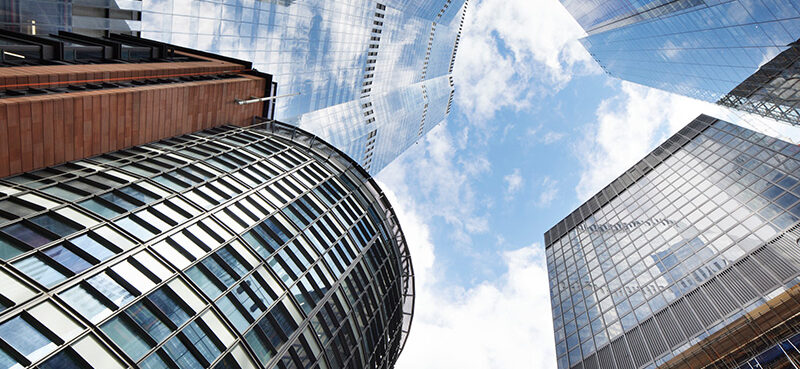
JRA’s design sought to respond sensitively to its neighbours through a distinctive curved façade and efficient floorplates which reflected the then emerging priorities of the BCO Specification. The original guidance placed significant emphasis on flexibility, natural light, servicing, circulation, and occupational efficiency – principles now taken for granted within office design, but still relatively new to speculative development at the time.
Greycoat, which was closely involved in the development of the first BCO Specification, recognised the opportunity to demonstrate how these standards could be successfully delivered within London. Importantly, OGSH was not considered a prime site, allowing us to test emerging best practice in a commercially realistic context without excessive risk.
Its leasing success was equally significant. The building was let to commercial insurer Hiscox within weeks of completion, with the insurer remaining in occupation for the next 25 years – a strong endorsement of the enduring quality of our original vision.
In 2021, JRA was reappointed by Rafer Investments to comprehensively refurbish and reposition OGSH to meet contemporary leasing, ESG and occupier requirements. By then, the surrounding context had already undergone dramatic change, with the Eastern Cluster emerging as London’s most recognisable commercial skylines and occupiers placing far greater emphasis on amenity provision and wellbeing, particularly in a post-Covid environment.
What became immediately apparent during the refurbishment process was just how well the original building had stood up against the BCO’s 2019 updated specification. Encouragingly, many of the fundamentals established nearly 30 years earlier remained entirely relevant and, as a result, the project became less about correcting obsolescence and more about giving OGSH a new lease of life.
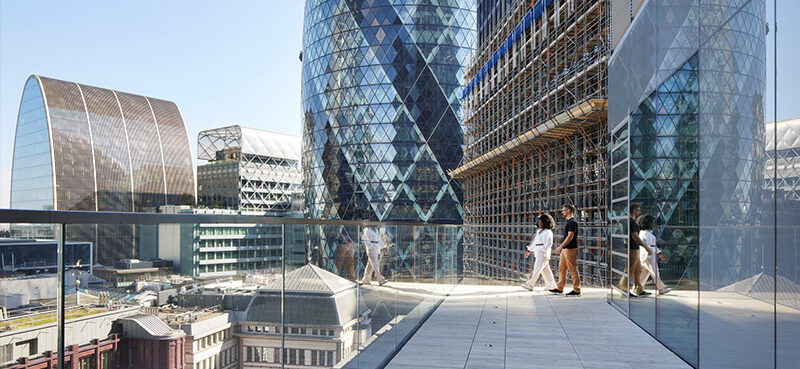
The refurbishment, completed earlier last year, introduced a new level 10 amenity floor incorporating a winter garden and roof terrace with sweeping views across some of London’s tallest buildings. At basement level, the former car park was reconfigured to provide cycling and changing facilities, reflecting changing patterns of workplace use and a greater emphasis on active travel. And at lower ground level, we have formed a new light well creating new workspace in what was previously secondary accommodation. But the core ideas of OGSH’s design – and the 1997 Specification that informed them – have remained.
OGSH shows us that offices designed and built to the highest industry standards not only have tremendous staying power but can also provide demonstrable and significant returns on initial investment.


Arup, Standard Life and Fieldfisher. Three major corporate occupiers united by a shared focus: relocation to premium office space in Birmingham city centre.
To find out more about this ‘great office migration’ and what’s behind the increasing focus on Birmingham city centre, the BCO’s Midlands committee teamed up with the West Midlands Combined Authority, West Midlands Growth Company and CBRE Investment Management. Together they held a seminar, hosted by Insider Media deputy editor Ian Griffin, at 10 Brindleyplace.
According to Theo Holmes, BCO Midlands committee member and CBRE’s head of office agency for the Midlands, this is not a new trend, but it is one that has accelerated in recent years.
The movement towards Birmingham city centre gathered pace post-Covid as the role of the office changed significantly, said Holmes. Businesses today increasingly want to locate where their customers, competitors and talent are, and the city centre provides that ecosystem.
Historically, there was a perception that graduates would leave Birmingham. Today, more and more are choosing to build their careers in the city. And with more than 200,000 students and graduates across the region’s universities, businesses are increasingly recognising that the talent they need is already here.
For Chris Lawes, sector lead of business, professional and financial services at West Midlands Growth Company, Birmingham’s appeal comes down to three factors: scale, skills and connectivity.
The West Midlands is the largest regional economy outside London, with a substantial professional and financial services workforce and a strong graduate pipeline. Businesses can also access London, Europe and international markets through Birmingham’s transport infrastructure.
Lucy Thompson, head of property and workspace at Standard Life, Ranjit Dhindsa, Birmingham office leader at Fieldfisher and Alison Kilby, associate director at Arup, all played key roles in shaping where their organisations’ new Birmingham offices would be located. All chose the city centre.
Standard Life relocated to 10 Brindleyplace from its campus-style office in Wythall, reducing its footprint by 90% to 25,000 sq ft.
The decision was not simply about reducing space. When organisations are making location decisions, access to talent is often the deciding factor and for Standard Life, attraction, retention and future skills requirements all influenced the move.
“Birmingham’s future talent pipeline is one of its biggest strengths,” said Thompson. “That’s a powerful argument when making long-term investment decisions.”
Future skills requirements are becoming increasingly important. AI, digital skills and technology capabilities are reshaping workforce needs and Birmingham is positioning itself at the centre of those growth sectors.

Fieldfisher was formerly based at Blythe Valley Park, near the M42. While geographically close to Birmingham, Dhindsa described it as a location that could feel disconnected when meeting clients and professional advisers.
The law firm recently relocated to 2 Chamberlain Square, placing it at the heart of the city’s professional services community.
While Birmingham is a global player, it also has a local feel too – the kind of place where you can see a lawyer, banker and surveyor on the same short stroll through Colmore Row. For professional services firms that proximity matters.
“We want to be close to all our intermediaries,” said Dhindsa. “We’re just following the business.”
Arup previously occupied a campus-style location in Solihull and spent around £80,000 a year transporting staff to and from the site.
“When we originally moved, we were promised transport links and infrastructure improvements that never really materialised,” said Kilby. The city centre offered significantly better accessibility.
Having made an early decision to relocate to One Centenary Way, Arup gave employees the opportunity to help shape their future workplace. What emerged was a consistent desire for better amenities, stronger connectivity, improved workplace experience and more sustainable offices.
Ultimately, Kilby said, the only place those ambitions could realistically be achieved was within Grade A city-centre office space.

ESG considerations were central to decision-making across the panel.
Standard Life relocated into an EPC A-rated, all-electric building, with carbon reduction, sustainable design and public transport access all influencing the project.
At Arup, ESG shaped both the building and fit out strategy. The company challenged developers to remove gas systems, prioritised all-electric solutions and focused on reducing embodied carbon through reused materials and low-carbon products.
Arup estimates the move will reduce commuting related carbon emissions by around 80% and business travel emissions by approximately 20%.
The panel agreed that Birmingham’s wider growth story remains an important factor when competing for investment.
Boards often sit in London and assess opportunities across the UK and Europe. Making the case for Birmingham requires a compelling narrative around talent, innovation and future growth.
It’s why the city’s mic-drop moment at UKREiiF where Richard Parker, Mayor of the West Midlands launched Britain’s biggest and most powerful mayoral development corporation, speeding up £11bn of regeneration, was so important.
As the city continues to promote major regeneration opportunities, investment districts and growth sectors, it strengthens the case for businesses choosing Birmingham as a long-term base.
Why Birmingham city centre works: 10 key takeaways
If you’d like to find out more about the BCO’s events, check out our calendar here: https://www.bco.org.uk/events
Make sure you’re kept up to date on BCO news and events by signing up to event and monthly newsletter emails. Emails direct to your inbox will ensure you receive opportunities to attend our events before they sell out. You can also opt-in to receive postal mailings from the BCO, including special event booking forms