Arup, Standard Life and Fieldfisher. Three major corporate occupiers united by a shared focus: relocation to premium office space in Birmingham city centre.
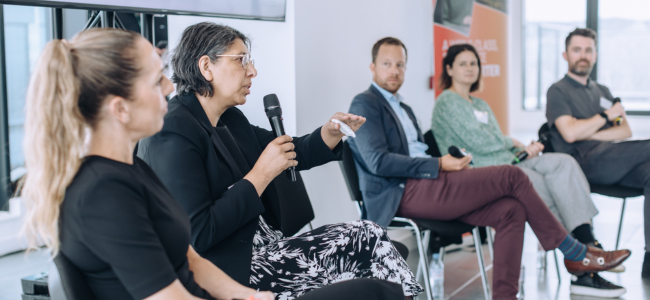
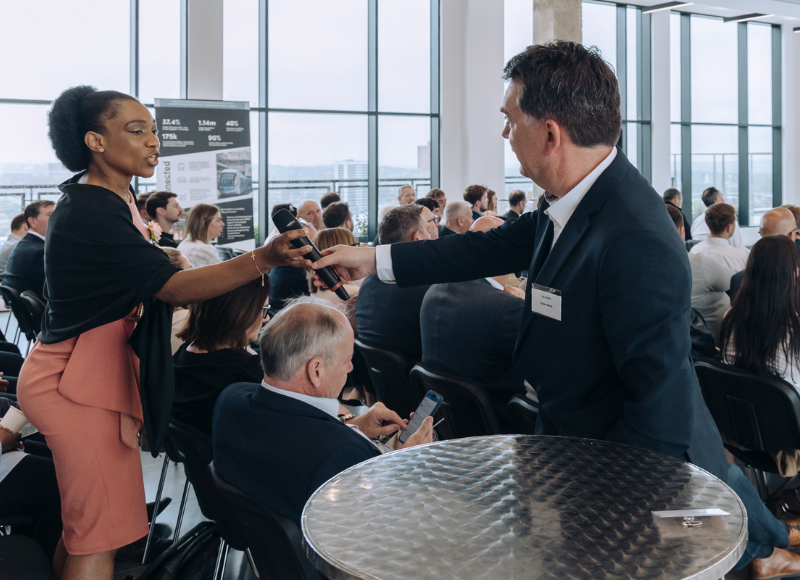
To find out more about this ‘great office migration’ and what’s behind the increasing focus on Birmingham city centre, the BCO’s Midlands committee teamed up with the West Midlands Combined Authority, West Midlands Growth Company and CBRE Investment Management. Together they held a seminar, hosted by Insider Media deputy editor Ian Griffin, at 10 Brindleyplace.
Why Birmingham? Why now?
According to Theo Holmes, BCO Midlands committee member and CBRE’s head of office agency for the Midlands, this is not a new trend, but it is one that has accelerated in recent years.
The movement towards Birmingham city centre gathered pace post-Covid as the role of the office changed significantly, said Holmes. Businesses today increasingly want to locate where their customers, competitors and talent are, and the city centre provides that ecosystem.
Historically, there was a perception that graduates would leave Birmingham. Today, more and more are choosing to build their careers in the city. And with more than 200,000 students and graduates across the region’s universities, businesses are increasingly recognising that the talent they need is already here.
For Chris Lawes, sector lead of business, professional and financial services at West Midlands Growth Company, Birmingham’s appeal comes down to three factors: scale, skills and connectivity.
The West Midlands is the largest regional economy outside London, with a substantial professional and financial services workforce and a strong graduate pipeline. Businesses can also access London, Europe and international markets through Birmingham’s transport infrastructure.
Relocation, relocation, relocation
Lucy Thompson, head of property and workspace at Standard Life, Ranjit Dhindsa, Birmingham office leader at Fieldfisher and Alison Kilby, associate director at Arup, all played key roles in shaping where their organisations’ new Birmingham offices would be located. All chose the city centre.
Standard Life relocated to 10 Brindleyplace from its campus-style office in Wythall, reducing its footprint by 90% to 25,000 sq ft.
The decision was not simply about reducing space. When organisations are making location decisions, access to talent is often the deciding factor and for Standard Life, attraction, retention and future skills requirements all influenced the move.
“Birmingham’s future talent pipeline is one of its biggest strengths,” said Thompson. “That’s a powerful argument when making long-term investment decisions.”
Future skills requirements are becoming increasingly important. AI, digital skills and technology capabilities are reshaping workforce needs and Birmingham is positioning itself at the centre of those growth sectors.

Following the business
Fieldfisher was formerly based at Blythe Valley Park, near the M42. While geographically close to Birmingham, Dhindsa described it as a location that could feel disconnected when meeting clients and professional advisers.
The law firm recently relocated to 2 Chamberlain Square, placing it at the heart of the city’s professional services community.
While Birmingham is a global player, it also has a local feel too – the kind of place where you can see a lawyer, banker and surveyor on the same short stroll through Colmore Row. For professional services firms that proximity matters.
“We want to be close to all our intermediaries,” said Dhindsa. “We’re just following the business.”
Getting connected
Arup previously occupied a campus-style location in Solihull and spent around £80,000 a year transporting staff to and from the site.
“When we originally moved, we were promised transport links and infrastructure improvements that never really materialised,” said Kilby. The city centre offered significantly better accessibility.
Having made an early decision to relocate to One Centenary Way, Arup gave employees the opportunity to help shape their future workplace. What emerged was a consistent desire for better amenities, stronger connectivity, improved workplace experience and more sustainable offices.
Ultimately, Kilby said, the only place those ambitions could realistically be achieved was within Grade A city-centre office space.

Electric dreams
ESG considerations were central to decision-making across the panel.
Standard Life relocated into an EPC A-rated, all-electric building, with carbon reduction, sustainable design and public transport access all influencing the project.
At Arup, ESG shaped both the building and fit out strategy. The company challenged developers to remove gas systems, prioritised all-electric solutions and focused on reducing embodied carbon through reused materials and low-carbon products.
Arup estimates the move will reduce commuting related carbon emissions by around 80% and business travel emissions by approximately 20%.
Birmingham’s story
The panel agreed that Birmingham’s wider growth story remains an important factor when competing for investment.
Boards often sit in London and assess opportunities across the UK and Europe. Making the case for Birmingham requires a compelling narrative around talent, innovation and future growth.
It’s why the city’s mic-drop moment at UKREiiF where Richard Parker, Mayor of the West Midlands launched Britain’s biggest and most powerful mayoral development corporation, speeding up £11bn of regeneration, was so important.
As the city continues to promote major regeneration opportunities, investment districts and growth sectors, it strengthens the case for businesses choosing Birmingham as a long-term base.
Why Birmingham city centre works: 10 key takeaways
- Talent wins
When organisations make location decisions, access to talent is often the deciding factor. Birmingham’s graduate population and growing professional workforce are major draws. - The office has changed
Modern workplaces are no longer just places to work. They are increasingly designed to support collaboration, culture, innovation and employee engagement. - Accessibility matters
Access to rail, tram and wider transport networks makes Birmingham city centre significantly easier for employees, clients and visitors to reach. - Follow the business
Professional services firms increasingly want to be where their clients, advisers and industry partners already are, creating a powerful city-centre cluster effect. - Smaller offices can support bigger ambitions
Standard Life reduced its footprint by around 90%, while Fieldfisher took additional space with growth in mind. The focus is less on square footage and more on what the workplace enables. - Change is cultural
Successful relocations require more than a property transaction. Employee engagement, communication and early involvement are critical to bringing people with you. - ESG is fundamental
Sustainability is now embedded within workplace decision-making, influencing everything from building selection to fit-out materials and commuting patterns. - Grade A space is part of the attraction
Modern occupiers increasingly expect high-quality buildings with strong amenities, sustainability credentials and a better overall workplace experience. - What happens outside work matters
Restaurants, cultural venues, events and social opportunities all contribute to recruitment, retention and stronger workplace culture. - A compelling growth story
Competing for investment means competing with cities across the UK and Europe. A clear narrative around talent, innovation and future growth remains essential.
If you’d like to find out more about the BCO’s events, check out our calendar here: https://www.bco.org.uk/events

 July 21, 2026
  By BCO Media