Productivity to purpose: NextGen Ideas Competition finalists showcase new vision for our workspaces
Presentations revealed how our offices can restore people, the planet and place.
 October 10, 2025


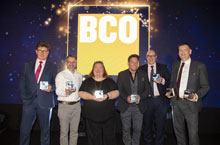
The 2025 BCO NextGen Ideas Competition, held at Hawkins/Brown’s Clerkenwell studio on Thursday 9 October, saw six finalists take to the stage to present bold, human-centred concepts for the future of the workplace.
Each finalist’s idea was shaped by mentorship, from both a 2024 finalist and a BCO mentor, and refined by public speaking training from Ginger Leadership Communications. The result was a night of compelling presentations that reflected a shared commitment to transforming how we work, live and connect in and around the office.
Throughout the evening, the NextGen finalists issued calls to action for the industry to meet the urgent challenges and exciting possibilities of tomorrow’s workplace.
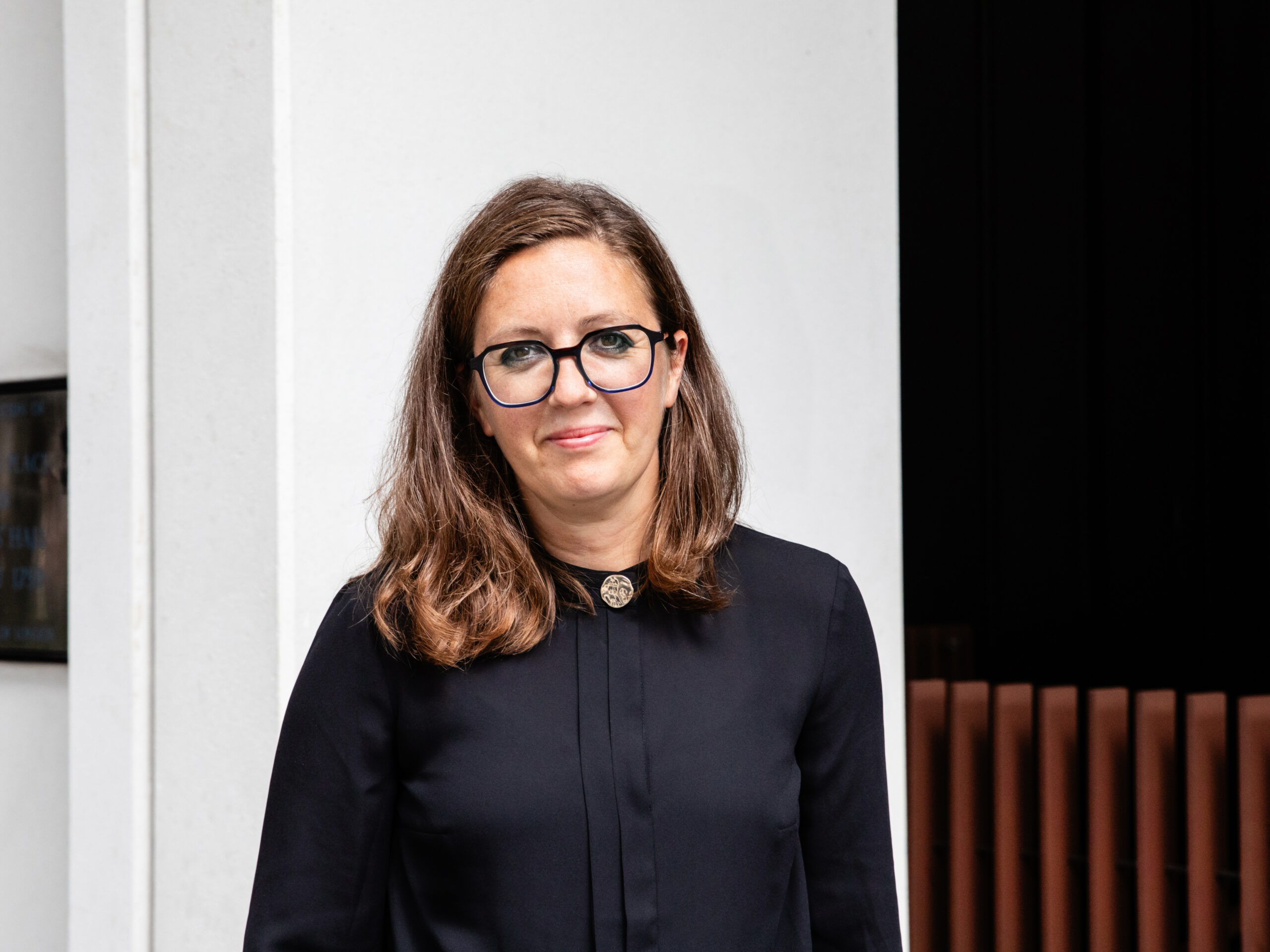
While this year a single winner was selected – AECOM’s Lauren Lemcke (pictured), whose concept CarbonLegacy earned her a ticket to next year’s BCO conference – the evening was a celebration of all six ideas and the collaborative spirit that defines the BCO NextGen community.
Workplaces that restore, not just perform
A recurring theme throughout the evening was the transformation of the office from a place of productivity to a destination of wellbeing and experience.
Plug-in Workspitality, a concept from Gensler’s Justin Lau, responded to the flight to quality by arguing that the office should do more. His proposal suggests the introduction of ‘Tetris-like’ modular plug-ins embedded throughout office cores, to improve a building’s amenity offer. This ranged from breakout spaces for group work to spaces for nourishment, exercise, healthcare and pop-up cultural events. These different zones are designed to respond to an employee’s changing needs throughout the day.
Also from Gensler, Allison Au’s Cinetecture takes a different approach to human-centred design by looking at the cinematic quality of emotionally engaging environments. A self-described ‘imagineer’, Au drew on Millennial and Gen-Z trends to create Instagrammable spaces, asking the audience to imagine workplaces that feel like boutique hotels or film sets – spaces that inspire and connect. She highlighted the rise of the experience economy, with 2.5bn social users forming new connections with brands and companies, and called for the BCO to incorporate function and experience into its office guidelines, including opportunities for reviews of fit-out across office spaces.
Together, these ideas reflect a growing desire to treat employees as guests rather than workers and find ways to embody the sense of value, care and inspiration needed to achieve this.
From sustainability to social value
Environmental responsibility was another powerful thread, with finalists proposing systems that embed sustainability into the very infrastructure of the workplace.
From Spec Commercial, Liam Jeanes challenged the audience to imagine not just the future of the office but the future of society, asking: “How would you survive in London if the wheels fell off?”
His concept, OFF GRID, extrapolates existing models, from GSK’s vertical farm to blue roofs, to position the office as infrastructure; reframing our building sites of agricultural production and sources of essential resources.
AECOM’s Lemcke introduced CarbonLegacy, a platform that converts embodied carbon savings from fit-outs into community investments. Her presentation shed light on the uncomfortable truth of office fit-outs.
“Over a 60-year period, more emissions are produced by the carpets and coffee tables in offices than by the concrete structure of the buildings,” she said.
Designed to slot into occupiers’ wider corporate social responsibility policies, CarbonLegacy involves converting carbon emissions into “legacy credits” that companies can use to track their carbon reductions and reinvest them into local projects.
Her presentation encouraged the BCO to adopt CarbonLegacy as part of its fit-out guide, bridging the gap between environmental responsibility and social value.
Kinga Zadora, representing ODGroup, took to the stage with REGEN Performance Clauses, a concept that turns service charges – “the dullest bill in real estate” – into a tool for driving measurable social and environmental value.
Her model rests on a points-based system, allowing tenants to earn rent reductions by meeting agreed sustainability and community engagement targets. With the clauses, frameworks and data already in place, Zadora proposed smart service charges to match the smart meters and tech in offices, concluding that “service charges just got interesting.”
Designing for life beyond the office
Alongside ideas focused on environmental impact and community value, the presentations also turned attention to the personal realities of working life, highlighting how workplace design can better support caregiving and inclusion.
Representing Whitecroft Lighting, Sophie Woodland delivered one of the evening’s most personal presentations.
Her concept, Making Family Work, reimagines the workplace as a space where parenting and professional life are not at odds, but integrated by design.
Her concept addressed the invisible barriers to women returning to work, noting that 34% of workers don’t return to the same job after parental leave, as she put it: “That’s 34% of experience, talent and employable people quietly leaving.”
Drawing on her own experience as a working mother, she proposed a model that includes co-working zones for parents and children, onsite early years learning hubs with flexible enrolment and sustainability-focused initiatives such as rooftop gardens and forest schools.
“What if we designed workplaces that actually work for families?” she asked. “Instead of hiding children away, what if we bring them in?”
A key ingredient in the success of all the ideas presented was the BCO’s mentorship programme.
Each finalist received guidance from both a seasoned BCO mentor and a previous finalist. This dual mentorship model not only elevated the quality of the presentations but also reinforced the idea that innovation is born out of community.
Across the evening, the finalists all offered visions for workplaces that are more responsive, inclusive and socially engaged. Their ideas challenge the notion of the office as a purely functional space, instead positioning it as a place where people can connect, contribute and thrive together.
BCO chief executive Samantha McClary, closed the night fittingly by reassuring the audience that “we can sleep easy tonight knowing that the future is in good hands”.
“The NextGen is a future generation that cares, that sees the problems we’re facing and isn’t afraid to find solutions,” she said.”
The BCO NextGen Ideas Competition 2025 is supported by Hawkins/Brown, Artus Air, Derwent London, Multiplex, Cushman & Wakefield and Parkeray.



 By BCO Media