By Thomas Watling, Senior Consultant at Deloitte, Contributing Author, Fast and Slow Buildings
Intelligent Buildings and the Internet of Things (IoT) in real estate are much talked-about, and for good reason.
Analyst predictions suggest that there will be over 10 billion connected devices deployed in real estate by 2020.
Watching this trend, the British Council for Offices (BCO) has just published a new report on intelligent buildings: “Fast and Slow Buildings: Responsiveness through technology and design”. It was authored by the building service engineering firm Max Fordham, for which Deloitte was a contributing author. BCO members can read the full report here.
In this blog, I’ll explain what’s meant by building ‘intelligence’, and share four things we’ve learnt from our work in the intelligent buildings space.
Intelligent buildings contain connected networks of sensors and actuators, which integrate with traditional building systems (such as lighting and air conditioning) to continually improve and automate the operations of the building in question.
The network of sensors might include occupancy tracking which measures the ‘busyness’ of the cafeteria and suggests when to visit.
There could be a set of sensors that monitors the indoor environment and the efficiency of air conditioning.
A corresponding set of actuators would automatically optimise energy consumption and make the working environment more comfortable for each individual employee.
Automated systems of sensors and actuators drive operational efficiency, reduce cost and environmental impact, and improve the employee experience, which in turn generates value by improving productivity.
We’ve learnt a lot from our discussions with clients and vendors. Here’s four things you should know:
#1 Older buildings can be intelligent too
Often the term ‘Intelligent Building’ is applied to eye-catching new-build headquarters, but not to pre-existing buildings. It’s estimated that 85% of building stock that will exist in 2050, is already in existence today (Existing Homes Alliance). Thus, there’s a significant opportunity to leverage building intelligence by retrofitting existing spaces with intelligent systems, in addition to the opportunities presented by intelligent new builds.
#2 There’s more to intelligence than connecting building subsystems
Historically, traditional building subsystems could be centrally controlled and were connected with one another. But a building being connected doesn’t equate to it being intelligent. Data from these subsystems needs to be shared and augmented by other sensor data, so that insight provided by this data can help solve wider business problems. Knowing where to find a free desk is useful. But what if your building directed you to sit next to a previously unknown colleague with shared interests to try and create an opportunity for serendipity – that’s intelligent.
#3 Don’t use technology for the sake of it – focus on business problems instead Deloitte Digital’s Chief Disruptor, Ed Greig, regularly reminds innovation novices and veterans alike to “fall in love with the problem, not the solution”. It’s easy to get excited about sensors and touch screens, but this should always be underpinned by a clear understanding of the cost and benefit drivers that influence real estate space, as well as a deep understanding of the building users’ needs.
#4 Treat changes as experiments
How do you measure the value of a new real estate technology? And how will you act when you’ve measured this value? When talking about the Internet of Things, we refer to the ‘information value loop’. A sensor creates data, which is communicated, aggregated and analysed. Then, someone or something has to act on the outcome of the analysis. The process starts over, measuring the impact of the new change. Realising the value of an intelligent building requires an iterative approach, where data communicates the value of the work and informs future decisions.
For information about how we’re helping clients understand Intelligent Buildings as part of the Global Consulting “Future of Work” agenda, contact Rob Scopes. For information about the Internet of Things, contact Ben Steward.
The British Council for Offices (BCO) has released “Fast and Slow Buildings: Responsiveness through technology and design”, for which Deloitte was a contributing author. BCO members can download the full report here.
The results are in for the BCO Photo Berlin Instagram based photography competition for all BCO delegates, devised and run by Art Acumen. Conference delegates were invited to take photographs of Berlin over the course of the event capturing the themes:
Art Acumen are proud to present the winners of BCO Photo Berlin, the inaugural Instagram photography competition for BCO’s annual conference.
“I would like to congratulate the winners and highlight the overall high standard and diversity of entries. We wanted to create a project without barriers, that was easy to participate in and that communicated thoughts and observations beyond the BCO Conference. As well as providing us with a visual thought-map of the weeks’ activities, we hope that the photography competition added a layer of contemplation, art and poetry to people’s experience as they explored the city.”
–Catherine Thomas, MD, Art Acumen
CONGRATULATIONS to the following winners!

OVERALL WINNER
DIVERSITY – WINNER

OVERALL RUNNER UP
INCLUSION – WINNER

INNOVATION – WINNER

CONNECTION – WINNER

DIVERSITY – HIGHLY COMMENDED
1) James Hindle, Tate Hindle
Overall winner. Diversity – winner.
Judges’ comments:
A well observed shot and very balanced.
Powerful story telling, the photographer alludes to the people behind the façade.
2) Stuart Pledge, Mason Navarro Pledge
Overall runner-up. Inclusion – winner.
Judges’ comments:
Great juxtaposition between the old and the new.
Good composition.
Technically one of the best pieces.
3) Mark Simpson, BDP
Innovation – winner.
Judges comments:
The composition is very good.
The photographer has been very innovative showing the layering of history.
4) David Blair, TP Bennet
Connection winner
Judges’ comments:
Great sense of vibrancy and movement, connecting people to one Berlin’s most iconic structures.
Technically very good.
Link back to people, which is what architecture is all about.
5) John Wright, Stride Treglown
Highly commended
Judges’ comments:
Very powerful image.
Great composition.
Criteria for judging:
Adherence and appropriateness to theme
•Innovative way of delivering message
•Creativity
•Overall artistic impression
•Composition
•Evokes an emotional response
•Judges personal response
“As most photographs were taken with a smartphone, more emphasis was placed on storytelling and originality than photographic technical skills.”
Thank you

#BCOphotoBerlin is an Instagram based photography competition for all BCO delegates, devised and run by Art Acumen, the leading art consultancy. They invite you to take photographs of Berlin (inside and out) over the course of the conference capturing the themes:

Katrina Kostic Samen, KKS Founding Partner, BCO Senior Vice President
Katrina has built a practice which is a recognised leader in workplace strategy and interior architecture, reflected in many achievements and awards over the last 15 years. Katrina’s belief in pushing boundaries, striving for excellence, and expanding the professional body for commercial offices is represented in her fundamental principle: Be Creative, Add Value, Have Fun!

Michael Pritchard, CEO of Royal Photographic Society
Michael is Chief Executive of the Royal Photographic Society, an educational charity with Royal Charter founded in 1853. Prior to this he was a Director at Christie’s, where he was the international business director and member of the senior management team.

Grant Smith, Leading photographer
Grant Smith has an extensive knowledge of London’s architecture and is commissioned by all sectors of the industry including design companies, magazines, architects, contractors and engineers. His body of work includes some of the world’s iconic structures: the Pont de Normandie, second Severn Crossing, the Sydney Harbour tunnel, the Millennium Bridge, the Millennium Dome and the Gherkin in London. He is currently photographing London’s newest skyscraper, The Scalpel.

Stuart Redler – Award winning photographer
Working exclusively and black in white, Stuart Redler photographs buildings from all over the world. He has received many awards, including six from the Association of Photographers, who awarded him a Gold Medal in 2000 for his portfolio of Architectural Images. He has also received Graphis, PDN New York and Communication Arts Awards, amongst others. As well as appearing in various private collections, his work is included in the permanent collection at the National Portrait Gallery in London and has been exhibited at the V&A Victoria and Albert Museum, London.
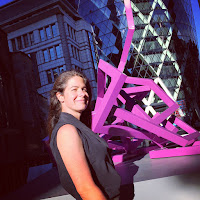
Catherine Thomas – Art Acumen Founder
Catherine is the creator of #BCOPhotoBerlin and Managing Director of Art Acumen, a consultancy providing art services to corporate, public and private clients. They specialise in curating and commissioning art collections, devising bespoke creative projects and place-making through public art programmes. For the past 16 years Catherine has delivered visionary art strategies and inspirational art commissions for many corporate, public and private clients, building a formidable portfolio and excellent reputation.

Elissaveta Marinova – Editor at OnOffice
Editor at OnOffice. Born in Bulgaria, raised in Morocco, “matured” in the UK, Elissaveta is Editor for OnOffice. Her career started in the field of architecture and design where she developed a talent for creative thinking and an eye for aesthetics. In 2014, she found her calling in design journalism.
To enter – Upload your photo via Instagram using the hashtag #BCOphotoberlin or email to BCOphotoberlin@artacumen.co.uk. This is an Instagram competition and judging will take place from INSTAGRAM and emailed entries only. Entrants are encouraged to share their entries elsewhere online but only Instagram and emailed entries are officially accepted and judged. There is no limit on how many images you can enter. The final deadline for submission is 31.05.18. 5-Star Hotel Vouchers and cash prizes are up for grabs! Also up for grabs is a highly sought after Stuart Redlar print PLUS all winners and highly commended will be invited on an architectural photographic tour of London by Grant Smith.

I have just completed a very enjoyable three years chairing the research committee of the British Council for Offices (BCO). In this time, two themes stood out above all others, writes Bill Page, Business Space Research Manager, LGIM Real Assets.
These two things are: occupiers are customers and investors have to treat them as such; and office space is a performance lever for companies, not just a shell that gets handed over.
“Occupiers are customers” may sound a bit trite. It has been part of the dialogue ever since the industry realised the Landlord and Tenant Act sounded a bit feudal and can indeed be adversarial in practice. It means landlords must go beyond their contractual liabilities and understand what end-users actually value. And end-user means the employee – not the corporation who signs the lease. Corporate requirements of appropriate lease length, catchment demographics and portfolio flexibility, for instance, do not always match “What Workers Want” which can be as simple as comfort, cleanliness, reliable Wi-Fi and, most importantly, pride in their place of work.
Ensuring occupiers are happy should be obvious. Everyone wants good service, but real estate lags behind other industries. Only 1 in 5 office occupiers within traditional space say their landlords are responsive, according to Real Service Ltd. But this rises to 4 in 5 occupiers within co-working space. Arm’s length interaction through disinterested intermediaries is no longer an option (nor should it ever have been). We have no doubt that content occupiers will stay in their offices for longer and therefore drive more income, less re-letting risk and less costly refurbishment than occupiers who vacate at their first opportunity.
A fundamental requirement of any building is to protect its occupant from harm. This sounds straight forward but the evidence of sick building syndrome, legionnaire’s disease and asbestosis tells us real estate can get this wrong. However, offices are now being designed to promote good health – not just the absence of harm. The physical building needs to address air quality, light levels and views of nature, for instance, while under certain certification occupants will need to promote the use of internal stairs and even the size of the plates used in the canteen.
Healthy offices enable productive work. Employee costs are between 7 and 15 times office costs and real estate can improve the productivity of these employees by around 3%. Productivity improvements are therefore the single most important contribution property professionals can make. The costs to productivity from ineffective measures to cut costs, or by imbedding poorly thought through intensification, for instance, can be astronomic.
Knowing how healthy employees are and how they are utilising space is important in managing the workplace. Smarter buildings require skills to operate and can create a huge amount of data to interpret. Furthermore, some of the most useful data comes from technology that is wearable. Wearables can measure location, air quality, calorie intake, anxiety or even posture. But as soon as employers try and utilise such data – even if demonstrably for the greater good – there are understandable privacy concerns. We expect data from wearables to be used as evidence in legal cases where workers claim their workplace has caused them physical harm. Employers will get sued and may counter-sue their landlords.
This all requires the better use of technology – across all points of a building’s lifecycle. For instance, buildings can be designed, constructed, marketed and managed using 3D representations of complex engineering systems. Visualisations can be fully immersive or collaborative. There are opportunities for full engagement between all interested parties before the first spade goes into the ground. This covers how office buildings are perceived externally – how they dominate a streetscape or interact with the public realm, or internally – the all-important first impression can be visualised and optimised. Once the reception looks good the hospitality skills of those who run it cannot be forgotten. This is another area where we are seeing a virtuous “race to the top”.
There are meaningful implications to real estate investors. Human engagement between landlords and occupiers will become more important, not less. This can be enabled by technology making mundane tasks efficient leaving time for valuable human interactions. Buildings will become smarter, more complicated and with an increased requirement for non-income generating space such as big receptions and touch down areas. Ultimately, however, the delivery and management of offices will be about curating the productivity of its occupants. Landlords who engage will see financial rewards, landlords who stand still will be overtaken.
Bill Page, Business Space Research Manager, LGIM Real Assets
As seen in CoStar
Read the full 2018 preview: Expert forecasts including Richard Kauntze and Ken Shuttleworth in Property Week.
Richard Kauntze
Chief executive, British Council for Offices
“I hope to see the industry continuing to drive the debate around the positive role the workplace can play in the prosperity of UK business. In times of economic and political uncertainty, it’s more important than ever that we understand and demonstrate how the right workplace can add value to a business, rather than being viewed simply as a cost. An exemplary office can strengthen a ‑ firm’s brand and reputation, and help drive more efficient and productive working.
I expect to see the conversation around health and wellness in the workplace increase and become more sophisticated. The line between our work and personal lives has long been blurred, but there is now broader recognition that addressing this, and improving employee health and wellness, will be a key factor in helping to solve the UK’s productivity puzzle. Consequently, there will be a need to develop more effective ways of measuring employee health and wellness. This should allow us, as an industry, to become better equipped at designing healthy workplaces that encourage wellness and facilitate productive working.
Resolution – To focus on the issue of diversity and inclusion in the workplace. We want to play a greater role in this debate and, as such, have chosen the issue as the theme of our annual conference, which for 2018 will be in Berlin. We’ll be interrogating how office environments can help progress the diversity agendas of their occupants, and how we can ensure the workplaces we are creating embrace and engage all employees.”
Ken Shuttleworth
Founder, Make Architects (and BCO President)
“I’ve been very inspired by some of the buildings delivered in London this year; my hope is that these don’t dry up as the country braces itself for Brexit. The temptation is to batten down the hatches, but, to my mind, it is now more important than ever to show the world we intend to stay a global hub for business and will continue to create market leading commercial stock to accommodate firms that want to be part of that.
I think we’ll see much more around the issues of wellness and their natural spin-offs into coworking and co-living as we look to create inspirational, comfortable and adaptable places in which to work and live. It is fascinating how technology is playing such a role in shaping our built environment, and collaboration to design buildings and spaces will become ever more important to facilitate this. I’m really looking forward to the BCO Berlin conference and its focus on diversity. Never more important than now.
Resolution – We’re strategising at Make for the next 12 to 18 months and it’s so interesting to see what different people view as being a real focus and passion for them. All different, all important, all showing where their talents and strengths lie. My resolution is to try and help facilitate this wherever possible and, for Make, to grow our international profile and portfolio.”
As seen in Property Week.

On Wednesday around 100 BCO members attended the launch of ‘The Productive Office’ at CMS, Cannon Street, London to participate in a thought-provoking discussion. The physical environment is understood to be a critical factor when it comes to productivity in offices and ultimately the success and longevity of leading companies. The latest BCO research examines how the physical design and management of offices can influence both individual and organisational productivity.
The first part of the seminar focused specifically on workplace design and the research findings were presented by Adam Mactavish of Currie & Brown who lead the BCO’s latest work ‘Defining and measuring productivity in offices’. Adam shared valuable insights on the work they have been carrying out over the last four months with special thanks to Ramidus Consulting and Despina Katsikakis who added valuable industry experience looking at the influence of the workplace itself on productivity with examples. A series of interviews and workshops took place with people in the supply chain. Productivity seems to be the buzz word at the moment and is either the source of all scepticism or the source of all opportunity depending on your perspective.
Adam spoke about some of the lower hanging fruit that makes a valuable contribution to productivity, that which is readily available to us now, and opportunities that we are already aware of as property professionals improving productivity in UK offices. Adam questioned whether we were doing it as widely and routinely across the UK as we could. Those involved in corporate real estate are often more focused on the cost of property rather than the opportunity the property presents to them.
Adam began by addressing the definition of productivity in offices and how we can go about measuring and improving it. The report hopes to encourage industry professionals to occupy more productive workplaces or to improve the workplaces they are currently in. There was a deliberate attempt not to replicate the tremendous amount of research on productivity already out there. The study instead provides a framework that people can use when discussing productivity so as an industry we are consistent in our approach.
The report covers the influence of the workplace on productivity and stresses that although the office itself is important, it is only one of several dimensions. There are short sections on the value of productivity, recognising productivity and measurement of productivity in the workplace. Starting with the influence of the workplace, the report looks at the office as a tool to deliver change within an organization, to help embody the company culture, provide facilities and at its heart provide the opportunity for people to be able to do their work well. As ever, it’s also about attracting and retaining the best people. The report covers the many factors which influence engagement with the workplace. There are many buildings toured at every BCO conference and there have been examples of companies trying to adopt agile working practices while not having sufficient WiFi to enable people to move from place to place and connect properly. Kate Vine of Perkins + Will brought this up later in the panel discussion- ‘We love to design beautiful spaces, but also – the technology has to work and the environment has to be healthy for the office to be productive’.
Session 2 of the seminar was dedicated to the impact of environmental qualities on productivity. In this section LCMB together with their Consortium Partners (including the BCO) outlined their interim findings on WLP+ (The Whole Life Performance) project, funded by Innovate UK. The project seeks to empirically validate the link between indoor environmental conditions and staff utilisation, output and absenteeism, by demonstrating the solution in three commercial case study buildings where there is available data on staff productivity.
Managing Director of LCMB, John O’Brian, kicked off the introduction to WLP+ saying that productivity in the UK has flat-lined since 2008. The industrial partners included Argent, Kings College London, EMCOR UK, Constructing Excellence, and the academic lead Rajat Gupta of Oxford Brooks University. Members were shown the results we are starting to see and Rajat presented some early findings and insights around office air quality and the impact this has on productivity. For the last 17 years they have studied over 200 buildings and concluded that when occupants are satisfied with their indoor environment, productivity levels increase.
Steve Dolan, Senior Account Director, EMCOR UK presented the first case study which covered the NATS analysis and the correlation between facilities management and productivity. EMCOR UK is the FM provider for NATS, one of the trial sites for the study. A second case study followed from Nick O’Donnell, Director of Estates & Facilities, King’s College London. Nick went over how a drop in oxygen in their office directly affected staff performance and while basic, an improvement in morale and productivity was seen once there was an increase in oxygen levels. Lastly Peter Runacres, Senior Projects Director from Argent presented a third case study before the panel closed with a Q&A. Peter made mention of the levels of CO2 being extraordinarily high in meeting rooms where staff should be most productive, for example in a board meeting.
WLP+ is a benchmark approach. It aims for the tested solution to then be developed into a software-based supervisory control and reporting solution operating in a cloud environment, with the capability to reset the controlled environment to maximise occupant productivity and comfort conditions, whilst minimising energy and fuel use and costs in commercial office environments. Learn more about how the WLP+ project is progressing: https://www.wlpplus.com/project-overview/
-Access the BCO research page and download the report.
-Follow the conversation on Twitter .
-Photo by Timothy Soar

Nigel Clark, Hilson Moran – National Judging Chair
Nigel’s top tip: “Set out your entry clearly and concisely and use the questions in the entry guide to explain to the judges what sets your project apart from other entries. Focus not just on the building, but also on the impact and change the project has delivered.”
Ian Aldous, Arcadis – Northern Judging Chair
Ian’s top tip: “The awards are about recognising excellence in the workplace, and one specific area of focus should be the impact it has – on the people that work there, the businesses that operate from there and the local community that surrounds it.”
Alistair Allison, Tuffin Ferraby Taylor – South of England & South Wales Judging Chair
Alistair’s top tip: “A successful office development needs a clear brief and it is important for this to be explained to the judges and to show how the design, construction and commercial solutions have been tailored to suit this. Also, highlight areas of the project that stand out.”
David Dool, Cooper Cromar – Scottish Judging Chair
David’s top tip: “As the BCO Awards are the benchmark for defining excellence in the workplace, submissions should, in addition to answering the ‘Judges Questions’, convey what sets the project apart in terms of its speciality and appeal to occupiers. A strong, factual and passionate submission generally reflects the excellence of the project and sets the scene for shortlisting and the judges’ visits.”
Nick Searl, Argent – London Judging Chair
Nick’s top tip: “Make sure that your submission allows the judges to see what makes your building or fit out unique and special. Be proud of what you’ve done, show us the passion that went into making it and let your answers demonstrate why you think it’s a winner.”
Rob Van Zyl, Cundall – Midlands & Central England Judging Chair
Rob’s top tip: “Always answer all the questions, even if you feel your submission is weak in one area. The judges award points for every question. For example, if your building only achieved a moderate EPC score, still state what it achieved rather than avoiding the question. Better to get a few points than none in weak areas.”
HOW TO ENTER YOUR PROJECT
To enter your project for the awards simply register on our entry website www.bcoawards.co.uk and create an entry. Entries are submitted online in three easy stages:
1. Enter project details
2. Answer the ‘Judges Questions’ as outlined in the entry guide
3. Upload 10 images and submit

It’s just 2 years since BCO published its ground-breaking report Building Performance – Rethinking the Relationship between Owners, Managers and Occupiers. The report set out a 10-point action plan to improve stakeholder relations and remove much of the friction that frustrates corporate occupiers. “Office Service Standards and Customer Experience: a best practice guide” highlights the revolution currently occurring in the property industry’s approach to delivering service, based on customers’ requirements ‘from space as a commodity’ to ‘space as service’. It also forms the basis for a consultation with the BCO members on the format of a new BCO Customer Experience Award which will recognise those owners and their managers that are running buildings in a truly innovative and customer focused way.
The research identified the need for change and articulates benefits for both owners and occupiers in adapting a new and inclusive approach that is more engaging and in line with a customer service and satisfaction ethos across other industries. Office owners, managers and occupiers were engaged with to define and communicate what the industry should be delivering by way of effective and efficient building services that match a significant improvement in building and workplace design and quality in recent years.
We participated in the debate and discussion at the breakfast seminar held on the 17th October at UBS, Broadgate, London sponsored by British Land, LGIM Real Assets, CBRE and Broadgate Estates. The panel was joined by Polly Plunket (Property Management Director, Broadgate Estates) Debbie Hobbs (Head of Sustainability, LGIM Real Assets) Danny Harte (Senior Director, CBRE) and Gary Wingrove (Projects and Construction Director, BT Facilities Services).
As recent PhD research by Dr Danielle Sanderson shows, there is a clear commercial case for investing in building strong relationships with occupiers. I am excited that there is evidence that our attention is now shifting from a viewpoint of ‘What’s wrong with the way we do things?’ to ‘How we can make things better for our occupier customers?’ That’s why this latest report is designed to provide those forward-thinking property owners and managers who want to change their approach with practical guidance in the form of checklists, scorecards and case studies. These will measure how well an office building is performing, viewed from the perspective of the owner, property manager and occupier.
The checklists, designed to help property owners, managers and occupiers understand what best practice looks like, follow the broad structure of the RealService ‘Best Practice Framework’ and cover the following areas: customer experience culture, customer insight and service design, collaboration with service partners, leadership & training, operational excellence, and, performance measurement.
There has never been a more apt time for our industry to get close to our customers – the price to pay for missing this opportunity is potentially great. Who could have predicted the seismic shifts in the political, economic, social and technical worlds that we have seen over the past 18 months? If ever there was a time to stick close to your customers it’s now!
Other industries have learned the hard way that failure to innovate and to follow the customer is a sure-fire way to attract the attention of the business disruptors – like Uber, eBay, Amazon, Airbnb, etc. The office industry is seeing new entrant disruptors like WeWork and The Office Group transform the experience of the workplace.
-Chris Richmond, PwC Chair, BCO Occupier Group
For more information on Office Service Standards and Customer Experience or to download the report, access the BCO research page.

 September 21, 2026
  By BCO Media