Let’s talk about…Adaptive Reuse
Buildings are only successful when they are used by people. A derelict building is no use to anyone—it’s just a pile of materials.
 August 08, 2025


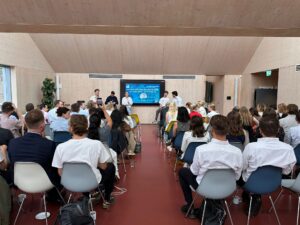
On 30 July, the BCO NextGen London & SE committee gathered a panel of experts from across the architectural, engineering, construction and development community to talk about adaptive reuse – the good, the challenges and the not so ugly.
Hosted by Heyne Tillett Steet at its award-winning offices at 16 Chart Street, N1, the location served a prime example of adaptive reuse done well. The former 1930s masonry warehouse has been lovingly retained and extended to create a low-carbon, four-storey HQ building.
Key themes discussed included:
· Design challenges and opportunities: Panellists highlight the tension between preserving historical character and meeting modern standards. Adaptive reuse requires sensitive integration of new systems while retaining the building’s essence.
· Construction complexities: Selective demolition, structural unknowns, and coordination issues are common. Contractors face risks due to limited surveys and existing tenants, making cost estimation and planning difficult.
· Sustainability and viability: Adaptive reuse is praised for its environmental benefits, especially in reducing embodied carbon. However, financial viability and regulatory support remain inconsistent.
· Community engagement: Successful reuse projects often involve local communities in design decisions, fostering a sense of ownership and preserving cultural identity.
· Future trends: The panel anticipates increased reuse of mid-century and early 2000s buildings, with digital tools like materials passports and digital twins aiding future retrofits.
Expert Panel:
• Host: Ben Gardner | Heyne Tillett Steel
• Alex Buck | BGY
• Cameron McGeoch | Multiplex
• Richard Sansom | Landsec
• Ella Smith | Allford Hall Monaghan Morris (AHMM)
Adaptive reuse is increasingly recognised as a vital strategy in sustainable architecture and urban development. The panel discussion, hosted by HTS’s Ben Gardner, offered up a multifaceted exploration of its implications, challenges, and future potential. Drawing on the expertise of architects, engineers, and developers, the conversation revealed both the promise and complexity of repurposing existing structures.
Design paradox
At the heart of adaptive reuse lies a design paradox: how to preserve the historical and cultural essence of a building while upgrading it to meet contemporary standards.
Alex Buck, head of sustainability at BGY, emphasised the importance of rediscovering traditional methods of adaptation, noting that buildings only thrive when actively used.
The sentiment was echoed by AHMM’s Ella Smith, who pointed out that the most impactful spaces often emerge from creatively addressing the constraints of older buildings. She cited The Bower in Old Street, EC1V, a building now on its third façade, but retained and reused and still much-loved despite its age.
From a construction standpoint, the challenges of adaptive reuse are substantial, however. Both Multiplex’s Cameron McGeoch and Landsec’s Richard Samson discussed the difficulties of selective demolition, health and safety risks, and the unpredictability of working with existing structures.
The lack of comprehensive surveys and the presence of tenants often complicate risk allocation and cost estimations, they said, issues that were often compounded by the still adversarial nature of contractor relationships.
Despite these hurdles, the panellists all agreed that adaptive reuse offers compelling benefits. Retaining structural elements significantly reduces embodied carbon, and refurbishing mechanical systems can extend their lifespan while minimizing waste. Buck and Samson both advocated for a nuanced approach, pointing out that even partial reuse contributes meaningfully to environmental goals.
However, the financial viability of such projects remains a concern. Regulatory frameworks often favour new builds, and planning processes can be slow and uncertain. The panel collectively called for policy reforms to incentivise reuse, such as streamlined approvals and VAT adjustments.
Leveraging value
Looking ahead, a shift toward reusing mid-century and early 2000s buildings is anticipated. The challenge, however, lies in identifying and leveraging their value, whether structural or spatial. Tools like materials passports and digital twins are seen as key enablers, providing transparency and facilitating future retrofits.
Adaptive reuse is a dynamic and evolving practice that bridges heritage, sustainability, and innovation. While technical and financial challenges persist, the benefits—environmental, cultural, and social—are substantial, said the panel.
What is needed now is a holistic approach that combines thoughtful design, strategic construction, policy support, and community involvement. As cities grapple with climate change and resource constraints, adaptive reuse offers a pathway to resilient and meaningful urban transformation.
And BGY’s Buck perhaps said it best: “Buildings are only successful when they are used by people. A derelict building is no use to anyone—it’s just a pile of materials.“




 By BCO Media