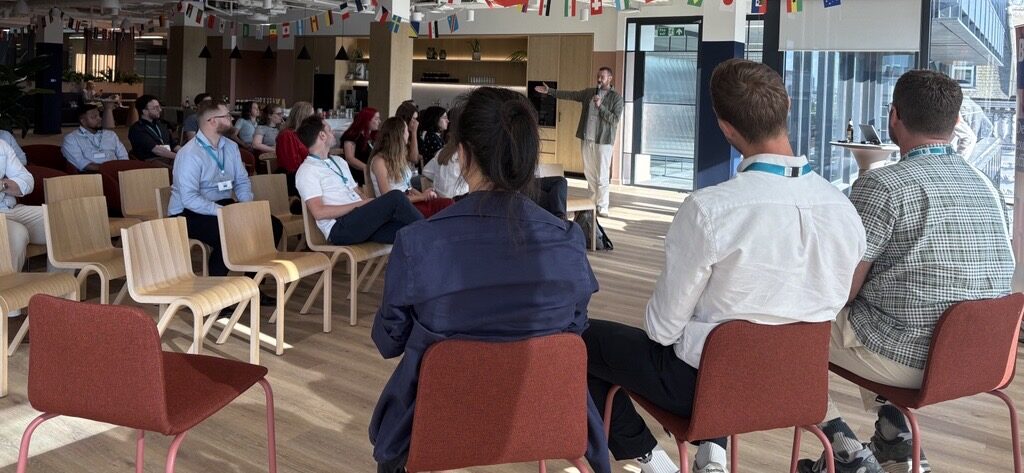
Green space has moved from a nice-to-have to a non-negotiable in office design, and that shift was the starting point for the latest BCO NextGen London SE event, part of the “Let’s Talk About It” series.
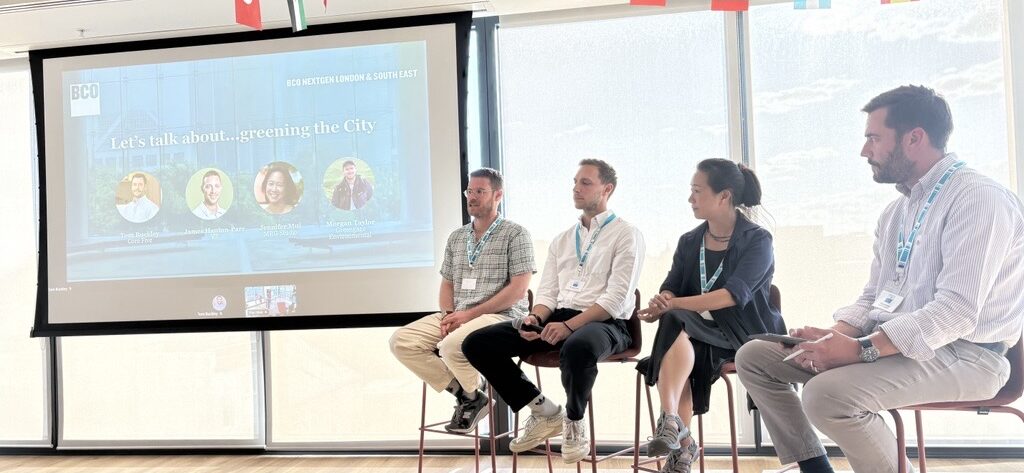
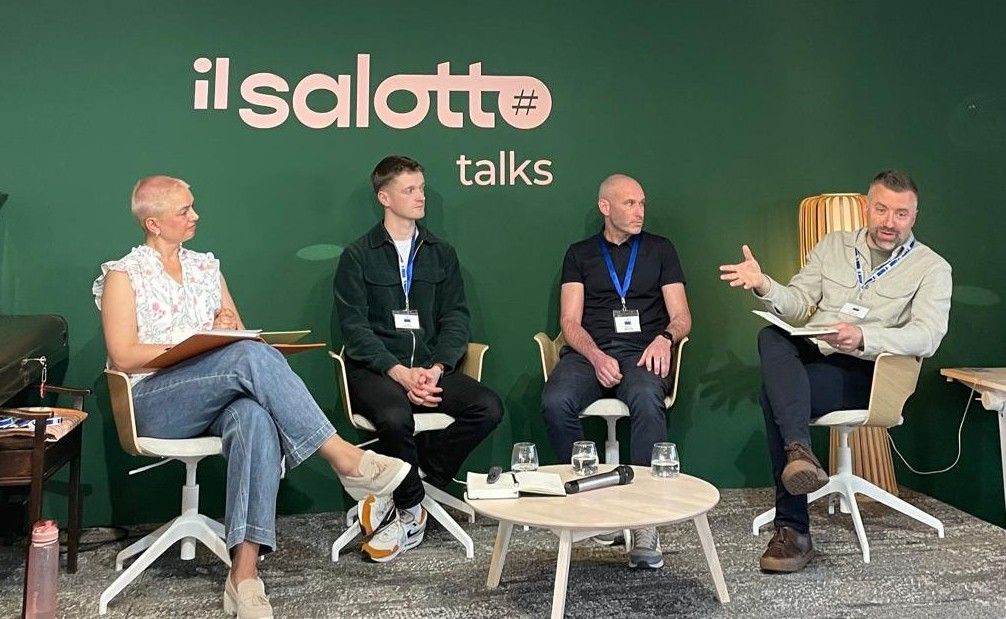
Hosted by Tom Buckley, partner at Core Five, the panel brought together Morgan Taylor, director at environmental consultancy Greengage Environmental, James Hanton Parr, development manager at V7, and Jennifer Mui, director and landscape architect at MRG Studio. Between them they covered the policy, the plant science and the pounds and pence of putting genuine biodiversity into commercial buildings.
Buckley opened by framing the shift bluntly: green space is no longer a question of whether to include it, but how to deliver it in a way that is measurable, meaningful and good value.
“The challenge for us is no longer where green spaces should be included,” said Buckley, “but how we deliver it in a way that’s meaningful, measurable and generally valuable for all.”
Two acronyms dominated the policy discussion: Biodiversity Net Gain (BNG) is now a legal requirement for most new developments, mandating a minimum 10% uplift in biodiversity value versus the pre-development baseline, calculated through a standardised metric. The Urban Greening Factor (UGF), by contrast, is not comparative and not universally mandatory; it sets a target score for the greening delivered on a scheme and is currently a London-specific tool, albeit one some boroughs, including the City of London, are moving to strengthen through unit-per-hectare targets.
Greengage’s Taylor was candid that both figures have shakier origins than most practitioners assume; the 10% BNG uplift and UGF’s 0.3–0.4 targets emerged from feasibility work rather than robust evidence, and BNG exemptions have recently been widened rather than tightened. Even so, the panel agreed the metrics have value: they replace subjective haggling over planning conditions with a consistent, harder-to-value-engineer baseline.
A recurring theme was the gap between what gets approved on paper and what actually survives on site. Taylor cited borough-level monitoring showing that roughly three-quarters of delivered green roofs failed to meet their planning objectives, typically because substrates were installed too shallow to sustain planting – turning living roofs into fire-risk kindling rather than functioning habitat.
MRG’s Mui and Taylor both argued for moving away from monocultural sedum roofs and manicured, heavily-irrigated planting towards biodiverse, stress-tolerant “matrix” planting modelled on habitats such as chalk grassland or brownfield sites – schemes that are more resilient to heat and drought, cheaper to establish, and score better against both BNG and UGF.
On the business case, Hanton Parr was clear that outdoor amenity now sits at or near the top of occupier priorities. Investors see a rental and asset-value premium attached to well-designed terraces, and green finance is starting to reinforce the trend directly. GPE’s credit facility, linked to BNG performance across its portfolio, was cited as an example of biodiversity commitments translating into more favourable lending terms.
“Green spaces and terraces form a big part of what makes buildings special for us,” said Hanton Parr.
Practical delivery constraints ran through the discussion: structural loading and soil depth, the balance between capital cost and long-term maintenance, fire safety, irrigation and access for upkeep. Mui stressed that terraces need to be designed as varied, usable spaces, for a quiet lunch as much as a summer party, not just expanses of “occupiable” square metreage.
Panellists agreed the biggest single lever for cost-effective biodiversity is dense, varied planting from the outset rather than a handful of statement trees; accepting a higher initial plant mortality in exchange for scale and diversity was described as the more economical route to a thriving, low-maintenance landscape over time.
The closing message to developers was to engage landscape and ecology expertise early and with an open brief, rather than defaulting to what has been delivered on the last five schemes.
As policy tightens further and occupier expectations rise, panellists were clear that genuinely biodiverse, well-maintained green space is fast becoming a core differentiator for prime office space, not a compliance afterthought.
FIVE KEY TAKEAWAYS
- Design for both metrics from day one: Biodiversity Net Gain and the Urban Greening Factor measure different things. Factor both into viability and structural/drainage strategy at the earliest stage, not once planning is underway.
- Ditch the monoculture: Sedum blankets and amenity grass score and perform poorly. Biodiverse, stress-tolerant planting modelled on chalk grassland or brownfield habitats is cheaper to sustain, more climate-resilient and scores higher on both BNG and UGF.
- Substrate depth is where schemes fail: Monitoring suggests a large majority of delivered green roofs in some boroughs don’t meet planning objectives, largely due to under-specified growing media. Check this at the detail design and inspection stage, not just at planning submission.
- Amenity space now drives value, not just compliance: Well-designed, biodiverse outdoor space is now a top occupier priority across London and major regional markets, commands a rental and asset-value premium, and is increasingly linked to green finance terms.
- Build in time and maintenance, not just capex: Dense, varied planting with accepted early mortality often beats fewer ‘showpiece’ specimens on cost and biodiversity outcomes, but landscapes need time to establish, and maintenance access and budget must be planned in from the outset.
Thanks to Core Five for hosting, our panel for sharing their intelligence and insights, and to Planteria for providing beautiful plants for all attendees.

 September 18, 2026
  By BCO Media