Scotland Archives - BCO - British Council for Offices Scotland Archives - BCO - British Council for Offices

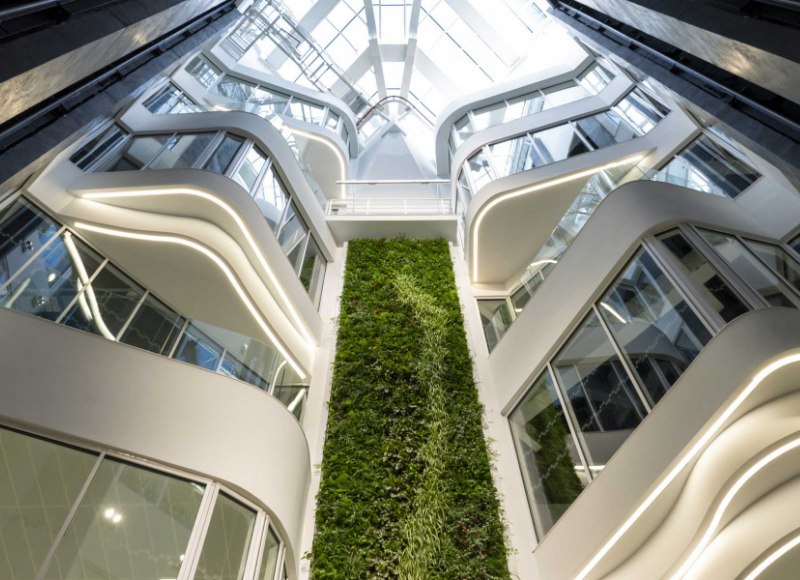
Good landscape design – in and outside of your workspace – is social infrastructure. Getting it right can support mental health, reduce stress, improve navigation, encourage civic life and unlock wider investment.

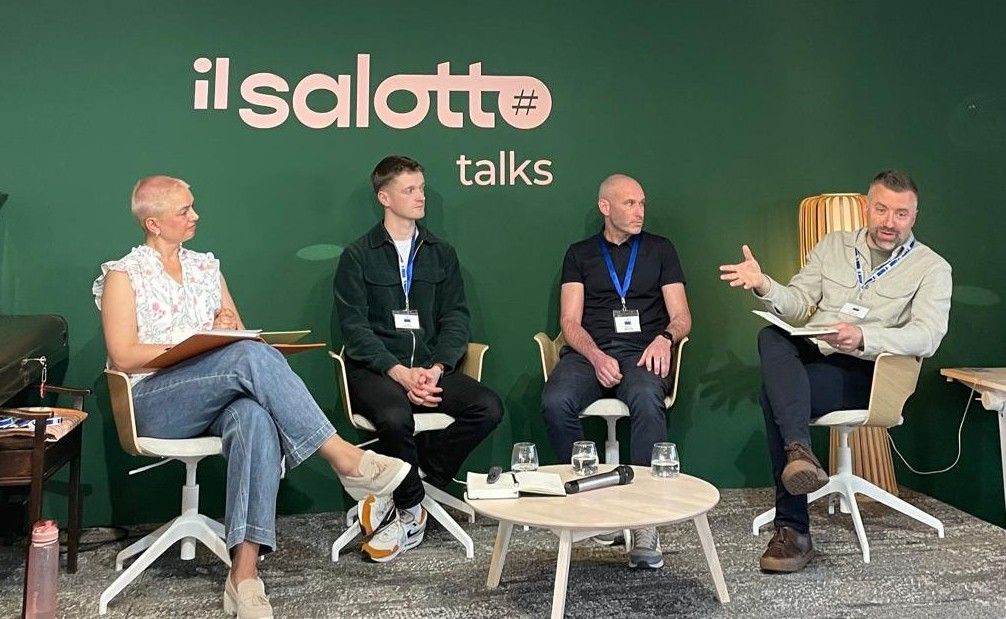
This was the topic of discussion at a recently hosted BCO Scotland event that brought together Greg Meikle, regional director at OOBE, Gordon Yeaman, director at MLA and Cameron Kerr’s Bernie Carr, to argue that biophilic design is so much more than just the introduction of plants into buildings.

A recurring theme was that landscape and external environment should not be treated as an afterthought, with the panel arguing that public realm, planting, views, daylight, thermal comfort and access to nature all influence how people experience buildings and cities.

The speakers challenged the idea that indoor planting alone delivered biophilic outcomes.

Plants can help, but only when the underlying environmental “canvas” is right. However, offices are often highly artificial environments: fixed temperatures, fixed lighting levels and controlled airflow.

Proper biophilic design requires more dynamic, naturalistic conditions, including daylight variation, air movement, material texture, views, seasonal change and opportunities to move between different environments.

The debate also connected biophilic design with trauma-informed design, with the panel highlighting how external routes, thresholds, wayfinding, colour, material changes and safe arrival sequences can materially affect whether people feel able to access a building. In healthcare and education contexts, better-designed environments were said to contribute to fewer missed appointments and reduced pressure on services.

 Another strong thread throughout the conversation was measurement. The panel acknowledged that the sector was good at measuring isolated components such as canopy cover, light levels or floor area, but much less effective at measuring lived experience. Post-occupancy evaluation was identified as essential, particularly if designers want to prove that early investment in landscape, public realm and environmental quality creates real value.

The discussion concluded with a focus on Glasgow and Scotland more generally. The panel suggested that Scotland was still behind parts of England and Europe in treating landscape and public realm as a primary driver of development quality. Projects such as George Square, the Avenues and the Clyde were discussed as opportunities to use landscape, water, biodiversity and “meanwhile” interventions to make the city centre healthier, more attractive and more investable.

Top ten takeaways

  1. Biophilic design is not just plants
    It includes daylight, air movement, thermal variation, natural materials, views, smell, sound, texture, seasonality and people’s emotional experience of space.
  2. Landscape must be involved from day one
    Leaving external space until the end usually reduces it to “green sauce” rather than a meaningful part of the development strategy.
  3. The base environment matters before decoration
    A rigid, sealed, artificially lit office cannot become genuinely biophilic simply by adding planting.
  4. Real plants outperform artificial ones
    Their value is not only visual. They change, grow, support air quality, create moments of attention and give people a sense of living connection.
  5. Experience is harder to measure than cost, but no less important
    The panel called for better post-occupancy evaluation to understand how spaces are actually used and felt.
  6. Biophilic design can support trauma recovery and accessibility
    Safe routes, clear thresholds, intuitive wayfinding and softer sensory environments can reduce anxiety and help people feel able to enter and use buildings.
  7. Choice is critical
    People need different types of space: light and dark, open and sheltered, social and quiet, warm and cool.
  8. Thermal variation can be positive
    The panel discussed “thermal alliesthesia”: the pleasure and stimulation people can feel from moving between different thermal conditions rather than sitting in one fixed temperature all day
  9. Public realm investment can unlock wider value
    Good streets, squares, green spaces and riverfronts can improve wellbeing while also encouraging commercial and civic investment
  10. Scotland needs to treat landscape as social infrastructure
    The strongest closing point was that biophilic and landscape-led design should be outcome-based, strategic and embedded early, not treated as optional aesthetic enhancement.

If you’d like to find out more about the BCO’s events, check out our calendar here: https://www.bco.org.uk/events
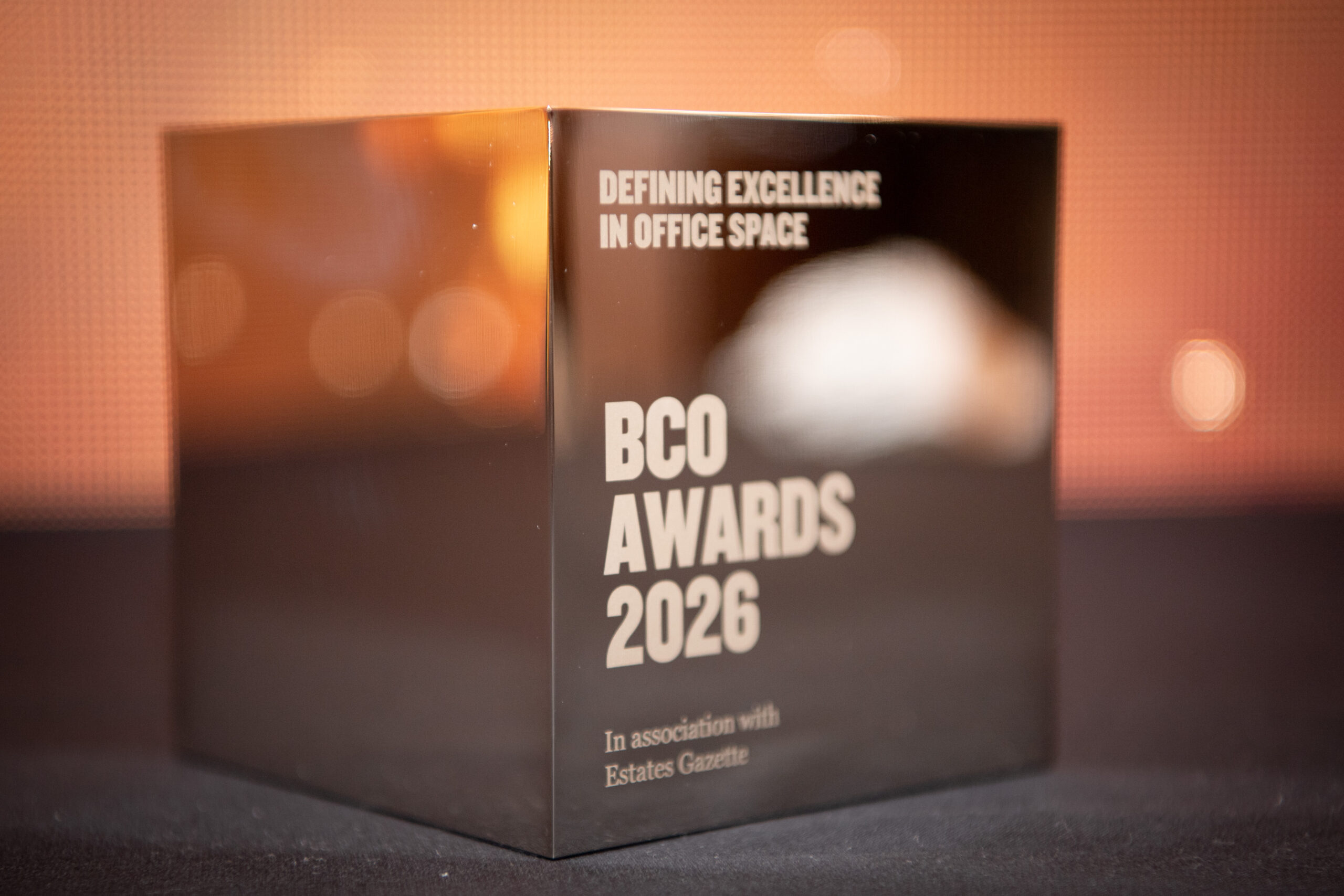
A new age for retrofit; pushing the boundaries on circularity; and celebrating sustainability and heritage. Those were just a few of the key messages shared as seven incredible workspaces were crowned winners of the BCO Scotland Awards today.

Held at Glasgow’s Hilton Hotel, the BCO’s annual Scottish Awards lunch, hosted by comedian Christopher Macarthur-Boyd, recognised projects that demonstrate best practice in office design, fit-out, operation and sustainability, setting the bar for excellence across the sector.

The BCO Award winners for Scotland are:

  • Projects up to 1,500 sq. m: BDP Studio, Glasgow
  • Refurbished / Recycled workplace: Lucent, Glasgow
  • Fit-out of Workplace: PwC at Aurora, Glasgow
  • Corporate Workplace: 20 Brandon Street, Edinburgh
  • Commercial Workplace: 30 Semple Street, Edinburgh
  • Innovation: Health Innovation Hub, Glasgow
  • ESG: Cundall New Clarendon, Edinburgh

The Committee Chair’s Award, for an outstanding contribution to the Scottish property industry, was also presented to MLA’s Gillian Stewart.

Peter Kerr, chair of the BCO Scotland committee, said: “I am delighted with the calibre and diversity of this year’s winners. From creative retrofits to cutting‑edge lab space, each project demonstrates the quality, sustainability and occupier focus that the BCO champions. The strength of entries from both Glasgow and Edinburgh shows how resilient and adaptable Scotland’s office market remains.”

 Tim Griffin, chair of the Scottish Judging panel, added:  “This year’s entries continued the trends of previous years with a clear shift towards improved environmental performance, reduced embodied carbon, and a consistent ambition to the increase colleague attendance in the office by embracing experiential design principles. It was great to see a number of entries in the Commercial Workplace category this year after a no-show last year, and an increased focus on refurbishment and remodelling of existing office stock.”

 “Scotland never disappoints when it comes to showcasing the very best in workplace design, fit-out and operation,” said BCO chief executive, Samantha McClary, “and its brilliant to see exemplar projects in Glasgow and Edinburgh recognised by our judges.

“What continues to shine through in the BCO awards is this industry’s commitment to delivering sustainable buildings, projecting heritage and creating workspaces that work for human beings. Congratulations not just to everyone who won today, but to all those shortlisted.”

All winners from the Scotland awards will compete with other winners from across the UK at the BCO National Awards in October.

THE WINNERS:

Projects up to 1,500 sq. m: BDP Studio, Glasgow

What is it? BDP’s new Glasgow studio, occupying the historic Grosvenor Building in Glasgow’s Gordon Street.

The judges said: “Delivered with a strong focus on sustainability and enhancing their own studio culture, this scheme achieves low energy use while prioritising the reuse of existing furniture, all within a comparatively modest budget. The result is a highly successful project that demonstrates what can be achieved through creativity, rigour and commitment.”

Refurbished / Recycled workplace: Lucent, Glasgow

What is it? A newbuild wrapped in a historic façade, located on Glasgow’s Bothwell Street, with sustainability at its core.

The judges said: “Lucent is an exemplary project demonstrating how a complex and constrained building can be successfully transformed into high quality office accommodation.  The clever incorporation of the historic sandstone frontage on the upper levels preserves and celebrates the building’s heritage, whilst enabling the delivery of high-quality Grade A workspace.”

Fit-out of Workplace: PwC at Aurora, Glasgow

What is it? A highly successful fit-out for PwC within the previous BCO award winning Aurora building, creating a workplace of genuine quality and versatility.

The judges said: “The office design balances the needs of a corporate environment with a strong hospitality feel, whilst reflecting both the local culture and character of Glasgow. The inclusion of an interconnecting stair between floors is a particularly successful intervention, enhancing physical connectivity and promoting knowledge exchange across teams. Overall, this is a confident and engaging workplace that fully realises the potential of the building.”

Corporate Workplace: 20 Brandon Street, Edinburgh

What is it? An exemplary refurbishment in Edinburgh’s New Town for BlackRock, transforming a historic B-listed former printworks and 1970s office into 140,000 sq ft of modern workspace.

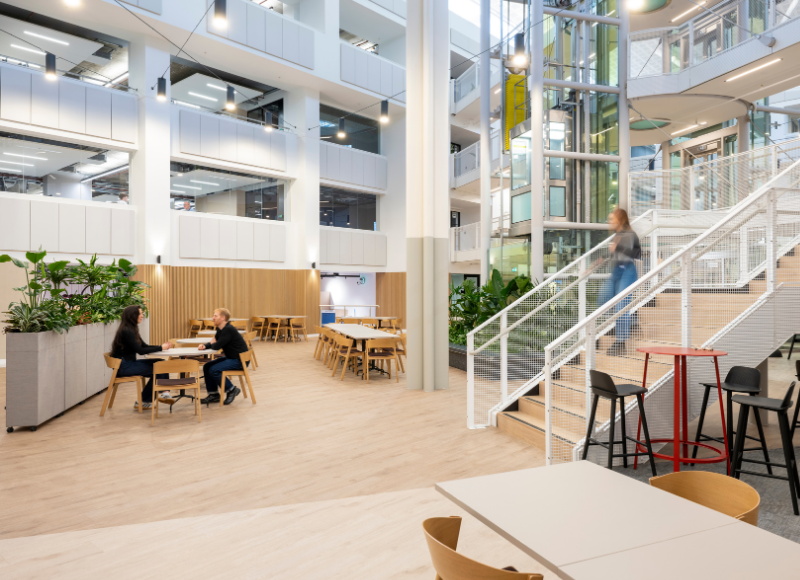
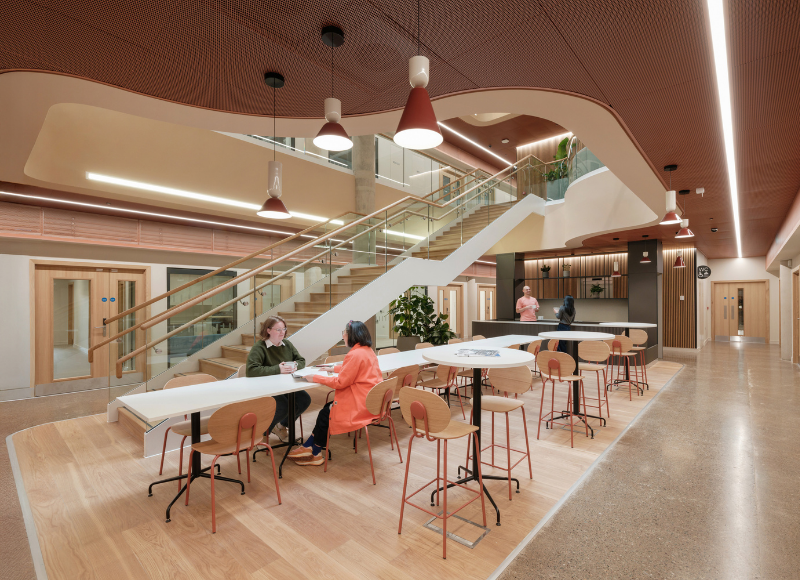
The judges said: ”Brandon Street exemplifies exceptional adaptive reuse, seamlessly transforming the three buildings into a cohesive workspace for 1,500 employees. The innovative reimagining of the central atrium as a vibrant social hub with bleacher seating, café, and wellness facilities demonstrates how thoughtful design can fundamentally enhance user experience and collaboration. The project’s robust sustainability achievements and inclusive design approach, developed through extensive stakeholder engagement, establish it as an exemplary example of heritage-sensitive workplace regeneration.”

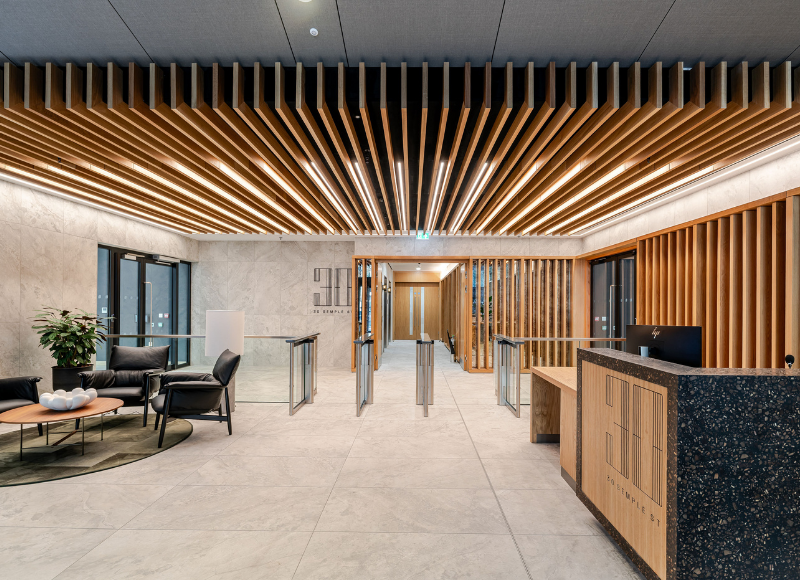
Commercial Workplace: 30 Semple Street, Edinburgh

What is it? A ‘new age’ of retrofit, having been awarded the first BREEAM Outstanding certification in Scotland for an office building refurbishment. 

The judges said: “We were impressed by the quality and calibre of the enhancements – the building is unrecognisable when compared with its starting point and is an outstanding example of what can be achieved with a retrofit development.  This is reflected in the fact that 30 Semple Street has set a new benchmark for office rental levels in the city.  The amenity areas, wellbeing spaces and finishes are of a very high quality, adding a subtle luxe feel to the building which creates a real sense of place and gives the building a true personality.”

Innovation: Health Innovation Hub, Glasgow

What is it? the first purpose-built flexible lab and office building in Glasgow totalling 87,000 sq ft. Located strategically adjacent to the Queen Elizabeth University Hospital, the building brings together researchers, healthcare professionals, and innovative companies in a collaborative ecosystem designed to promote and support innovation & growth.

The judges said: “We were extremely impressed by the integrated design approach and investment in flexible and collaborative space and design and are delighted to award this building with the Innovation Award.”

ESG: Cundall New Clarendon, Edinburgh

What is it? Cundall’s new Edinburgh office, in Edinburgh’s George Street

The judges said: “This project has pushed the boundaries on circular economy principles and is a practical demonstration of highly sustainable, cost- efficient, human-centred design, proving that high-performance, flexible, and healthy workplaces can be delivered through circularity principles, careful planning, and performance-based decision-making. It offers a replicable model for low-carbon refurbishment across the sector setting an impressive benchmark for others to follow.”

Gold sponsor’s for this year’s BCO Awards are AET Flexible Space and Troup, Bywaters + Anders. Ryden is sponsor for the Scotland region. Estates Gazette is media partner.

About the BCO

The British Council for Offices’ (BCO) mission is to research, develop and communicate best practice in all aspects of the office sector. It delivers this by providing a forum for the discussion and debate of relevant issues.

Established in 1990, the BCO is the UK’s leading forum for the discussion and debate of issues affecting the office sector.

Its members are all organisations involved in creating, acquiring, or occupying office space, whether architects, lawyers, surveyors, financial institutions, or public agencies. The BCO works to advance the collective understanding of its members, enabling them to work together to create more effective office space.

BCO Scotland media contact:

lisa@skylarkpublicrelations.com

T: 07825225414

Latest news

May 21, 2026
By BCO Media

Green days: Why biophilic design cannot be an afterthought

Good landscape design – in and outside of your workspace – is social infrastructure. Getting it right can support mental health, reduce stress, improve navigation, encourage civic life and unlock wider investment.
Read more
May 15, 2026
By BCO Media

Regeneration and sustainability shine at BCO South of England & South Wales Awards

From Pixel in Penzance to Arlington Square in Bracknell, workspaces across the South of England and South Wales are leading the way in design, sustainability and occupier experience.
Read more
May 08, 2026
By BCO Media

People, place and planet prosper at BCO Midlands & Central England Awards

On Friday 8 May 2026 at the Eastside Rooms, Birmingham, the BCO’s annual awards lunch celebrated five incredible workplaces, ranging from transformative refurbishments to an exemplary, double-award-winning office development.
Read more