BCO North x Expo Sunderland: Reimagining a city centre for work, life, and play
BCO champions offices as an essential catalyst for urban renewal at major North East conference
 October 31, 2025



BCO North chair Alex Stork and other members of the committee descended on the North East earlier this month for the BCO North x Expo Sunderland: Delivering the Future City 2025 conference.
The two-day event – held at the BCO award-winning City Hall – showcased Sunderland’s ambitious transformation, at the heart of which was its vision to create a central core where people can live, work, and play in a connected and vibrant environment.
The BCO partnered with this year’s Expo Sunderland to explore the future of urban living, working, and placemaking. The focus was firmly on the government’s growth ambitions, housing delivery, planning reform, community building, infrastructure, and the skills needed for our future workforce.
In her keynote speech on day two of the event, BCO chief executive Samantha McClary brought a central BCO aim to the table: that offices must too be seen as critical infrastructure when it comes to building thriving cities.
Workplaces are essential catalysts for urban renewal, said McClary, they drive footfall, encourage local spending, and support the ecosystem of shops, cafés, and amenities that bring cities to life. In short, a strong office presence can boost leisure and retail, creating vibrant, thriving places for all.
McClary further highlighted how modern mixed-use districts (or MXDs) were replacing traditional central business districts. Offices, she said, are not merely buildings but “communities and idea hubs” that must evolve to support living, learning, and collaboration.
Citing new BCO research on post-pandemic office habits, she talked of the steady return to the office, particularly in regional cities like Sunderland. McClary concluded that the most successful workplaces of the future would be those defined by purpose, connection and place, not just design or location.
Repopulating Sunderland
The BCO’s must-see Repopulating the city panel explored how strong partnerships, pride in places, and bold leadership were breathing life back into Sunderland.

The University of Sunderland’s Andrea Walters emphasised the university’s role as a civic anchor an active driver of the city’s social and economic ecosystem.
Through initiatives such as the Hope Street Exchange and community-led innovation schemes, the university connects students with local employers, fosters entrepreneurship, and ensures the city retains the next generation of talent.
“We’re not just shaping futures,” she said, “we’re shaping Sunderland’s future workforce and identity.”
Peter McIntyre of Sunderland City Council reflected on the council’s journey of “bravery and belief”.
For decades, repopulation wasn’t truly on the city’s agenda, but the Riverside Sunderland regeneration project marks a turning point, said McIntyre.
He spoke about rebuilding confidence within the council and across the city, noting the importance of organisational reform and a willingness to take risks.
“Before we could convince others,” said McIntyre, “we had to convince ourselves.”
Riverside now embodies that self-belief. It is a flexible, evolving district that puts people, partnerships and placemaking at its core.
Knight Frank’s Paddy Matheson stressed the need to understand the full spectrum of demand, from multinationals like Ocado to long-standing local firms.
For the market, the aim should be to create a city centre that attracts both new investment and loyalty from existing businesses. He also noted how Sunderland’s office market has risen by more than 30% in five years, showing that ambition, when matched by delivery, can change perceptions and attract high-quality occupiers.
“You can’t just wait for demand to arrive. Sometimes you have to build it and then they will come,” he concluded.
A clear message emerged throughout the discussion that repopulation was about connection as much as construction. The panel called for more collaboration between public, private and civic partners to sustain the city’s momentum, ensuring that Sunderland’s regeneration extended beyond its red lines into the communities that define it.
Bold investment
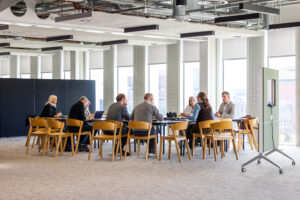
“To attract occupiers and remain functional, offices and city centres must both deliver accessible, amenity-rich and experiential spaces,” said BCO North chair Stork. “Sunderland City Council has set the bar high with bold investment into its own workspace, a move that signals confidence and sets a standard that we’ve seen in other areas of the city.”
Sunderland’s regeneration delivers a lesson in civic confidence for other places.
The new bridge across the River Wear is more than infrastructure, it’s a continued statement of ambition that connects areas and unlocks development potential.
Upcoming civic projects are the foundation of the city’s ambitions. Culture House, a multi-purpose cultural venue, will be home to the City Library and will be packed with interactive, digital features and a year-round programme of fun things to do, while Crown Works Studios hopes to make north-east England a hub for the film and television industry.
New AI and creative sector initiatives further showcase Sunderland’s intent to position itself as a hub for modern work, innovation, and urban living.
For office occupiers, this signals a city rich in talent, amenity and opportunity that can be tapped into with the best workspaces.
A partnership approach
Sunderland provides a compelling example of how placemaking and office-led regeneration can work hand in hand, delivering both social and economic value.
The city is in the midst of a visible and tangible transformation. Each development, from the new bridge to Culture House, contributes to the story of confidence, reinvention, and connectivity that was on show at Expo Sunderland.
For the office sector, Sunderland illustrates that the future of city centres lies in integrated, people-first urban planning, where offices, homes, culture, and infrastructure combine to create sustainable, vibrant environments.
Sunderland’s story is unfolding rapidly, offering lessons for developers, investors, and planners across the UK. Other towns and cities across the North and wider UK should take note.




 By BCO Media