Green days: Why biophilic design cannot be an afterthought
BCO Scotland gathers experts to debate the value of greenery in our workspaces
 May 21, 2026


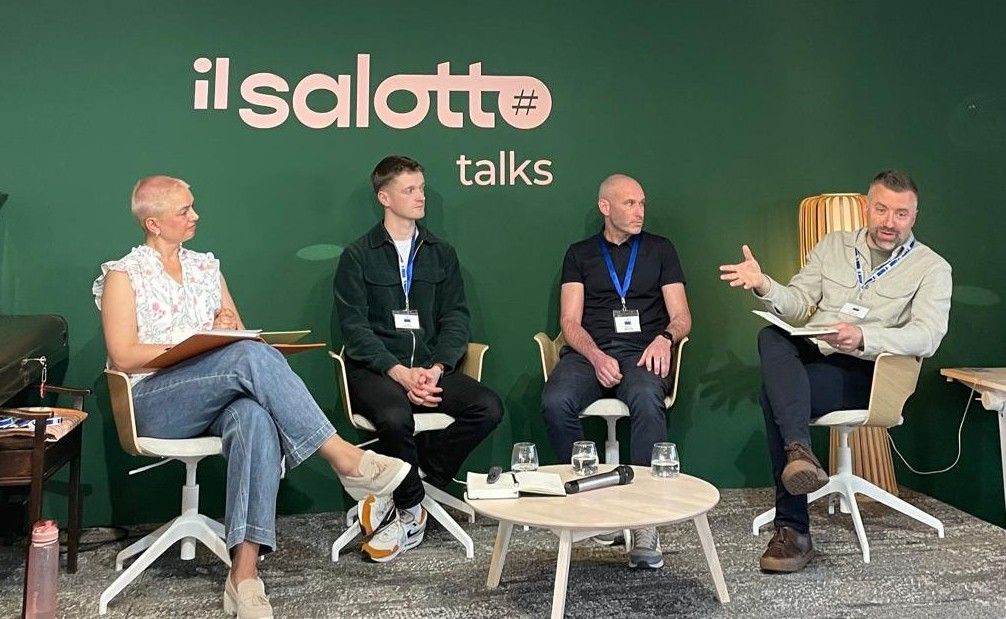
Good landscape design – in and outside of your workspace – is social infrastructure. Getting it right can support mental health, reduce stress, improve navigation, encourage civic life and unlock wider investment.
This was the topic of discussion at a recently hosted BCO Scotland event that brought together Greg Meikle, regional director at OOBE, Gordon Yeaman, director at MLA and Cameron Kerr’s Bernie Carr, to argue that biophilic design is so much more than just the introduction of plants into buildings.
A recurring theme was that landscape and external environment should not be treated as an afterthought, with the panel arguing that public realm, planting, views, daylight, thermal comfort and access to nature all influence how people experience buildings and cities.
The speakers challenged the idea that indoor planting alone delivered biophilic outcomes.
Plants can help, but only when the underlying environmental “canvas” is right. However, offices are often highly artificial environments: fixed temperatures, fixed lighting levels and controlled airflow.
Proper biophilic design requires more dynamic, naturalistic conditions, including daylight variation, air movement, material texture, views, seasonal change and opportunities to move between different environments.
The debate also connected biophilic design with trauma-informed design, with the panel highlighting how external routes, thresholds, wayfinding, colour, material changes and safe arrival sequences can materially affect whether people feel able to access a building. In healthcare and education contexts, better-designed environments were said to contribute to fewer missed appointments and reduced pressure on services.
Another strong thread throughout the conversation was measurement. The panel acknowledged that the sector was good at measuring isolated components such as canopy cover, light levels or floor area, but much less effective at measuring lived experience. Post-occupancy evaluation was identified as essential, particularly if designers want to prove that early investment in landscape, public realm and environmental quality creates real value.
The discussion concluded with a focus on Glasgow and Scotland more generally. The panel suggested that Scotland was still behind parts of England and Europe in treating landscape and public realm as a primary driver of development quality. Projects such as George Square, the Avenues and the Clyde were discussed as opportunities to use landscape, water, biodiversity and “meanwhile” interventions to make the city centre healthier, more attractive and more investable.
Top ten takeaways
- Biophilic design is not just plants
It includes daylight, air movement, thermal variation, natural materials, views, smell, sound, texture, seasonality and people’s emotional experience of space. - Landscape must be involved from day one
Leaving external space until the end usually reduces it to “green sauce” rather than a meaningful part of the development strategy. - The base environment matters before decoration
A rigid, sealed, artificially lit office cannot become genuinely biophilic simply by adding planting. - Real plants outperform artificial ones
Their value is not only visual. They change, grow, support air quality, create moments of attention and give people a sense of living connection. - Experience is harder to measure than cost, but no less important
The panel called for better post-occupancy evaluation to understand how spaces are actually used and felt. - Biophilic design can support trauma recovery and accessibility
Safe routes, clear thresholds, intuitive wayfinding and softer sensory environments can reduce anxiety and help people feel able to enter and use buildings. - Choice is critical
People need different types of space: light and dark, open and sheltered, social and quiet, warm and cool. - Thermal variation can be positive
The panel discussed “thermal alliesthesia”: the pleasure and stimulation people can feel from moving between different thermal conditions rather than sitting in one fixed temperature all day - Public realm investment can unlock wider value
Good streets, squares, green spaces and riverfronts can improve wellbeing while also encouraging commercial and civic investment - Scotland needs to treat landscape as social infrastructure
The strongest closing point was that biophilic and landscape-led design should be outcome-based, strategic and embedded early, not treated as optional aesthetic enhancement.
If you’d like to find out more about the BCO’s events, check out our calendar here: https://www.bco.org.uk/events



 By BCO Media