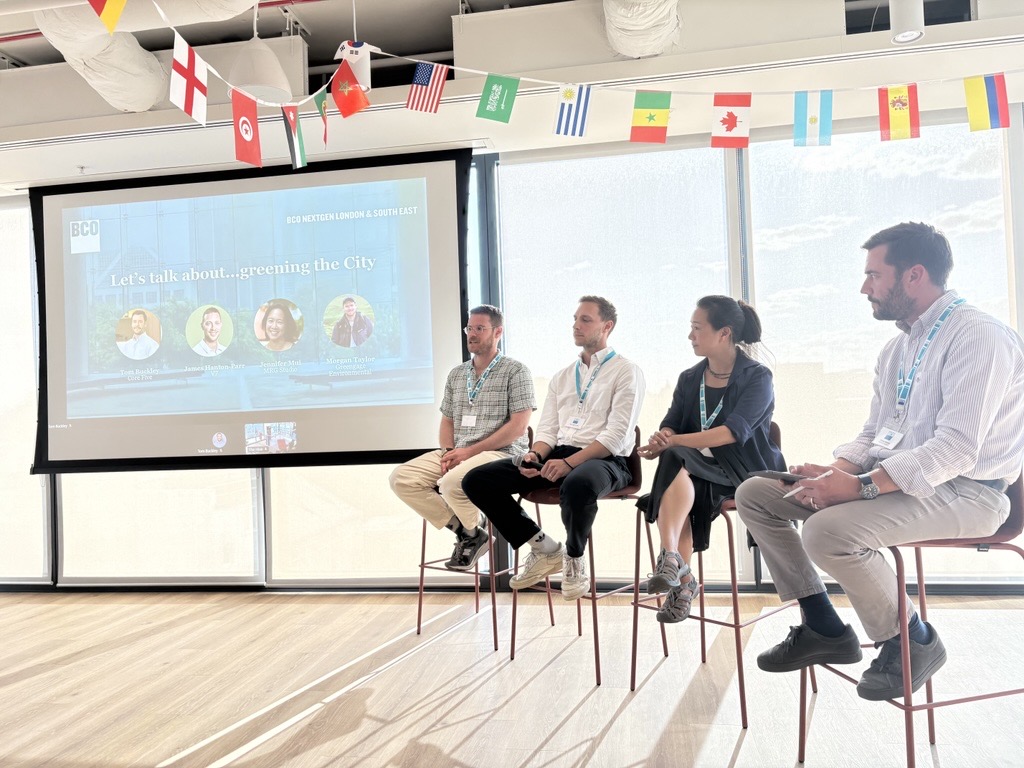
A total of 31 outstanding individuals and firms have been shortlisted for this year’s BCO NextGen Awards.
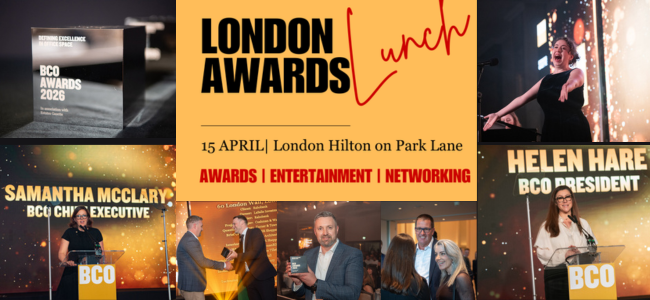
The awards, which take place on Thursday 13 November at Skylon in London, will see 10 trophies handed out, including a special one-off award to celebrate a decade of BCO NextGen activities.
After an intense and highly competitive judging process, the BCO can now reveal who will be battling it out to take home the NextGen Rising Star awards in London & the South East, the Midlands and East Anglia, Northern England, North Wales and Northern Ireland, Scotland and in the South West and South Wales, alongside awards for Employer of the Year, Graduate of the Year, the Impact Award and Inspirational Leader of the Year.
This year, to mark the 10th anniversary of the awards, the BCO has also introduced a special one-off category –Outstanding Contribution to BCO NextGen. This award recognises an individual who has demonstrated exceptional commitment to the BCO NextGen community, going above and beyond to foster inclusion and to provide opportunity for the next generation of property professionals.
Judges were particularly impressed this year by the depth of talent, innovation, and leadership shown across the UK’s commercial property sector.
The shortlisted individuals and organisations truly exemplify the values at the heart of BCO NextGen — ambition, impact, and a commitment to shaping the future of the workplace.
Created to recognise and celebrate emerging talent in the workplace sector, from future-focused graduates to employers creating inclusive and dynamic environments, these awards celebrate those who are making a real difference, both within their organisations and in the wider industry.
Congratulations to all who have made the list this year. We look forward to celebrating with you at the 10th anniversary awards dinner next month.
For those who have not yet secured their ticket click here. Or if you would like to find out more about how you can support fresh new talent in our sector, email us at events@bco.org.uk

We are pleased to share that our chief executive, Samantha McClary, has been honoured with the Built Environment Award at the newly renamed awards event, previously known as the Property Awards – reflecting the University’s refreshed identity and vision.
The headline Built Environment Award was presented to Sam in recognition of her two decades of impact across the property and workplace sectors. Before joining the BCO, Sam spent 20 years at Estates Gazette, where she served as editor until January.

Since 1987, University of the Built Environment has presented its annual Built Environment Award (formerly the Property Award) to a person or organisation which has made an outstanding contribution to the property industry.
In her acceptance speech, Sam said:
“It’s really humbling to pick up an award that has been given in a former guise to so many phenomenal human beings. The imposter syndrome in me says that I’m just a journalist, just doing a job and trying to nudge this industry along in the right direction, so it’s really wonderful to be recognised for that.”
Widely regarded as both a champion and challenger within the sector, Sam has been a driving force for diversity, inclusion, sustainability, and innovation – from launching the Future Leaders programme to serving on the advisory board of Black Women in Real Estate. Since taking the helm at the British Council for Offices in May, she has continued to shape the debate during a pivotal moment for the workplace sector.
We are proud to see Sam’s leadership and contribution recognised through this award and extend our congratulations to all nominees and winners who continue to drive excellence across the built environment.
Photos courtesy of The University of The Built Environment.

The 2025 BCO NextGen Ideas Competition, held at Hawkins/Brown’s Clerkenwell studio on Thursday 9 October, saw six finalists take to the stage to present bold, human-centred concepts for the future of the workplace.
Each finalist’s idea was shaped by mentorship, from both a 2024 finalist and a BCO mentor, and refined by public speaking training from Ginger Leadership Communications. The result was a night of compelling presentations that reflected a shared commitment to transforming how we work, live and connect in and around the office.
Throughout the evening, the NextGen finalists issued calls to action for the industry to meet the urgent challenges and exciting possibilities of tomorrow’s workplace.
While this year a single winner was selected – AECOM’s Lauren Lemcke (pictured), whose concept CarbonLegacy earned her a ticket to next year’s BCO conference – the evening was a celebration of all six ideas and the collaborative spirit that defines the BCO NextGen community.
Workplaces that restore, not just perform
A recurring theme throughout the evening was the transformation of the office from a place of productivity to a destination of wellbeing and experience.
Plug-in Workspitality, a concept from Gensler’s Justin Lau, responded to the flight to quality by arguing that the office should do more. His proposal suggests the introduction of ‘Tetris-like’ modular plug-ins embedded throughout office cores, to improve a building’s amenity offer. This ranged from breakout spaces for group work to spaces for nourishment, exercise, healthcare and pop-up cultural events. These different zones are designed to respond to an employee’s changing needs throughout the day.
Also from Gensler, Allison Au’s Cinetecture takes a different approach to human-centred design by looking at the cinematic quality of emotionally engaging environments. A self-described ‘imagineer’, Au drew on Millennial and Gen-Z trends to create Instagrammable spaces, asking the audience to imagine workplaces that feel like boutique hotels or film sets – spaces that inspire and connect. She highlighted the rise of the experience economy, with 2.5bn social users forming new connections with brands and companies, and called for the BCO to incorporate function and experience into its office guidelines, including opportunities for reviews of fit-out across office spaces.
Together, these ideas reflect a growing desire to treat employees as guests rather than workers and find ways to embody the sense of value, care and inspiration needed to achieve this.
From sustainability to social value
Environmental responsibility was another powerful thread, with finalists proposing systems that embed sustainability into the very infrastructure of the workplace.
From Spec Commercial, Liam Jeanes challenged the audience to imagine not just the future of the office but the future of society, asking: “How would you survive in London if the wheels fell off?”
His concept, OFF GRID, extrapolates existing models, from GSK’s vertical farm to blue roofs, to position the office as infrastructure; reframing our building sites of agricultural production and sources of essential resources.
AECOM’s Lemcke introduced CarbonLegacy, a platform that converts embodied carbon savings from fit-outs into community investments. Her presentation shed light on the uncomfortable truth of office fit-outs.
“Over a 60-year period, more emissions are produced by the carpets and coffee tables in offices than by the concrete structure of the buildings,” she said.
Designed to slot into occupiers’ wider corporate social responsibility policies, CarbonLegacy involves converting carbon emissions into “legacy credits” that companies can use to track their carbon reductions and reinvest them into local projects.
Her presentation encouraged the BCO to adopt CarbonLegacy as part of its fit-out guide, bridging the gap between environmental responsibility and social value.
Kinga Zadora, representing ODGroup, took to the stage with REGEN Performance Clauses, a concept that turns service charges – “the dullest bill in real estate” – into a tool for driving measurable social and environmental value.
Her model rests on a points-based system, allowing tenants to earn rent reductions by meeting agreed sustainability and community engagement targets. With the clauses, frameworks and data already in place, Zadora proposed smart service charges to match the smart meters and tech in offices, concluding that “service charges just got interesting.”
Designing for life beyond the office
Alongside ideas focused on environmental impact and community value, the presentations also turned attention to the personal realities of working life, highlighting how workplace design can better support caregiving and inclusion.
Representing Whitecroft Lighting, Sophie Woodland delivered one of the evening’s most personal presentations.
Her concept, Making Family Work, reimagines the workplace as a space where parenting and professional life are not at odds, but integrated by design.
Her concept addressed the invisible barriers to women returning to work, noting that 34% of workers don’t return to the same job after parental leave, as she put it: “That’s 34% of experience, talent and employable people quietly leaving.”
Drawing on her own experience as a working mother, she proposed a model that includes co-working zones for parents and children, onsite early years learning hubs with flexible enrolment and sustainability-focused initiatives such as rooftop gardens and forest schools.
“What if we designed workplaces that actually work for families?” she asked. “Instead of hiding children away, what if we bring them in?”
A key ingredient in the success of all the ideas presented was the BCO’s mentorship programme.
Each finalist received guidance from both a seasoned BCO mentor and a previous finalist. This dual mentorship model not only elevated the quality of the presentations but also reinforced the idea that innovation is born out of community.
Across the evening, the finalists all offered visions for workplaces that are more responsive, inclusive and socially engaged. Their ideas challenge the notion of the office as a purely functional space, instead positioning it as a place where people can connect, contribute and thrive together.
BCO chief executive Samantha McClary, closed the night fittingly by reassuring the audience that “we can sleep easy tonight knowing that the future is in good hands”.
“The NextGen is a future generation that cares, that sees the problems we’re facing and isn’t afraid to find solutions,” she said.”
The BCO NextGen Ideas Competition 2025 is supported by Hawkins/Brown, Artus Air, Derwent London, Multiplex, Cushman & Wakefield and Parkeray.
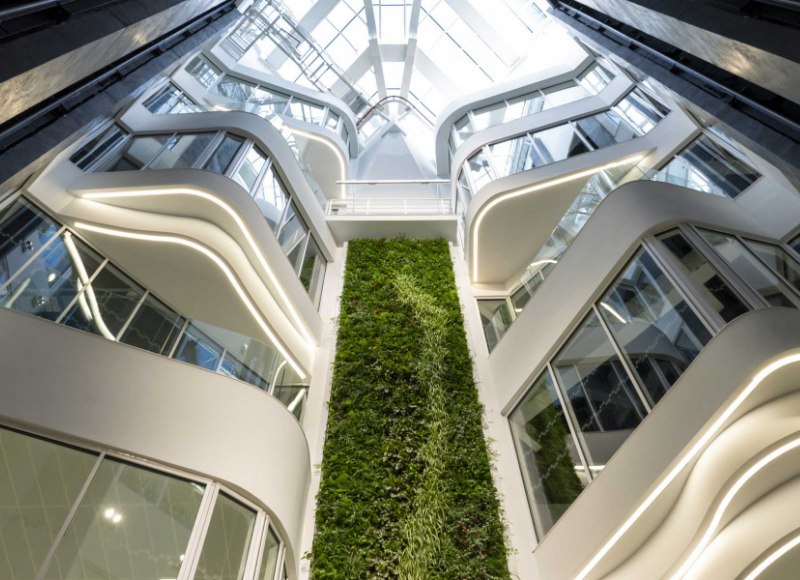
An office designed entirely around circular economy principles, a 3,300m² living wall and a former infirmary transformed into a modern office and events space, were just three of the amazing office innovations highlighted at the BCO’s National Awards event.
The awards, widely recognized across the built environment for celebrating the very best in office design, development and operation, took place at the JW Marriott Grosvenor House hotel on London’s Park Lane on 7 October.
The winners, announced in front of an audience of more than 1,200 senior figures from across the office sector, showcase what it takes to create a successful office in today’s environment and how those leading the way are revitalising cities, cutting carbon and setting new benchmarks for best-in-class.
Unusual HQ in Northamptonshire, home of lighting and stage engineering solutions provider Unusual Rigging, took home two awards on the night – one for Corporate Workplace and the Best of the Best gong.
The project was given the awards for not only achieving the very highest energy performance rating of EPC A+ and being built entirely on circular economy principles, but for exemplifying how modern offices have evolved to become beacons of sustainability best practice.
A key highlight for judges was how this innovative building could be disassembled and reused at the end of its life, massively reducing its carbon footprint.
The Edinburgh Futures Institute, a former Victorian infirmary transformed into a modern office and events space, collected the BCO’s Innovation award. The restored 20,000m² space includes state-of-the-art teaching facilities, co-working space, business incubator space, plus exhibition and event spaces.
The judges were particularly impressed by the excavation under the main concourse to form a new auditorium, the innovative construction techniques used to restore and enhance the building, and the commitment of the University of Edinburgh to turning Scotland’s oldest voluntary hospital into a hub for future thinking.
Other winners on the night included One Station Hill in Reading, which picked up the award for Commercial Workspace, Capital Group’s HQ at 1 Paddington Square, PC, which won Fit Out of Workplace and Eden in Salford’s New Bailey development site, which was crowned winner of the ESG award. Eden is a LETI Pioneer project and is the UK’s first commercial office to achieve a 5.5-star NABERS UK “Design Reviewed” rating.
This year’s event also handed out its first awards for customer experience, a new category focused on how well the UK’s offices are serving the people that occupy them.
GPE’s Woolyard development in London Bridge, SE1, won the Customer Experience – Commercial Landlord – award, with judges labelling the service as “game-changing”, with building managers understanding client needs, providing a genuine sense of care and enabling customers to succeed.
Natwest raised the Customer Experiencer – Corporate Occupier – award aloft for its offices at 250 Bishopsgate, EC2. The integration of technology with human-centred service throughout the building, plus the bank’s commitment to capturing the voices of 9,000 colleagues through various surveys to directly inform customer strategy, were standout actions for the BCO’s judges.
Mike Burton, chair of National Awards judging panel, said: “This year’s judging process revealed a notable shift in how we define excellence in the workplace. The 2025 winners show how the UK’s office sector is leading the way in creating spaces that are not just high-performing and sustainable, but deeply human. The winning projects prove that offices can be catalysts for wellbeing, creativity and urban renewal. “
Make Architects founder Ken Shuttleworth was handed the prestigious President’s Award at the event. He was honoured by BCO president Helen Hare for his outstanding contribution to the real estate industry.
“Ken’s philosophy is not just about the architecture of an individual standalone building,” said Hare. “It is about creating a place – one that must have a heart. Ken has genuinely made a difference to our industry. His fearlessness in breaking down architectural boundaries, dedication to bringing through the next generation of architects, while supporting other aspects of the office sector, is why he is the perfect recipient of this year’s BCO President’s Award.”
Shuttleworth is recognised as one of the world’s leading architects and continues to deliver a portfolio of iconic, innovative and sustainable buildings.
Over the course of his 50-year career he has worked on some of the most groundbreaking architectural landmarks in the world, from HSBC in Hong Kong to London’s Canary Wharf. He was one of the first to develop a 100% employee-owned architectural business and is committed to diversity, inclusion and recognising the importance of people.
BCO chief executive Samantha McClary added: “The BCO Awards are a celebration of bold thinking and brilliant execution. What stands out this year is the sheer diversity of innovation taking place, from circular economy construction and biophilic design to inclusive, neurodiverse environments and flexible leasing models. These workplaces – and the people who creature and curate them – reflect a sector that’s listening, learning and leading the way in meeting future challenges and opportunities head-on. The BCO is proud to champion this evolution and the people driving it”
The full list of winners from this year’s BCO National Awards:
Seven projects were highly commended at this year’s awards. They include Dojo Bristol for Fit Out of Workplace, the Living Lab in London for Projects of up to 2,500m², Foundation in Altrincham for Refurbished/Recycled Workplace, Oldham Spindles for Innovation, 11 Belgrave in London for ESG and Here East in Stratford and Ovo Energy’s HQ at Cadworks in Glasgow for the BCO’s new Customer Experience awards. They were highlighted in the commercial landord and corporate occupier categories respectively.
Huge thanks to this year’s sponsors of the BCO awards, including platinum sponsor AET Flexible Space, Gold sponsors AECOM, Glamox, Morgan Lovell, Troup, Bywaters + Anders and silver sponsors Cundall, GPF Lewis and Quantem are silver sponsors.
Estates Gazette is media partner to the awards and those interested diving deeper into the award winners can read our awards supplement with the next edition of the magazine or browse the digital version here.
Entries for 2026 awards are now officially open. Find out how to make sure your project makes it on to the BCO’s regional and national shortlist by downloading the 2026 Entry Guide here.

Cath Macpherson, director at Hoare Lea, has been appointed as the new chair of the BCO’s South West committee. She takes over the position from John Wright, director at Stride Treglown, who was appointed junior vice president of the BCO in July this year.
Wright will remain as a member of the committee.
Macpherson first became involved with the BCO in 2017 when she became a judge for the body’s South awards. She has some 15 years of experience working in the office and workplace sector and is passionate about making sure our offices truly work for the people who use them.
“I’m really pleased to be taking on the role of chair for the BCO’s South West committee,” said Macpherson. “As chair, I want to bring more of an occupier’s perspective to the committee, which is why I’ve already invited a couple of new members from that side of the market.”
She added: “We’ll be bringing forward more events focused on occupiers and continuing to provide members with great building tours across the region. I’m also keen to help demystify accreditations for our members so they can better understand what they mean and how they add value.”
Macpherson said she was looking forward to working with the committee to help shape great workplaces across the South West.
The South West committee currently comprises 17 BCO members, with four recent new additions, including Isabelle Davies from Legal & General, Danielle Kirk from LSH, Sarah Mitchell from Overbury and Toni Riddiford from Stride Treglown.
The full committee is as follows:
To find out more about the BCO South West and to keep up to date with all its events and activities follow the committee on LinkedIn.

BCO NextGen member and Knight Frank development surveyor Betsy Brady has always loved buildings and development. That passion comes across loud and clear in the BCO’s Workspace Unwired podcast, in which she proposes that offices are no longer just places of work—they are spaces for connection, purpose, and human flourishing.
At the heart of Brady’s philosophy is the idea that the office must serve a human-centric purpose. She challenges superficial post-pandemic design trends – remember the slides, basketball courts and ball pools? – and instead advocates for deeper thinking about what human beings really need to be productive, happy and fulfilled.
For her a great office, a functional office where people choose to go, is one that goes beyond the aesthetic and thinks about how space works as a reflection of a company’s ethos and how it enables the human beings that inhabit it to perform to the best of their ability.
A great workspace is one that enables businesses to get their best out their workforce.
“There’s real work going into how can we make spaces where you can nurture your young talent, bring returners into work and feel valued,” says Brady. “As we move into a very human-centric workplace, the human element isn’t just about whether people want to be in the office or do they want to be at home, it is about things like how the psychoacoustics affect someone who’s 20, who’s 30, who’s 40.”
With the workforce now spanning more generations than ever before, creating spaces that are adaptable and flexible for different workstyles is vital, says Brady.
Ultimately, we have to create offices where people want to be.
“The office has been around for years and it will continue to be around for years,” says Brady. “But we now have an opportunity to make it something where people leave being happy that they went.”
Listen in to Workspace Unwired: Beyond the Aesthetic to hear more of Brady’s optimism, why workspace is the best place to build a career and why our offices can—and should—be a source of joy and purpose.
Tune in to a new episode of the BCO’s Workspace Unwired every fortnight. Available on all good podcast players including Apple, Spotify, Amazon and Podbean.

Last month, Cundall’s management board met in Birmingham. I welcomed colleagues from across the world and, afterwards, I took them on a walking tour of the city.
We started in St Paul’s Square, the green oasis that once hosted our own offices, before moving on to landmarks we’ve been part of delivering, including Three Snowhill, a striking 17-storey Grade A office building in the city’s business district.
A short walk down Colmore Row brought us to Paradise. Paradise? In Birmingham? For those who haven’t visited in a while, the surprise is understandable. Yet this £1.2bn development is transforming the civic heart of the city, blending heritage with modernity and creating over 1m sq ft of contemporary office space. It’s the kind of bold vision that captures what Birmingham is becoming.
More than a second city
Like so many in the local business community, I’m not originally from the West Midlands, but more than 20 years on, I now count myself among Birmingham’s most passionate advocates.
Sure, the city is not without its challenges. A cash-strapped council and ongoing bin strikes have led to unwanted headlines and fuelled longstanding jokes. A second rate Second City some might say.
But make no mistake about it, Birmingham is on the rise.
A bold vision
With the Mayor’s Growth Plan now on the table in Westminster, a new Mayoral Development Corporation announced and the government’s landmark Regional Investment Summit coming to Birmingham, the region’s growth is in full motion.
Underpinned by a vision of raising living standards, reducing poverty and progressing toward net zero, the West Midlands Growth Plan sets out goals including:
The MDC is designed to accelerate regeneration and economic growth with major projects including the Birmingham Sports Quarter, the HS2 Curzon Street station, the Smithfield development, and a creative industries hub in Digbeth.
Then there’s the Regional Investment Summit. Backed by household names including Eon, Lloyds, KPMG, HSBC and IBM, the event makes one thing clear: this is a region ready to compete on a larger stage.
Building blocks
With its diversity and industrial heritage alongside investment and innovation in advanced engineering, clean tech, life sciences, digital and professional services, the West Midlands has the ingredients to be a global powerhouse.
Scan the skyline and you’ll see cranes everywhere. Much of current activity is residential, drawing people into Birmingham with attractive leisure and lifestyle facilities. But here lies a question: where will this growing, young, diverse, educated population work?
Offices are the jewel at the centre of the city and their quality sets the tone for everything else; attracting global names, creating confidence, and shaping perceptions.
Demand vs. supply
The proof is in the pudding. Grade A space at Three Chamberlain Square was snapped up almost as soon as it became available and the only major refurbishments currently taking place are already attracting significant interest. Demand is outstripping supply and that tells its own story. Yet there are no new office developments in the pipeline for the year ahead.
Companies like Goldman Sachs and EY have already recognised the opportunity here. Others are watching closely. Why? Because Birmingham offers something rare in a global city: the ability to live close to your workplace, enjoy the cultural and lifestyle benefits of an urban centre, and still access international markets. With HS2 on the horizon and a steady pipeline of talent from our five universities, the position is perhaps stronger than ever.
This is the moment
But to sustain growth we must continue to invest in quality workplaces. Businesses know that if they can offer the best office space, they can attract and retain the best talent. Workers increasingly expect flexible, agile environments that match or exceed what they might find in London. Cities that offer those spaces will win the race for that talent and investment. Those that don’t will fall behind.
For Birmingham, this is the moment. The city has energy, ambition, and momentum. But the true measure of success will be whether we can deliver the workplaces that keep attracting the likes of Goldman Sachs, EY, and the next wave of businesses.
If we want sustainable, long-term growth, we must ensure Birmingham’s jewel — its offices — continues to shine.
Rob van Zyl is building services partner at Cundall and chair of the BCO Midlands committee.
By BCO Scotland committee chair Peter Kerr:

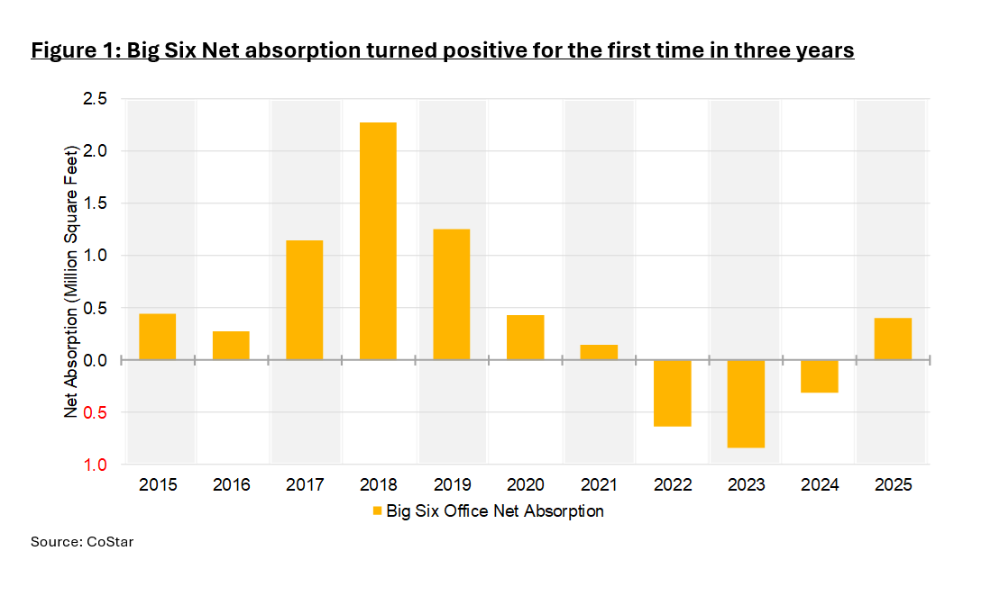
A quiet revolution is underway in the UK’s office market, and it’s happening outside of London. From Glasgow to Birmingham, major banks are doubling down on their presence in regional cities. This, in turn, is driving up demand for premium sustainable office space in the regions.
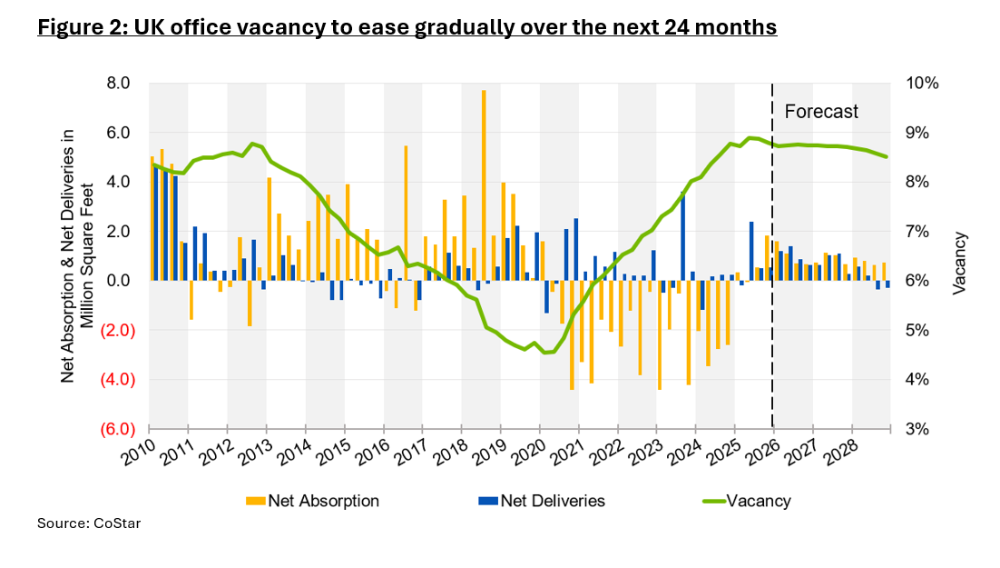
According to Savills, the banking sector is already recording its highest regional take-up since 2018, marking a significant shift in geography. A further wave of activity is predicted, driven by 1.8m sq ft of leases expiring in the sector due across the Big Six regional markets by 2030. This trend also stretches beyond the banking sector, with recent findings from CBRE showing that availability in the regional markets decreased by 3% in the second quarter of this year.
Occupiers aren’t just looking for any space. They want grade-A, BCO-compliant buildings that tick all the boxes: ESG compliance, tech-enabled infrastructure, wellness features and proximity to talent. Glasgow, Manchester and Birmingham are emerging as prime targets, offering lower costs, strong transport links and growing innovation hubs.
This shift in demand is reshaping how developers, investors and local authorities think about office-led regeneration. More than just places to work, offices have a vital role to play as anchors for wider urban renewal. When designed well and integrated with transport and public realm improvements, they can unlock stalled developments, attract complementary uses such as retail and leisure and boost civic pride.
This aligns with both national and devolved government strategies. The UK’s “Plan for Change” aims to relocate 12,000 civil service roles from London by 2030, with new campuses planned in Aberdeen and Manchester. These moves are expected to generate £729m in local economic benefits and release 3.5m sq ft of London office space. Meanwhile, the Scottish Government’s National Planning Framework 4 emphasises sustainable, high-quality work environments that support local economies.
Capital attracts capital. The benefits of the presence of JP Morgan’s 270,000 sq ft tech hub in Glasgow and HSBC’s headquarters at 1 Centenary Square in Birmingham, housing 2,500 staff, will go far beyond providing custom for local shops and businesses.
Barclays’ £500m campus on Glasgow’s riverside is a case in point. The BCO Award-winning workplace now houses more than 5,000 employees and has helped catalyse regeneration in the surrounding area. It also demonstrates how large occupiers can integrate social value commitments into their developments. Barclays’ partnership with local employability programmes reflects the office’s role as a wider community asset.
Indeed, major office developments often trigger improvements in public transport, public realm and local services. In line with BCO guidance, the integration of active travel routes and public transport is now a baseline expectation for attracting leading occupiers.
Offices can also help to anchor mixed-use regeneration, integrating retail, leisure and civic uses into business districts. This is demonstrated in Glasgow’s International Financial Services District and Edinburgh’s Haymarket regeneration, where office-led schemes have catalysed broader urban renewal.
Public sector pre-letting is likewise proving to be a powerful tool for growth. It can de-risk speculative developments and encourage clustering, drawing in private sector occupiers. This dynamic is already playing out in cities such as Leeds and Newcastle, where civil service relocations have boosted demand and viability.
Of course, challenges remain. Hybrid working is now the norm and civil service headcount reductions could dampen long-term demand. But the shortage of premium ESG-certified space in regional markets means that the best buildings will continue to attract tenants.
For landlords and developers, regional cities are no longer secondary markets. These locations are central to the UK’s economic future. Unlocking their full potential will require coordinated planning policy, infrastructure investment and occupier incentives. If all of this can come together, we have the opportunity to create thriving, inclusive business districts that support long-term growth.
Banks are investing, occupiers are expanding and cities are responding. If we get this right, regional office markets will not only thrive but help rebalance the UK’s economic map, one building at a time.
Photo credit: Material Source.
The UK’s current office grading system is no longer fit for purpose, says a new report from the British Council for Offices.
The report, authored by JLL for the BCO, found that fewer than 3% of respondents supported the current grading system. As such, the report proposes a comprehensive overhaul of how office quality is defined and measured.
The Redefining the Market: Beyond Grade A report presents a comprehensive analysis of how office quality is currently assessed and suggests a new scoring-based classification system that better reflects the evolving priorities of occupiers, investors and developers in the flexible working era.
The report proposes a new 100-point scoring matrix that evaluates buildings across four categories – physical quality, sustainability, technology and amenity – offering a more transparent and adaptable framework.
Key findings include:
The research draws on input from 89 representatives across 41 organisations, including developers, agents, investors and occupiers, as well as data from more than 180 survey responses and multiple stakeholder workshops.
The proposed new BCO grading system would use a scoring-based approach that allows for more nuanced differentiation between buildings. This includes a flexible matrix adaptable to both new-builds and retrofits, taking the form of a four-tier classification: Prime (≥80 points), Grade A (50–79 points), Grade B (30–49 points) and Grade C (<30 points). The criteria used cover natural light, floor-to-ceiling heights, building management systems, WiredScore rating, WELL certification, energy source, air quality and tenant amenities.
The framework has been tested on office schemes in London, Leeds, Manchester, Reading and Gloucester. These pilot applications demonstrate that best-in-class office space is no longer confined to central London and that high-quality retrofits can compete with new-builds.
The proposed BCO grading aims to support better decision-making, improve transparency, and align the industry with modern standards of performance and user experience.
BCO chief executive, Samantha McClary, says: “As demand for high-performing, sustainable and amenity-rich workplaces continues to grow, the industry needs a shared language to distinguish truly exceptional space. The proposed framework supports the market’s flight to quality and provides clarity for investors, developers and tenants alike. It’s about creating offices that deliver long-term value – for people, for performance and for the planet.”
Elaine Rossall, report author and JLL head of offices research, says: “Office market standards and occupier expectations have evolved since the pandemic. While traditional physical characteristics remain important, there has been a shift towards emphasising building performance and user experience, and it was encouraging to see that there was a strong recognition and a consensus for change from across a broad cross section of stakeholders. This is key for industry adoption and to ensure relevance over the longer term.”
The BCO is now calling for further feedback from both its members and the wider office community on the proposed new grading system.
To share your views, email mail@bco.org.uk
ENDS
Please find a link to the full report here
About the BCO
The British Council for Offices’ (BCO) mission is to research, develop and communicate best practice in all aspects of the office sector. It delivers this by providing a forum for the discussion and debate of relevant issues.
Established in 1990, the BCO is the UK’s leading forum for the discussion and debate of issues affecting the office sector.
Its members are all organisations involved in creating, acquiring, or occupying office space, whether architects, lawyers, surveyors, financial institutions, or public agencies. The BCO works to advance the collective understanding of its members, enabling them to work together to create more effective office space.
Media Contact:
ING Media
T: + 44 (0) 20 7247 8334
London continues to outperform, sustainability and employee experience matter most and supply remains a critical issue.
Those were some of the key takeaways from the recent BCO NextGen London & South East Committee and Carter Jonas hosted Q2 Market Update webinar.
The session, which took place on 12 August, offered a detailed analysis of the Central London office market from the occupier’s perspective, focusing on demand dynamics, supply constraints, and future outlook.
The panel was hosted by Carter Jonas’s Lucy Atkins (BCO NextGen London & South East Committee member) and feature expert insights from research associate Sophie Davidson, head of research Daniel Francis, and head of tenant representation Michael Pain.
Francis presented a macroeconomic overview, noting that while UK growth remains subdued, London continued to outperform. He highlighted that London’s economic growth had historically averaged 2.5% annually, compared with 2% for the UK as a whole.
“London’s resilience is underpinned by strong infrastructure investment, population growth, and a robust office-based employment forecast,” said Francis. He projected 460,000 new office-based jobs in Greater London over the next decade, driven by professional services and tech sectors.
Pain said that while demand for office space was strong, occupiers were focused on three key drivers: sustainability, employee experience, and talent attraction.
Businesses are increasingly relocating to Grade A buildings with strong environmental credentials, he said, using high-quality office space to foster collaboration and support recruitment. Pain also noted the rise of landlord-funded fit-outs, which offer tenants turnkey solutions and reduce upfront capital expenditure.
Supply, of course, remains a critical issue, said Carter Jonas. The market is experiencing a shortage of new and refurbished Grade A space, exacerbated by rising development costs, geopolitical uncertainty, and regulatory pressures. This imbalance has led to significant rental growth, particularly in the West End, where headline rents have reached £167.50 per sq ft, with some deals exceeding £215 per sq ft. Rent-free periods have remained stable, as landlords prioritise headline rents to support investment valuations.
Davidson, said there had been a 6% rise in net effective rents across central London, led by the West End, which reported a 8.1% rise and the City, up by 7.5%. Net effective rents take into account rent free periods.
Districts such as Marylebone and Mayfair saw the strongest growth, driven by limited availability and pre-letting activity.
The panel also discussed the impact of upcoming EPC regulations and their influence on lease lengths and investment risk. Davidson noted that 80% of London’s office stock could become non-compliant by 2030, prompting tenants to secure long-term leases in sustainable buildings now.
What was clear from the data presented was London’s enduring appeal and adaptability for both occupiers and investors.
“London’s ability to consistently outperform the UK economy is not accidental,” concluded Francis, “It’s the result of strategic investment, global connectivity, and a dynamic workforce. That growth story is far from over.”


Make sure you’re kept up to date on BCO news and events by signing up to event and monthly newsletter emails. Emails direct to your inbox will ensure you receive opportunities to attend our events before they sell out. You can also opt-in to receive postal mailings from the BCO, including special event booking forms