Designing for everyone: Building disability-inclusive workplaces
Industry needs to go beyond compliance to deliver truly accessible workplaces
 October 16, 2025


In today’s evolving work culture, the conversation around disability inclusion is gaining long-overdue momentum – but more action, education and understanding is needed.
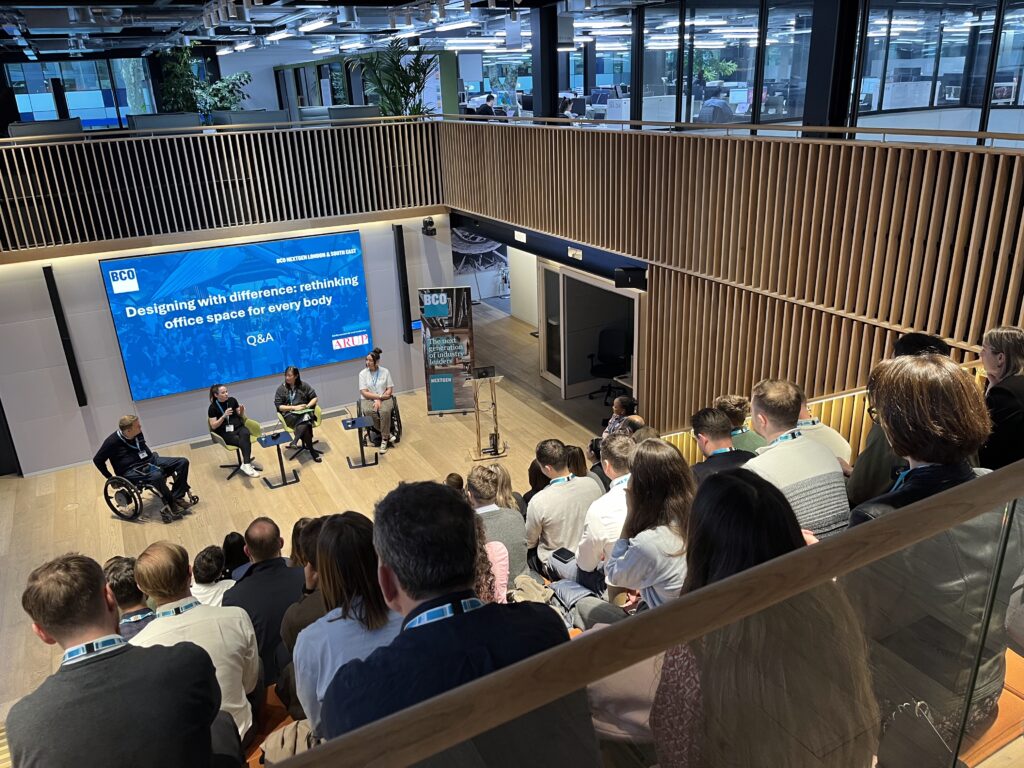
That’s why the BCO NextGen London & South East committee gathered a panel of experts at Arup’s 80 Charlotte Street offices in London to dive deeper into how we need to ensure we are creating workspaces that are inclusive and accessible for all.
The panel, chaired by James Taylor, co-founder of MotionSpot, brought together Frankie Pringle, architect and founder of Studio Pringle, Mei-Yee Man Oram, associate director and global accessibility and inclusion lead at Arup, and Jennie Berry, disabled content creator and educator and business engagement lead at Sociability, who each offered a compelling look at how inclusive design can and must go beyond compliance to create truly equitable workplaces.
One of the most powerful themes to emerge was the need to move beyond regulatory checklists. As Berry pointed out: “I’m not sat outside a building with a protractor measuring ramp gradients. I just need to know if I can get in and have the same experience as everyone else.”
This sentiment was echoed by Pringle, who emphasised that many buildings still fail to meet even the minimum standards of Part M of the UK Building Regulations.
“Sometimes we don’t even tick the boxes,’ she said, highlighting a widespread lack of awareness and accountability in retrofit projects. She called on the audience to stop using accessibility statements as a get around.
While it is clear that inclusive design is a moral and social responsibility, the panel also stressed its business value.
Accessible workplaces attract and retain diverse talent, foster innovation, and reflect positively on company culture.
Berry shared her own experience of struggling to find employers who provided accessibility information during the recruitment process. “It’s no use going through the whole process only to find I can’t access the interview room,” she said.
This lack of transparency not only deters disabled candidates but also signals a broader cultural gap.
As Taylor noted: “We’re not just talking about ramps and lifts—we’re talking about dignity, autonomy, and belonging.”
The role of technology
Technology is playing a transformative role in inclusive design. From smart sensors that monitor lighting and noise levels to customisable room booking systems, digital tools are enabling more responsive and adaptable environments.
Oram described how Arup uses data to help employees choose workspaces that suit their needs on any given day, whether due to neurodivergence, migraines, or menopause symptoms.
Sociability’s platform, Berry added, empowers users to filter spaces based on specific access needs, reclaiming agency in a world that often tells disabled people where they can and cannot go.
The discussion also shed light on the often-overlooked reality of hidden disabilities. Pringle, who lives with a paralysed vocal cord, described the frustration of not being heard in noisy office environments.
The solution? Choice.
Providing a variety of settings – quiet zones, acoustically treated rooms, and flexible layouts – ensures that everyone, regardless of their needs, can find a space that works for them.
Lived experienced matters
A recurring message was the importance of embedding inclusive design from the earliest stages of a project. Oram emphasised that inclusion should be part of the brief, not an afterthought. This includes considering travel routes, safety, and engagement with end users, especially those with lived experience.
Berry was unequivocal: “It has to be led by lived experience. Not just one disabled person, but a whole host of voices.”
She also encouraged following disabled creators online to build awareness and empathy beyond the workplace. (You can follow Jennie on Instagram at wheelie_good_life).
While there is still so much to be done to create truly accessible and inclusive places, the panel remained largely optimistic.
“We are seeing a shift,” said Berry. “People are realising that inclusive design doesn’t have to be expensive. Sometimes it’s as simple as better signage or clearer communication.’
The message is clear. Inclusive design benefits everyone. And with the right mindset, tools, and leadership, we can build workplaces that truly work for all.
Five key takeaways:
- Go beyond compliance: Meeting regulations is the bare minimum. True inclusion requires empathy, creativity, and a willingness to challenge the status quo.
- Design for flexibility: One-size-fits-all doesn’t work. Offer a variety of spaces and settings to accommodate visible and invisible disabilities alike.
- Engage lived experience: Involve disabled people from the outset. Their insights are invaluable and often highlight issues that compliance alone can’t address.
- Leverage technology: Use digital tools to enhance accessibility, from wayfinding apps to customisable workspaces. Tech can empower users and reduce the need for disclosure.
- Make the business case: Inclusion isn’t just the right thing to do—it’s smart business. Diverse teams are more innovative, resilient, and reflective of the world we live in.


 By BCO Media